• Skip to main content
  • Skip to site footer
  • Home
    • Images
    • Video
  • Accommodation
  • Exclusive
  • Top 5
  • Add Business
  • Book a Review
MyAddo

MyAddo

Addo and Kirkwood Accommodation

You are here: Home / Archives for blog

blog

April 8, 2013 by Addo and Kirkwood Blogger

Roadtripping Part 4: Addo Elephant Park | trop d'amour

The last stop on our roadtrip was Addo Elephant Park, just outside of Port Elizabeth. I’d been to Addo before, but only as a kid, and I was very excited to be there with Rowan. It was about an hour away from PE, the road wasn’t ideal and you do drive through some areas that …

100_3285 100_3293 100_3297 100_3300 100_3306 100_3323

The last stop on our roadtrip was Addo Elephant Park, just outside of Port Elizabeth. I’d been to Addo before, but only as a kid, and I was very excited to be there with Rowan. It was about an hour away from PE, the road wasn’t ideal and you do drive through some areas that look a bit less than ideal – don’t get discouraged, just follow the signs.

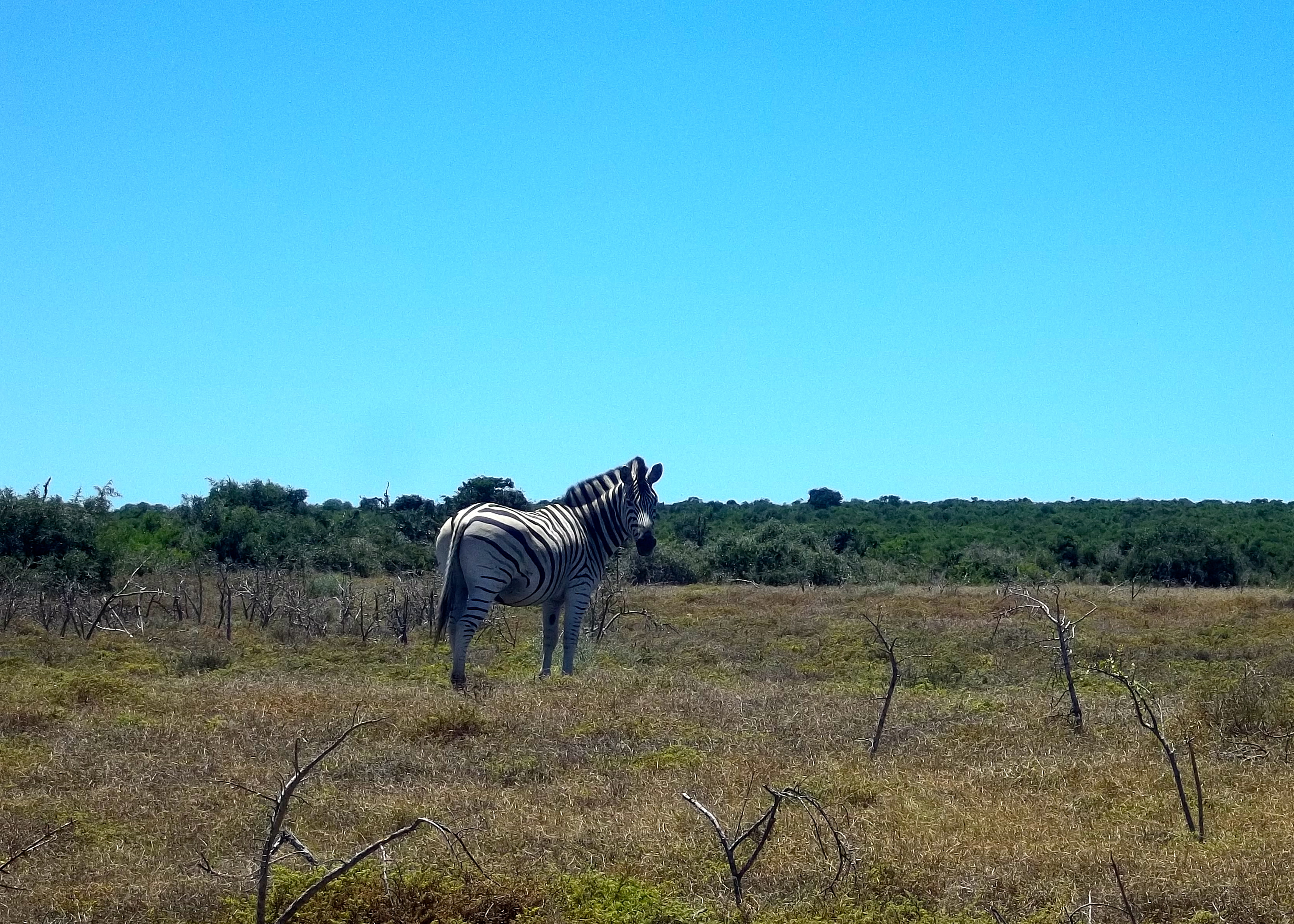
We drove into Addo very early in the morning, wanting to make the most of our 1 night there. We arrived at about 9am, and even then it was too hot to set up our tent. We decided to drive into the game park and spot some wildlife.  The first hour we drove around the park we saw elephants, zebras, lots of warthogs, a tortoise, many different types of buck and some interesting birds. But no lions, and no buffalo. There are only a few lions in Addo, and because the park is quite large I know they are hard to spot but I was determined to see one (I’ve never seen a lion in the wild before, only in the zoo). On our first day in Addo; Rowan and I drove around the park for about nine hours, in the airconditioned car. Partly because we were determined to spot the lions and partly because we desperately needed the aircon, it was so hot!

We finally gave up on the lions and headed back to the camp for a swim. The pool water was almost too warm, but it was nice. We set up our tent and got changed into some warmer clothes for our night safari drive – we had been warned that it would get quite a bit colder.

We started the night safari drive just before sunset, as we entered the game park everything felt different. Darkness was settling in, and some animals were making interesting sounds. After not seeing a buffalo all day; we saw one in the first five minutes of the night drive, and then another four or so during the drive.

We saw jakkals and hyenas, some right next to the jeep – hyenas look and act just like dogs, kinda cute in a creepy way. The whole park is different at night, we saw so many animals that we would never have seen during the day; spring hares, buffalos and many shining eyes hiding in the bushes. If you’re going to Addo I highly recommend that you book a night drive – the rangers are so experienced and you will definitely see animals that you won’t find yourself during the day.

Unfortunately we didn’t see any lions while we were in Addo, I was prett disappointed but now it just means that I’ll have to organise a trip to Kruger National Park at some point. I loved every second of being at Addo, and the camping facilities were great (and a lot cheaper than the other options). Don’t forget to factor in that you also have a pay a daily fee to enter the game park itself.

About these ads

div { margin-top: 1em; }
]]>

Category: NewsTag: addo, blog, blogger, kirkwood, news
April 8, 2013 by Addo and Kirkwood Blogger

Five Star Lodge in the Addo Elephant National Park: Birds seen in …

We have started doing a Species Identification of Birds which we have identified in and around the garden’s of River Bend and Long Hope Villa. Birds seen outside the fence only count if they have been seen from inside the perimeter fences. As we record sightings and have photographs we will add to the Blog. …

We have started doing a Species Identification of Birds which we have identified in and around the garden’s of River Bend and Long Hope Villa. Birds seen outside the fence only count if they have been seen from inside the perimeter fences.

As we record sightings and have photographs we will add to the Blog. Like our Facebook Page, to keep abreast with updates:

https://www.facebook.com/RiverBendLodgeAddo

The first two are photographs of two of the three Sunbird species.

Category: NewsTag: addo, blog, blogger, kirkwood, news
April 3, 2013 by Addo and Kirkwood Blogger

River Bend Lodge, Addo Elephant Park – Jeremy Williamson

Ideally located immediately opposite the entrance gates to Addo Elephant National Park Main Camp gates, is the privately run, Five Star, River Bend Lodge. Set in a 14,000 ha private concession within the greater Addo Elephant National Park, from this venue one is able to experience Addo in superb luxury. The Addo Elephant National Park …

Ideally located immediately opposite the entrance gates to Addo Elephant National Park Main Camp gates, is the privately run, Five Star, River Bend Lodge. Set in a 14,000 ha private concession within the greater Addo Elephant National Park, from this venue one is able to experience Addo in superb luxury.

The Addo Elephant National Park is South Africa’s 3rd largest National Park – originally proclaimed in 1931, in desperation to save the last remaining cape Elephant, with possibly only 11 of these large pachyderms left in that area. What a success story. There are now in excess of 500 and in order to broaden their genetic diversity, some bulls from the Kruger National Park have relatively recently been introduced. With the decimation of the elephant herds in the 1800’s and early 1900’s, with primarily the larger tuskers being sought after, those remaining genetically produce progeny with smaller tusks whilst some have none. So with these new Kruger Park elephant’s genes, the genetics could in time return to normal. This is the same species Loxodonta africana we all know and love, as the genetics were originally modified by man’s intervention, I believe this to be a sensible and acceptable correction of the malady.

One of the Kruger Park bulls
Other animals have also been brought back to Addo from local extinction, one of the most significant being the African lion – Pantera pardus, thus escalating the Park to Big Five status, almost a prerequisite for international guests. So convenient too, no need now for those wishing to only visit the Cape to have to travel further. The area is slowly getting back to what it must have been like before man’s destruction of the wildlife.

The Park is presently 180,000 ha with plans to enlarge the protected area to 264,000 ha progressing well. This Greater Addo area includes St Croix and Bird Islands, just off the coast, these islands host the largest breeding colony of the Cape Gannet and second largest breeding colony of African Penguin. With this diversity of biomes in the area, with hosting the Big 7, elephant, rhino (both black and white) lion, leopard, buffalo, whales and the great white shark and then a very large diversity of antelope species as well, the Addo area has become a rewarding wildlife destination. Some specials too and some very threatened, such as the Addo flightless dung beetle ! Beyond Addo there are a number of Private Game Parks, many already removing the dividing fences from neighboring properties and creating a vast protected area, a huge plus for biodiversity ..and the area is Malaria free too !!

The breakfast and luncheon veranda venue
At River Bend Lodge all the accommodation is in very comfortable chalets, slightly away from the Main Lodge area, affording privacy,


 all the chalets are air conditioned as well as having ceiling fans, each with expansive views out into the reserve.


In the rooms there is a mini bar, satellite TV, loads of space, comfortable chairs with the bathrooms en-suite with separate bath and shower, some also have outdoor showers whilst the Honeymoon Suite has a private plunge pool.


 Then the comfort and soaps and… The luxury suites are made up of two adjacent units with inter-leading doors if required, ideal for families.
Set in the grounds of a farmstead of old, there is a beautiful established garden with some large trees which attract a number of diverse bird species.


The Lodge is fenced, entrenching it’s suitability as an ideal venue for children and so easily accessible, being only some 45 minutes drive from Port Elizabeth.
Although Five Star, the Lodge is comfortable and casual, there is a TV lounge “for sport enthusiasts”,


lovely deep verandas where one may sit and relax, watching the passing parade,


 more lounges, all with super comfortable couches and  chairs,


 a lovely loft library


and then a sheltered pool area, again with comfortable recliners. A place to relax between those game drives!


Lana and I entered the concession just before 14h00 (check-in time) and drove the 3,5 kms to the Lodge gates. On the left just before River Bend Lodge is a water-hole right next to the road, as we drove up, a herd of approx 80 elephant were there drinking and doing elephant things. With the herd milling around and our cameras safely ensconced in their cases in the boot, a wonderful photo opportunity missed. As we watched, the matriarch led the herd away and into the bush – we were not to see them again.

A warm welcome from Tariro Chaonwa, a welcome drink, check in, she then took us on a tour to familiarise Lana and I on the Lodge facilities, with easy access to our chalet,we settled into our room,  with cameras now ready, a quick nap? lunch is not included on the first day, although Tariro offered to arrange for the kitchens to make somethingg should we be starving –  and so instead  to the gourmet high tea on the main Lodge veranda before departure on the Game drive.


 There is a convenient water-hole just beyond the fence, lovely, tea, cake and delicacies with a view, but unfortunately no visitors today. In the distance one could see some plains game, so with anticipation we prepared for the afternoon game drive. This was to be on the River Bend Lodge concession. Speckboom – Portulacaria afra is relatively abundant amongst dense stands of other low woody shrubs, with the grass component rather poorly developed. The Speckboom has been the saving grace of the area, as it is favored as browse by so many of the resident species from black rhino to kudu to just so many of the thriving populations.
Our guide was determined for us to have a better elephant sighting than the one both parties (ourselves and a Honeymoon couple) on the vehicle, had experienced on the way in, so we spent some of the afternoon searching for this elusive herd that had melted away. There were however some really wonderful opportunities to see some of the general game in reasonable numbers, in good light.

Yellow mongooseEland herd


Our game drive and sightings were all in this elongated narrow strip between the fence / R342 and the Zuurberg Mountains which is rather inaccessible in parts and to where the elephant had retreated, returning to their hiding place. We were fortunate to have seen them at the water-hole on arrival. This is not really a problem for the Lodge though, as the game drives can alternatively be conducted inside the main Addo Elephant Park, where normally excellent sightings of elephant may be enjoyed. We did however find a lone elephant bull who obligingly posed for us.


Pale chanting GoshawkJuvenile Blue Crane
Back to the Lodge and a divine dinner. It is in the culinary department that the Lodge excels.Imagine after a delicious cauliflower soup to have as one of the starter choices; Parma Ham, crispy egg, pea mousse and Truffle dressing. The “Crispy Egg”, was intriguing, this was a ‘boiled’ ? egg cooked with a soft center, with a delicious golden, crispy crunchy coating on the outside. Want the recipe? An early Easter surprise. I have been practicing upping the status of my modest breakfast egg.

What a delicious line up on the Menu for mains. Roast Sirloin, my choice, done to rare perfection and so tender, but there was a Moroccan spiced Line Fish or even a Mushroom Risotto mit trimmings. The dessert was a beautifully presented caramelised Apple Tart, vanilla Struzzel and Creme Anglaise.

There was also a selection of cheeses too. Well considered wines as an accompaniment were suggested, an excellent recommendation. A delicious and beautifully presented meal in a fine convivial dining room, decorated with period furniture and with service of a high standard… then to bed, to the comfortable suite and slumberland.

An early start and we were on a mission, this time to find lion. These felines have recently been introduced and are yet to multiply in this sector of the Park. They will. We did not find them. I am inclined, when visiting our game parks, to appreciate the animals as they are discovered, to sit and watch and appreciate them and then move on.


The lovely early morning light offered some super opportunities, we were fortunate to be able to snatch the odd photograph. Yes, antelope, jackal, baboon, birds and such are rather high on my list of animals to see and photograph – especially in that golden light as the sun peeps over the horizon.


Take each sighting as it is presented, it could well be the most pleasant.

Leopard tortoiseBlack backed Jackal
Back to the Lodge for breakfast, a rather delightful affair looking out over the bushveld and beyond. I am sure with more time we would have been able to see more of the species in the area, with a trip to Addo Elephant Park possibly a bonus, from this venue. This Lodge would be an excellent choice for those wanting five star accommodation and superb meals vs staying at the National Park accommodation and driving ones-self. Beautifully appointed with excellent service, guided game drives, well priced, this convenient luxury Lodge is highly recommended.

Photographs : Jeremy and Lana Williamson

Category: NewsTag: addo, blog, blogger, kirkwood, news
April 3, 2013 by Addo and Kirkwood Blogger

Living life breathlessly: Addo Elephant Park Pics

“Life is not measured by the number of breaths we take, but by the moments that take our breath away”

“Life is not measured by the number of breaths we take, but by the moments that take our breath away”

Category: NewsTag: addo, blog, blogger, kirkwood, news
April 1, 2013 by Addo and Kirkwood Blogger

Eastern Cape – Addo Elephant Marathon

76 km and 44km trails to keep you on your toes… Elephants do not traditionally make good joggers.  As far as running is concerned, these beautiful beasts tend to take it easy, with the occasional moment of ferocious sprinting, trumpeting and ear flapping.

76 km and 44km trails to keep you on your toes…

Elephants do not traditionally make good joggers.  As far as running is concerned, these beautiful beasts tend to take it easy, with the occasional moment of ferocious sprinting, trumpeting and ear flapping.

addo-elephant-park

Category: NewsTag: addo, blog, blogger, kirkwood, news
March 31, 2013 by Addo and Kirkwood Blogger

fifishoek: Addo Elephant Park

If you haven’t been to Addo…. there are several hundred elephants, mostly tucked out of sight in the thick bush, but we were lucky to see almost a hundred of them at Hapoor Dam – drinking, splashing muddy water over their backs, resting, arriving and leaving in family groups, babies sticking to their mothers and trying …


If you haven’t been to Addo…. there are several hundred elephants, mostly tucked out of sight in the thick bush, but we were lucky to see almost a hundred of them at Hapoor Dam – drinking, splashing muddy water over their backs, resting, arriving and leaving in family groups, babies sticking to their mothers and trying not to slip into the dam, young adults playing in the water.  


 The day was very hot, in the mid-thirties or higher, so the waterhole was a great attraction.  Some just came to drink in a row along the edge.

One or two eyed us and we were a little anxious when approached later by a group walking down the road in the opposite direction.  They calmly moved over to the other side and slid past us – we could have reached out and touched them!

 Addo has a few remaining tusked females.


A large Kudu resting in the shadeBuffalo – the only one we saw

At another waterhole we watched a herd of Eland approaching, probably wanting to drink, but something spooked them and they gathered speed until they shot past the water.  Amazing to think that an antelope that stands about 1.6m at the shoulder and weighs between 400 and 600kg can ‘pronk’!
Leopard TortoiseBlack-backed JackalRed HartebeestKeeping an eye on the lionsRoadblock…

The Warthogs were everywhere

Category: NewsTag: addo, blog, blogger, kirkwood, news
March 31, 2013 by Addo and Kirkwood Blogger

Five Star Lodge in the Addo Elephant National Park: An …

We recently hosted Professor Michael Bode and his family at River Bend Lodge. Professor Bode is the Director of the Astrophysics Research Institute at Liverpool John Moore’s University, which is considered to be one of the world’s leading authorities in astronomy and astrophysics. Professor Bode is also a past Vice President of the Royal Astronomical …

We recently hosted Professor Michael Bode and his family at River Bend Lodge. Professor Bode is the Director of the Astrophysics Research Institute at Liverpool John Moore’s University, which is considered to be one of the world’s leading authorities in astronomy and astrophysics. Professor Bode is also a past Vice President of the Royal Astronomical Society.

Some of us were fortunate enough to have some time with Michael, after dark, gazing at the heavens while he gave us a short talk on what we were looking at. Michael specializes in ‘exploding stars’ and we wish to thank him for giving us of his time and a very interesting talk!! This is what he had to say of his time spent at River Bend Lodge.

0
0
1
438
2501
RiverBend Lodge
20
5
2934
14.0

Normal
0

false
false
false

EN-US
JA
X-NONE

/* Style Definitions */
table.MsoNormalTable
{mso-style-name:”Table Normal”;
mso-tstyle-rowband-size:0;
mso-tstyle-colband-size:0;
mso-style-noshow:yes;
mso-style-priority:99;
mso-style-parent:””;
mso-padding-alt:0cm 5.4pt 0cm 5.4pt;
mso-para-margin:0cm;
mso-para-margin-bottom:.0001pt;
mso-pagination:widow-orphan;
font-size:12.0pt;
font-family:Cambria;
mso-ascii-font-family:Cambria;
mso-ascii-theme-font:minor-latin;
mso-hansi-font-family:Cambria;
mso-hansi-theme-font:minor-latin;}

“We’d never been on safari before and didn’t quite know what to
expect. Our 4 days and nights at River Bend were however some of the most
memorable we’ve had as a family. Each day was full of adventure and discovery
with our guide Mikey. We had some very close encounters with the wildlife and
literally never knew what would be around the next corner – his knowledge of
the flora and fauna was unbelievable and his enthusiasm just infectious. 

Then there was the Lodge itself where we felt pampered and at home.
Between the twice daily drives, and all the food(!) we also managed to tap into
Michael’s expertise to enhance my daughter’s photographic skills while I learnt
far more about wine in a glorious couple of hours with him (Michael Price) than
several decades of quaffing had imparted. I thus felt the least I could do was
show them, and some of the other staff, a few things from my own area of
expertise in astronomy.

I’ve been to the Southern Hemisphere several in my career, and maybe
I shouldn’t be, but I’m always taken aback a little by the Southern sky. First
of all, familiar things are literally ‘upside down’ to a northern European like
me. Then there are the unfamiliar constellations and objects such as the
Magellanic Clouds that are too far South to see from home. Finally, the Milky
Way is even more glorious ‘down there’.

We chose a dark spot in the grounds and looked up. The most obvious
object was our own Moon, just past first quarter. Also easily visible was the
giant planet Jupiter, the largest planet in our solar system. Turning much
further afield, to the stars, I pointed out Alpha Centauri, one of the nearest
stars to the Earth at just over 4 light years away. Easily visible across the
sky was the great constellation of Orion where the two supergiant stars Rigel and
Betelgeuse clearly showed their distinctive blue and red colours respectively.
These are stars in the later stages of their lives which are likely to go out
with a bang in supernova explosions. In between them, I pointed out Orion’s
belt and sword, with the latter being the illuminated part of a giant cloud of
dust and gas that covers that whole region of sky but most of which is
invisible to our eyes. In that cloud, new stars are being formed. 

Stretching across the sky was the Milky Way, the diffuse band of
light that is in fact the Galaxy in which we sit, comprising around 200
thousand million stars – a giant spiral structure over 100,000 light years
across, with us circling our star the Sun some 30,000 light years from our
Galaxy’s centre. Finally, the faint blotches known as the Magellanic Clouds off
to one side of the Milky Way are in fact small satellite galaxies of our own.
Light from the larger of the two takes over 150,000 years to reach us. There
was lots more to see, but by now it was getting late, and we had to be up
bright and early for our final drive, so we said our goodnights and turned in.”


Category: NewsTag: addo, blog, blogger, kirkwood, news
March 30, 2013 by Addo and Kirkwood Blogger

Addo Elephant Park, South Africa

River Bend Lodge Tranquility, luxury and exquisite cuisine describe the gracious living at the River Bend Lodge. River Bend Lodge is situated within the 17 000 hectare Nyati Private Concession of the Addo Elephant Park … Addo Elephant Safari Lodge Walk with the Elephants through the diverse valley bushveld, ravine and forest habitat. After the …

River Bend Lodge

Tranquility, luxury and exquisite cuisine describe the gracious living at the River Bend Lodge. River Bend Lodge is situated within the 17 000 hectare Nyati Private Concession of the Addo Elephant Park …

Addo Elephant Safari Lodge

Walk with the Elephants through the diverse valley bushveld, ravine and forest habitat. After the walk, we offer you the exhilarating experience of riding these magnificent animals – revel in the natural beauty of the …

Gorah Elephant Camp

The comings and goings of wildlife around the waterhole situated in front of the main verandah are a constant source of fascination. The natural rock swimming pool is the perfect place to beat the African heat, otherwise …

Long Hope Villa @ River Bend

Long Hope Villa is a beautifully restored exclusive safari villa, located in the Greater Addo Elephant National Park, on a private concession. All meals are prepared by private chef, all game activities with private game vehicle …

Kuzuko Lodge

At night let the “Sky Rangers” enhance your nature experience with cosmic safaris from our deck using our eight inch telescope. With unforgettable morning and night game drives experience the diverse wildlife on …

Addo Elephant Park

Accommodation nearby

For accommodation outside of the reserve, see these towns which border the reserve:

• Addo Accommodation

• Colchester Accommodation

• Kirkwood Accommodation

• Nanaga Accommodation

• Paterson Accommodation

• Somerset East Accommodation

• Zuurberg Accommodation

Or to see all towns bordering the reserve at once, visit Greater Addo Accommodation.

Category: NewsTag: addo, blog, blogger, kirkwood, news
March 26, 2013 by Addo and Kirkwood Blogger

Baby jumbo's amazing rescue from Addo dam

All material copyright The Herald. © Times Media Group. All Rights Reserved. Subscribe | Terms Conditions | Privacy Policy | News | Archives | Events | Blogs | Classifieds | About Us | Jobs | Herald Rates | WeekendPost Rates Website development and design by Online Innovations

All material copyright The Herald. © Times Media Group. All Rights Reserved.

Subscribe | Terms Conditions | Privacy Policy | News | Archives | Events | Blogs | Classifieds | About Us |
Jobs | Herald Rates | WeekendPost Rates

Website development and design by Online Innovations

Category: NewsTag: addo, blog, blogger, kirkwood, news
March 25, 2013 by Addo and Kirkwood Blogger

Addo Elephant Park

A  B  C  D  E  F  G  H  I  J  K  L  M  N  O  P  Q  R  S  T  U  V  W  X  Y  Z

A  B  C  D  E  F  G  H  I  J  K  L  M  N  O  P  Q  R  S  T  U  V  W  X  Y  Z

Category: NewsTag: addo, blog, blogger, kirkwood, news
March 23, 2013 by Addo and Kirkwood Blogger

Addo Elephant National Park 2013, Hapoor waterhole african4x4.com

On our first morning in the park, we headed straight for Hapoor waterhole. There were a few safari vehicles, but on the whole we had the place to ourselves. Then the elephant started arriving, non-stop. Eventually there were over 100 with dozens of little ones. We were surrounded by the hordes! There was high drama …

  • On our first morning in the park, we headed straight for Hapoor waterhole. There were a few safari vehicles, but on the whole we had the place to ourselves. Then the elephant started arriving, non-stop. Eventually there were over 100 with dozens of little ones. We were surrounded by the hordes!

    There was high drama when one of the littlies fell into the waterhole and couldn’t get out. Much trumpeting and rumbling by the entire group ensued. The bulls kicked up dust in their eagerness to rally the mothers to assist the little tyke. Eventually it emerged unharmed, but covered all over in dark mud except for its ears, eyes and trunk. What relief!

    Then a hyaena couple arrived, keen for a bath themselves. There was much splashing and shaking of heads and eventually one of them even submerged its head under the surface. When the male had had enough and started to leave, his companion initially followed him, them turned around for another go at it. The previous days the temperature reached 39 degrees, which explains their frolicking. Another unique experience.

    Posted on 19/03/2013

  • Category: NewsTag: addo, blog, blogger, kirkwood, news
    March 22, 2013 by Addo and Kirkwood Blogger

    3 places to go on safari in South Africa – The Time

    Date: March 22, 2013 Author: Ellen Small Billard 0 Comments I’ve wanted to experience an African safari my entire life. Lions, zebras, elephants, giraffes, hippo, cheetah. You name it, I want to see them all — and in their own habitat, roaming freely outside of the confines of a caged area. Justin has gone on …


    3 places to go on safari in South Africa

    • Date: March 22, 2013
    • Author: Ellen Small Billard
    • 0 Comments

    I’ve wanted to experience an African safari my entire life.

    Lions, zebras, elephants, giraffes, hippo, cheetah. You name it, I want to see them all — and in their own habitat, roaming freely outside of the confines of a caged area. Justin has gone on many safaris in his lifetime as he spent a significant portion of his childhood living in South Africa. Some of his greatest childhood memories are of spotting the Big Five (elephant, leopard, cape buffalo, rhino, and lion) from the back of a safari vehicle. But if all goes according to plan, this Fall, that dream will finally come true for me, too. We’re planning to visit Justin’s parents in South Africa in October and high on our list of things to do is a safari (or two, or three …).
     
    But the question is … where do we go for our safari? Should we visit more than one park? Which parks are the best? And where can we see a cheetah?!


    Photo Credit 

    There’s no doubt that South Africa is one of the best places to go for safari in Africa. It boasts some of the greatest variety of wildlife, as well as some of the most developed parks with a great tourist infrastructure. But there are just too many options to choose from in this rather large country! To help us narrow down our decision, we’ll be researching which parks and the most recommended and for what reasons. We’ll keep you posted on our progress and update you on our decision over the coming months, but for now, we’ve identified three top places to go on safari in South Africa:

    1.) Kruger National Park


    Photo credit

    Kruger National Park safaris are an extremely popular choice for anyone looking for the best African safari experience. The area is famed for it’s incredible array of wildlife, including the Big Five. It’s also easily accessed and the surrounding area offers many accommodation options for every budget, whether you’re looking to stay in a luxury lodge or a primitive tent.  Experienced rangers are on hand to guide you through open vehicle game drives in the park. Kruger National Park is also fringed by spectacular mountainous terrain, making it an all round must do.  If location was not an issue for us, Kruger would hands-down be my pick for safari in South Africa. But our other travels in South Africa will likely have us sticking to the southern coast, which means, unfortunately, Kruger might not be the right choice for us.

    2.) Addo Elephant Park

    Photo credit

    Although it’s not as well known as Kruger, at nearly 450,000 acres, Addo Elephant Park is actually the third largest national park in South Africa and it’s where I am leaning toward most for our safari. It is located conveniently outside of the city of Port Elizabeth, where we’ll be spending some time visiting Justin’s family. Contrary to what its name may imply, the park holds more than just elephants. Lions, zebra, black rhino, leopard, cape buffalo, and spotted hyena roam its protected plains. The combination of convenient location with abundant wildlife makes this my top choice.

    3.) Pilanesberg National Park

    Photo Credit

    Pilanesberg National Park is located in the northern part of South Africa, close to Botswana. This park is interesting because it lies in a volcanic crater where the unique geological formations are a bonus attraction to its varied range of wildlife. If you’re looking for a completely different experience to the traditional African Safari, there is also the family friendly resort Lost City, which offers wave pools, beaches, water slides, amusement park rides, and championship golf courses, adjacent to the game park. Although this park sounds unique and I have no doubt we would find it amazing, we will probably be unable to visit there as it is so far from South Africa’s coast.
     
    There are a broad range of African safaris available in South Africa, many of which are suitable for the whole family. Companies such as Wild Africa offer a host of family friendly safari options. For more information on choosing the best African Safari for you and your family, visit www.wildafrica.com.au

    Stay tuned over the coming months to see which South African safari we choose — and what else our South African itinerary will hold!


    Have you visited South Africa? What safari experience do you recommend?


    Feature image credit

    This post was supported by www.wildafrica.com.au


    No related posts.

    Category: NewsTag: addo, blog, blogger, kirkwood, news
    March 19, 2013 by Addo and Kirkwood Blogger

    Face To Face With An Elephant At Addo National Park | TravMonkey …

    I have to admit, I was expecting to be given a few more warnings or perhaps a few tips on what to do in a certain situation. But no, all I got was “please sign here”. I presumed it’d be fine, entering Addo National elephant park, the third biggest national park in South Africa and …

    Baby elephant and adult

    I have to admit, I was expecting to be given a few more warnings or perhaps a few tips on what to do in a certain situation.

    But no, all I got was “please sign here”. I presumed it’d be fine, entering Addo National elephant park, the third biggest national park in South Africa and home to the so called “big 5″ game animals.

    “Stay in your vehicle at all times”

    The biggest problem we’d have in our lovely blue bubble of a hire car (Nissan Micra!?) would probably be some cheeky band of monkeys bouncing all over the car and chewing on windscreen wipers, I thought. However, this wasn’t Knowsley Safari Park. There were much bigger animals roaming the park and the most obvious instructions on the warning signs seemed to be to “stay in your vehicle at all times”.

    We turned a sharp corner and were confronted with a huge elephant who was being photographed like a A list celebrity. The huge animal was dwarfing a tiny silver Polo car. We slowly crept forward, not too close, but near enough to get a decent shot with a zoom lens.  Milene took the camera and starting taking photos, it was an impressive sight. The one thing that struck me was the size of its head, seeing these creatures roaming around at will is quite humbling.

    Up close with a adult elephant

    I thought the huge beast would probably just plod on by, perhaps slowing or even stopping so we could get the perfect shot. But our amazement suddenly turned to fear as the elephant abruptly changed his course, the docile look in his eyes that was there earlier seemed to have vanished.
    Adult Elephant

    I asked Milene to stop taking photos and not to make any sound as my heart start thumping out of my chest. As the fully grown adult elephant headed straight towards our passenger door I remembered the signs around the park of cars being tipped over by an elephant and warnings of not getting too close. But what do you do when the elephant gets close to you? The first thing you notice when an elephants coming straight towards you are how big the tusks are and how powerful this creature is.

    Incredible but frightening experience

    We sat perfectly still for what seemed like a long time but was probably only seconds before I realised the car engine was still running. Just as the elephants head filled the view out of the passenger window and his body cast a huge shadow over our tiny Nissan Micra he turned his head away and plodded on by brushing the car as he went with his tail. Perhaps he was bemused by the sound of the car engine or just wanted a closer look at us? Either way it was an incredible if not slightly frightening experience.

    A herd of elephants

    Addo Elephant National Park is actually the third largest national park in South Africa. It’s home to more that 550 elephants as well as buffalo, lion, black rhino, antelope, warthogs, zebra, jackal, dung beetle and tortoises. A visit to the park is an amazing day out (you could probably spend longer if you wanted) that we would reckon to anyone visiting this part of South Africa. It’s also a very safe place to visit as long as you are sensible, despite my heart pumping experience face to face with an elephant.

    My Cape Town flights were courtesy of Skyscanner and the trip was assisted by Cape Town Tourism.


    Share on WorldTravelist Vote for my article on WorldTravelist.com, sharing the best travel content on the web.

    Like this article? Subscribe to our newsletter.

    Category: NewsTag: addo, blog, blogger, kirkwood, news
    March 15, 2013 by Addo and Kirkwood Blogger

    Addo Elephant Park – To Africa

    Addo Elephant Park was proclaimed in 1931, as a safeguard for the last 11 wild elephants roaming the area. It is now home to over 350 elephants and numerous other species. Addo Elephant Park was so successful that it started to get overcrowded, so surrounding land needed to be acquired. With local co-operation, adjacent farms …

    Addo Elephant Park was proclaimed in 1931, as a safeguard for the last 11 wild elephants roaming the area. It is now home to over 350 elephants and numerous other species. Addo Elephant Park was so successful that it started to get overcrowded, so surrounding land needed to be acquired.
    With local co-operation, adjacent farms were purchased and the new Greater Addo National Park will soon cover 1.2 million acres (492,000 ha).
    Elephants are wondrous creatures to watch especially at a waterhole. Some facts about elephant’s digestion may help to demonstrate why the dung beetle is so important to this park ,and why rangers were very worried about their decline.
    An adult elephant deposits upwards of 330 pounds (150 kilos) of dung every day – about one consignment every 15 minutes. Prior to the expansion of the park, this meant that the dung beetles had an enormous clearing up job, and they were just not coping.
    The flightless dung beetle is found almost exclusively in this park (other dung beetles can fly), and are important to the ecology of the area.
    No citrus fruits may be taken into Addo as elephants have such a craving for them, that one whiff of an orange could send them crazy, and could mark the end of you and your car.
    The cruellest irony is that the region has many citrus groves – which is an unkind twist of fate for the Addo elephants!
    Black-backed jackal are commonly seen in Addo, and evenings are punctuated by their strident howls.
    Cape buffalo, black rhino, kudu, eland, red hartebeest and springbok all graze on their preferred grasses or bushes and highly adaptable leopards are there but rarely seen. With the consolidation of the land expansion, lion will be reintroduced to complete the ‘Big Five’.
    Furthermore, with the park now stretching to the shores of the Indian Ocean, whales and dolphins will swell the viewing opportunities.
    Addo’s birding opportunities are accentuated by the contrasting habitats of dense thickets interspersed with open grassy areas and wooded kloofs. Look out for martial and crowned eagles, olive bush shrikes, yellowthroated warblers, Cape batis, black korhaan and secretary birds.

    This region’s temperate climate is influenced by the Indian Ocean, providing rain in equal measures throughout the year.
    Spring: Spring is in the air by the end of August and into September.
    October gets much warmer with the feeling of summer around the corner.
    Summer: November to March are hot, and temperatures peak from December to February at around 75°-86°F (24-30°C) or more.
    Autumn: Temperatures start cooling down from about April but it can still be very pleasant until June.
    Winter: June, July and August are mid-winter months but the days may still be bright and warm, but it gets cold in the evening.

    Article source: http://goafrica.netscype.com/node/33

    Category: NewsTag: addo, blog, blogger, kirkwood, news
    March 12, 2013 by Addo and Kirkwood Blogger

    Nature Reserves to visit in South Africa

    De Hoop Nature Reserve It’s wonderful to know that in a diverse and abundantly beautiful country, land and the species that live on it are preserved.  Within every province you will find another reserve with a different climate, rainfall patterns, vegetation and inhabitants.  There are so many to choose from so I’ve made a list …

    De Hoop Nature Reserve

    De Hoop Nature Reserve

    It’s wonderful to know that in a diverse and abundantly beautiful country, land and the species that live on it are preserved.  Within every province you will find another reserve with a different climate, rainfall patterns, vegetation and inhabitants.  There are so many to choose from so I’ve made a list of ones you shouldn’t miss.

    De Hoop Nature and Marine Reserve

    I love that this reserve combines the coastline and the veld (field).  One minute you could be trailing through fynbos and low lying vegetation whilst spotting zebra and the next you could be searching rock pools to observe what lives within its waters.  There are a few overnight trails available which go through De Hoop, the most popular one being the Whale Trail. There isn’t a better way to explore this territory than on foot, up hills and sand dunes and past bontebok on the pathways.

    The Kruger National Park

    Kruger National Park

    Kruger National Park

    This is South Africa’s most iconic park which houses the Big Five; lions, leopards, buffalo, elephant and rhinos.  There are countless ways to enjoy your time here and a plethora of accommodations to choose from ranging from luxury safari tents to basic rondavels.  Go on morning games drives or drive yourself through the reserve and hold thumbs that you spot these majestic creatures.  Dine beside the camp fire and fall asleep to the sound of the wild.

    Cape Point Nature Reserve

    This reserve forms part of the Table Mountain National Park and will open your eyes to cliffs towering above the south-western most tip of Africa, bays, beaches and valleys.  Once inside you can climb your way to the lighthouse which was first built in 1859 or take the Funicular.  Zebra, baboons, buck and over 250 species of bird call this home so bring binoculars and a camera.  There are overnight trails which run through this reserve, so if you’re keen for a walk with a view, this is where to begin.

    Addo Elephant Park

    Addo Elephant Park

    Addo Elephant Park

    Despite its name, this park houses way more animals than just elephants.  Cape Buffalo, warthogs, Black rhino, lions, eland, kudu and hartebeest antelope are all found within this reserve.  On a self-drive through the park we spotted three lions snoozing in the midday sun and an entire herd of elephants visiting and playing near a waterhole.  You can also opt to go on horse, hiking or 4×4 trails and elephant back safaris.

    West Coast National Park

    This is one of my favourite parks to visit.  You won’t find the Big Five here but you will find tranquillity amongst the fynbos and spring blossoms, sunshine on the beaches of Kraalbaai’s azure waters and antelope such as eland and bontebok grazing in the fields.  Just a over an hour’s drive from Cape Town, this makes for a great day visit unless you wish to overnight on a house boat or in the fishing village of Churchhaven.

    South Africa is filled with beautiful game and nature reserves. Book your South Africa Accommodation today so that you can visit.

    Useful Links:
    South Africa Wildlife
    South Africa Game Reserves
    South Africa Accommodation

    Related Posts:

    • South Africa Game Reserves Lodges
    • Zebra in Pilanesberg National Park Photo
    • De Hoop Nature Reserve
    • Game Drive photograph by Justin Cohen
    • “Bottoms up” at Addo Elephant Park

    Category: NewsTag: addo, blog, blogger, kirkwood, news
    March 10, 2013 by Addo and Kirkwood Blogger

    Addo Elephant Park – To Africa

    Addo Elephant Park was proclaimed in 1931, as a safeguard for the last 11 wild elephants roaming the area. It is now home to over 350 elephants and numerous other species. Addo Elephant Park was so successful that it started to get overcrowded, so surrounding land needed to be acquired. With local co-operation, adjacent farms …

    Addo Elephant Park was proclaimed in 1931, as a safeguard for the last 11 wild elephants roaming the area. It is now home to over 350 elephants and numerous other species. Addo Elephant Park was so successful that it started to get overcrowded, so surrounding land needed to be acquired.
    With local co-operation, adjacent farms were purchased and the new Greater Addo National Park will soon cover 1.2 million acres (492,000 ha).
    Elephants are wondrous creatures to watch especially at a waterhole. Some facts about elephant’s digestion may help to demonstrate why the dung beetle is so important to this park ,and why rangers were very worried about their decline.
    An adult elephant deposits upwards of 330 pounds (150 kilos) of dung every day – about one consignment every 15 minutes. Prior to the expansion of the park, this meant that the dung beetles had an enormous clearing up job, and they were just not coping.
    The flightless dung beetle is found almost exclusively in this park (other dung beetles can fly), and are important to the ecology of the area.
    No citrus fruits may be taken into Addo as elephants have such a craving for them, that one whiff of an orange could send them crazy, and could mark the end of you and your car.
    The cruellest irony is that the region has many citrus groves – which is an unkind twist of fate for the Addo elephants!
    Black-backed jackal are commonly seen in Addo, and evenings are punctuated by their strident howls.
    Cape buffalo, black rhino, kudu, eland, red hartebeest and springbok all graze on their preferred grasses or bushes and highly adaptable leopards are there but rarely seen. With the consolidation of the land expansion, lion will be reintroduced to complete the ‘Big Five’.
    Furthermore, with the park now stretching to the shores of the Indian Ocean, whales and dolphins will swell the viewing opportunities.
    Addo’s birding opportunities are accentuated by the contrasting habitats of dense thickets interspersed with open grassy areas and wooded kloofs. Look out for martial and crowned eagles, olive bush shrikes, yellowthroated warblers, Cape batis, black korhaan and secretary birds.

    This region’s temperate climate is influenced by the Indian Ocean, providing rain in equal measures throughout the year.
    Spring: Spring is in the air by the end of August and into September.
    October gets much warmer with the feeling of summer around the corner.
    Summer: November to March are hot, and temperatures peak from December to February at around 75°-86°F (24-30°C) or more.
    Autumn: Temperatures start cooling down from about April but it can still be very pleasant until June.
    Winter: June, July and August are mid-winter months but the days may still be bright and warm, but it gets cold in the evening.

    Category: NewsTag: addo, blog, blogger, kirkwood, news
    March 3, 2013 by Addo and Kirkwood Blogger

    Five Star Lodge in the Addo Elephant National Park: OF …

    0 0 1 778 4436 RiverBend Lodge 36 10 5204 14.0 Normal 0 false false false EN-US JA X-NONE /* Style Definitions */ table.MsoNormalTable {mso-style-name:”Table Normal”; mso-tstyle-rowband-size:0; mso-tstyle-colband-size:0; mso-style-noshow:yes; mso-style-priority:99; mso-style-parent:””; mso-padding-alt:0cm 5.4pt 0cm 5.4pt; mso-para-margin:0cm; mso-para-margin-bottom:.0001pt; mso-pagination:widow-orphan; font-size:12.0pt; font-family:Cambria; mso-ascii-font-family:Cambria; mso-ascii-theme-font:minor-latin; mso-hansi-font-family:Cambria; mso-hansi-theme-font:minor-latin;} Ecclesiastes Chapter 3 tells us there is a “Time for Everything”…and …

    0
    0
    1
    778
    4436
    RiverBend Lodge
    36
    10
    5204
    14.0

    Normal
    0

    false
    false
    false

    EN-US
    JA
    X-NONE

    /* Style Definitions */
    table.MsoNormalTable
    {mso-style-name:”Table Normal”;
    mso-tstyle-rowband-size:0;
    mso-tstyle-colband-size:0;
    mso-style-noshow:yes;
    mso-style-priority:99;
    mso-style-parent:””;
    mso-padding-alt:0cm 5.4pt 0cm 5.4pt;
    mso-para-margin:0cm;
    mso-para-margin-bottom:.0001pt;
    mso-pagination:widow-orphan;
    font-size:12.0pt;
    font-family:Cambria;
    mso-ascii-font-family:Cambria;
    mso-ascii-theme-font:minor-latin;
    mso-hansi-font-family:Cambria;
    mso-hansi-theme-font:minor-latin;}

    Ecclesiastes Chapter 3 tells
    us there is a “Time for Everything”…and without sounding flippant, in the
    Eastern Cape, now is the ‘Time for Prickly Pears’. And this many thorned fruit
    is important to hundreds of people who wake up early every morning in January,
    February and into March each year to harvest the fruit, wipe on the grass to
    remove the thorns from the fruit, and heap them into containers of all sorts.
    The day is then spent on the side of the road…holding up the fruit to passing
    motorists in the hope that they will stop and buy some of the fruits of their
    labours. For all…this is an important source of income.


    Rubbing the thorns off

    “Like all true cactus species, prickly pears are native only to the
    Western hemisphere; however, they have been introduced to other parts of the
    globe. Prickly pear species are found in abundance in Mexico, especially in the
    central and western regions. They are also found in the Western United States,
    in arid regions in the Northwest, throughout the mid and lower elevations of
    the Rocky Mountains such as in Colorado, where species such as Opuntia
    phaeacantha, Opuntia polyacantha and others become dominant, and especially in
    the desert Southwest. Prickly pears are also the only types of cactus found to
    grow natively far east of the Great Plains states”.

    “The first introduction of prickly-pear into Australia
    can be definitely ascribed to Governor Philip and the earliest colonists in the
    year 1788. Brought from Brazil to Sydney, they remained in Sydney for 50 years,
    until they were brought to New South Wales to a farmer’s garden in 1839. The
    farmer’s wife gave cuttings to neighbours and friends, who planted it not only
    in their gardens but also as hedgerows. So began the Australian invasion that
    caused major ecological damage in the eastern states. They are also found in
    the Mediterranean region of Northern Africa, especially in the most northern
    nation of Africa, Tunisia, where they grow all over the countryside, and
    southern Europe, especially on the island nation of Malta, where they grow all
    over the islands, and can be found in
    enormous numbers in parts of South Africa, where it was introduced from South
    America.
    ”


    Prickly Pears belong to the
    Family
    Cactaceae Genus Opuntia. The spread of the plant to
    Australia was a result of the insect Cochineal which hosts on the plant and is
    an important part of the dye industry.

    “The cochineal (/kɒtʃɨˈniːl/ koch-i-neel or /ˈkɒtʃɨniːl/ koch-i-neel;
    Dactylopius coccus) is a scale insect in the suborder Sternorrhyncha, from which
    the crimson-coloured dye carmine is derived. A primarily sessile parasite
    native to tropical and subtropical South America and Mexico, this insect lives
    on cacti in the genus Opuntia, feeding on plant moisture and nutrients.

    The insect produces carminic acid that deters
    predation by other insects. Carminic acid, typically 17–24% of dried insects’
    weight, can be extracted from the body and eggs then mixed with aluminum or
    calcium salts to make carmine dye (also known as cochineal). Carmine is
    today primarily used as a food colouring and for cosmetics.”


    Traditionally cochineal was used for colouring
    fabrics. During the colonial period, with the introduction of sheep to Latin
    America, the use of cochineal increased, as it provided the most intense colour
    and it set more firmly on woolen garments than on clothes made of materials of
    pre-Hispanic origin such as cotton, agave fibers and yucca fibers. In general,
    cochineal is more successful on protein-based animal fibres (including silk)
    than plant-based material. Once the European market discovered the qualities of
    this product, the demand for it increased dramatically. By the beginning of the
    seventeenth century it was traded internationally. Carmine became strong
    competition for other colourants such as madder root, kermes, Polish cochineal,
    brazilwood, and Tyrian purple, as they were used for dyeing the clothes of
    kings, nobles and the clergy. For the past several centuries it was the most
    important insect dye used in the production of hand-woven oriental rugs, almost
    completely displacing lac.It was also used for painting, handicrafts, and
    tapestries. Cochineal-coloured wool and cotton are still important materials
    for Mexican folk art and crafts.

    The
    Dye Industry in the late 1700’s was controlled by Spain and Portugal and, according to some sources, the
    the reason that Governor Philip took it from Brazil to Australia was to create
    a supply of the source of this dye for England.

    There are many theories as to
    how and why and when Prickly Pears arrived in South Africa. What we do know
    though, is that they have thrived in South Africa and are prevalent in most
    Provinces…not least the Eastern Cape.

    Category: NewsTag: addo, blog, blogger, kirkwood, news
    February 28, 2013 by Addo and Kirkwood Blogger

    Addo Elephant Trail Run | Port Elizabeth, South Africa | 28 Feb 2013

    Tweet Experience the thrill of running wild! Tackle the 44km or 76km Trail Run through the vast Addo Elephant National Park (75km from Port Elizabeth) and experience the remoteness of the Eastern Cape’s bushveld. Designed to test trail runners both mentally and physically, the trail tracks the mountains and valleys of the park. Runners are …


    Addo logo


    Tweet


    Experience the thrill of running wild! Tackle the 44km or 76km Trail Run through the vast Addo Elephant National Park (75km from Port Elizabeth) and experience the remoteness of the Eastern Cape’s bushveld. Designed to test trail runners both mentally and physically, the trail tracks the mountains and valleys of the park. Runners are challenged to run primarily on tracks within the park itself as well as some stretches of gravel roads. If you are fit enough to go the distance – come and experience the unrivalled natural diversity of the park’s vegetation and wildlife.

    LOGISTICS: Runners are required to run with a small pack to carry two drinking bottles or a bladder.  For environmental reasons, no cups or sachets will be provided at the checkpoints – water bottles will be filled. Check Points are stocked with bottled water, energy drinks, cola, tea, coffee, soup, boiled potatoes, jam and peanut butter sandwiches, oranges, bananas and sweets.

    REGISTRATION: Registration will be held at the Addo Elephant National Park Main Rest Camp from 13:00 on Friday, 01 March 2013.

    MEDICAL ASSISTANCE: There will be nurses along the route, as well as a 4×4 ambulance with paramedics and the Mountain Search and Rescue Team in vehicles.

    76km ROUTE: Starts at the Entrance Gate to the Addo Elephant National Park, Kabouga, just outside Kirkwood at 06:00 on Saturday, 02 March 2013.  The 76km route winds its way over the mountains, into the Sundays River Valley and then across the escarpment of the Zuurberg Mountains to finish at the Addo Elephant Park Main Rest Camp.  There are 8 Check Points along the route.  There is a cut-off time at 16:30 at Check Point 6 (47km mark) and at 19:00 at Check Point 7 (56.5km mark).  All finishers of the 76km run will receive a miniature hand blown glass elephant from Ngwenya Glass which will be given to the participants as they finish.

    44km ROUTE: Starts at the Entrance Gate to the Addo Elephant National Park, Kabouga, just outside Kirkwood at 06:00 on Saturday, 02 March 2013. The 44km route follows a section of the 76km route to finish at Zuurberg Mountain Village.  There are 6 Check Points along the route.  There is a cut-off time at 16:30 at Check Point 6 (34km mark).  All finishers of the 44km run will receive a commemorative key ring which will be given to the participants as they finish.

    PRIZE GIVING: Prize-giving for the 44km will be at the Zuurberg Mountain Village at 14:00.  Mens and Ladies trophies for the 1st, 2nd and 3rd positions will be handed out.  Prize-giving for the 76km will be at the Addo Elephant National Park Main Rest Camp at 19:00.  Mens and Ladies trophies for the 1st, 2nd and 3rd positions will be handed out.

    For Itinerary and more details go to the Website or contact Nadia Arndt on+27 (0)44 690 3420

    Category: NewsTag: addo, blog, blogger, kirkwood, news
    February 27, 2013 by Addo and Kirkwood Blogger

    The Addo Elephant | Nature on the Edge

    The Addo Elephant Images of elephant have stayed with me since my post of last week and sparked by Buzzerbeezz, who highlighted a wildlife sanctuary for orangutans,  i’d like to pay tribute to these regal creatures and the conservation work of the Addo Elephant Park. On this particular visit there had been a lack of rain …

    The Addo Elephant

    Images of elephant have stayed with me since my post of last week and sparked by Buzzerbeezz, who highlighted a wildlife sanctuary for orangutans,  i’d like to pay tribute to these regal creatures and the conservation work of the Addo Elephant Park.

    On this particular visit there had been a lack of rain and the herds congregated around the water holes.  As each group made it’s way toward water there was an expectant air of reunion and revelry, which made for some interesting viewing.  I was struck by the greetings between the family units,  but as always it was the boisterous youngsters with their rough and tumble who stole the show.   Well, and as for the littlest…. . he was having problems with his trunk (take a look at the picture where he loses patience and just slings it about)! With over 50 000 muscles to co-ordinate it takes some practice.

    The heart of the Park is located in the Sundays River Valley where i still have family ties.  I recall family outings there as a  child when the park had a small herd of ‘problem’ elephant with a deep distrust of people.  In those days visitors viewed the animals from safe vantage points through a specially engineered fence.  To heighten the chances of seeing them the local farming cooperative supplied castoff oranges which were put out in allocated ‘feeding’ areas.   As the elephant came to trust people gradual changes were made.  Tentative measures such as allowing visitors in their cars into certain areas habituated the animals to accepting vehicles as being non-threatening.  Over time a forward thinking conservation ethos allowed for the introduction of a wider selection of species and an expanded conservancy area.  Today the park boasts the attraction of the big “seven”  (elephant, rhino, lion, buffalo, leopard, southern right whale and great white shark) and stretches well over 180 000 hectares encompassing a range of ecosystems, including the coastal water s and two islands.   It provides sanctuary to over 600 elephant, which considering there were only sixteen elephant when it was first proclaimed a park, is a heartening accomplishment.

    About these ads

    div { margin-top: 1em; }
    ]]>

    Category: NewsTag: addo, blog, blogger, kirkwood, news
    February 25, 2013 by Addo and Kirkwood Blogger

    The Addo Elephant National Park | Herbie's World Tour

    Together with the VW enthusiasts Sanita and Chris van den Heever, who we got to know at the “AutoPavilion” in Uitenhage, we visited the Addo Elephant National Park. Even though the entrance fee is pretty expensive for nonresidents (the annual pass for all South African National Parks would have even cost hundreds of Dollars – …

    Together with the VW enthusiasts Sanita and Chris van den Heever, who we got to know at the “AutoPavilion” in Uitenhage, we visited the Addo Elephant National Park.

    Even though the entrance fee is pretty expensive for nonresidents (the annual pass for all South African National Parks would have even cost hundreds of Dollars – it actually costs five times of the one for residents), we really enjoyed spending the day with Chris, Sanita and all the elephants we spotted within the park.

    Sanita and Chris van den Heever are proud “parents” of about three dozens of vintage air-cooled “Vee Dubs”. On our day trip to the National Park, they took one of their wonderful restored kombis (“Volkswagen Bus T2”) for a ride.

    About these ads

    div { margin-top: 1em; }
    ]]>

    Category: NewsTag: addo, blog, blogger, kirkwood, news
    • Previous
    • Page 1
    • Interim pages omitted …
    • Page 11
    • Page 12
    • Page 13
    • Page 14
    • Page 15
    • Interim pages omitted …
    • Page 27
    • Next
    WE LOVE ELEPHANTS.

    COPYRIGHT MyAddo.co.za · DESIGN Reach Trust
    All Rights Reserved · Powered by Stratlec Online