• Skip to main content
  • Skip to site footer
  • Home
    • Images
    • Video
  • Accommodation
  • Exclusive
  • Top 5
  • Add Business
  • Book a Review
MyAddo

MyAddo

Addo and Kirkwood Accommodation

You are here: Home / Archives for Addo and Kirkwood Blogger

Addo and Kirkwood Blogger

September 8, 2026 by Addo and Kirkwood Blogger

Addo Elephant National Park’s bush, dunes and bay

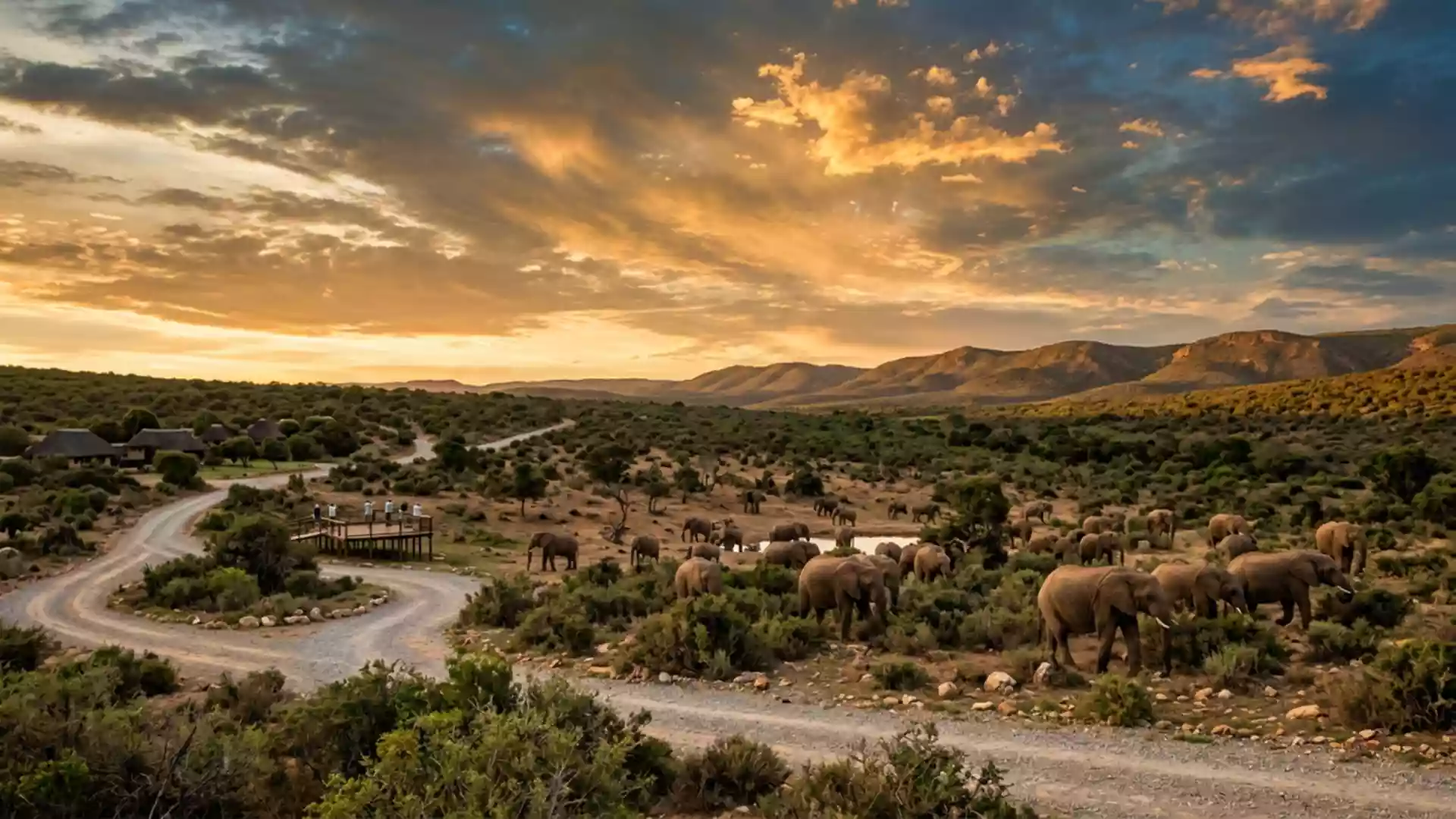
Addo Elephant National Park in South Africa’s Eastern Cape combines inland thicket, river valley and a coastal section linked to Algoa Bay. The park was proclaimed in 1931 and is tied to the name of Sidney Skaife and the early protection of elephants in the Sundays River area. Thicket, valley and coast in one park …

Addo Elephant National Park in South Africa’s Eastern Cape combines inland thicket, river valley and a coastal section linked to Algoa Bay. The park was proclaimed in 1931 and is tied to the name of Sidney Skaife and the early protection of elephants in the Sundays River area.

Thicket, valley and coast in one park

The southern section lies in the Sundays River valley south of the Suurberg Range, north of Gqeberha. Its landscape of low thicket, rounded hills and river-country sits beside the park’s coastal extension toward the bay.

Britannica describes the northern section as part of the Winterhoek Mountains, with deep ravines and rounded hills. That mountain section was originally established as Zuurberg National Park in 1985 and later joined the wider park in 1995. Winterhoek Mountains

The park’s elephant story

Addo Elephant National Park began as a reserve for the remaining elephants of the region, and the park name still reflects that origin. The modern park is associated with Stephen Harold Trollope, who served as the first park manager, and with the drive to protect the last surviving elephants.

The park’s public identity is shaped by elephants, but also by black rhino, lion and buffalo. A broad wildlife park has grown from that first reserve, while the name has stayed rooted in elephants and in the Eastern Cape landscape. proclaimed in 1931

Algoa Bay and the offshore side

The park extends beyond the inland reserve into a marine protected area around islands in Algoa Bay. Addo’s coastal reach includes Bird Island and St Croix Island, along with waters and shore habitat on the Eastern Cape coast.

That coast adds another layer to a park best known for land mammals. The setting brings together thicket, dunes, island groups and marine habitat in one protected landscape. Algoa Bay

Visiting Addo Elephant National Park: what travellers from Western Europe should know

  • The park lies in the Eastern Cape, north-east of Gqeberha, with road access from the Addo area and the wider Sundays River Valley. It also reaches to the coast and the offshore island groups in Algoa Bay.
  • The terrain ranges from thicket and valley floor to ravines, mountain sections and coastal ground. The park covers large, varied country rather than a single flat reserve.
  • The official language is English and the currency is the South African rand.
  • Entry requirements depend on your nationality; UK travellers can check the FCDO travel advice at gov.uk/foreign-travel-advice, Irish travellers the Department of Foreign Affairs at ireland.ie.

Searching for Addo Elephant National Park on social platforms

These links open searches for Addo Elephant National Park on each platform.

Frequently asked questions about Addo Elephant National Park

Where is Addo Elephant National Park?

It is in South Africa’s Eastern Cape, north-east of Gqeberha, with a southern section in the Sundays River valley and coastal parts near Algoa Bay.

What should a visit to Addo Elephant National Park feel like?

The place combines inland thicket, mountain country and coast. Elephants remain central, but the park also includes river, island and marine landscapes.

What makes Addo Elephant National Park distinctive?

Its shape and extent set it apart: a land park that reaches from the Sundays River valley to Algoa Bay. The name, the 1931 proclamation and the linked terrain remain its strongest markers.

Disclaimer…

Read More at the Source

Category: NewsTag: addo, news
September 4, 2026 by Addo and Kirkwood Blogger

A Simple Budget Friendly Way to Answer ONE Question

Table of Contents You drive away from the house and halfway down the road you ask yourself that dreaded question; “Did I close the garage door on my way out?” You carry on, and for the rest of the journey the question nags. At some point you either turn back to check or you decide …

Table of Contents

You drive away from the house and halfway down the road you ask yourself that dreaded question; “Did I close the garage door on my way out?” You carry on, and for the rest of the journey the question nags. At some point you either turn back to check or you decide to trust that you closed it and carry on.

A garage door monitoring sensor removes this entirely. You open the app, see the closed status and move on. Or you see it is open, close it remotely (if you have a smart garage opener), and move on. The round trip is ten seconds.

Beyond the daily uncertainty, there are properties where garage security is genuinely important — attached garages with direct internal access to the house, garages storing high-value vehicles or tools, or properties where the garage is a routine entry point that the alarm system does not currently cover.

There are many effective solutions – mostly stand alone, so it makes sense to use a solution that will fit seamlessly into an existing home automation eco-system or even be the first step in home automation AND on a budget.

The Stratlec solution does NOT explicitly require a qualified electrician to install or run cables either – literally lick, stick and activate to control from a FREE Smartphone App with NO monthly subscriptions.

The Stratlec Solution:

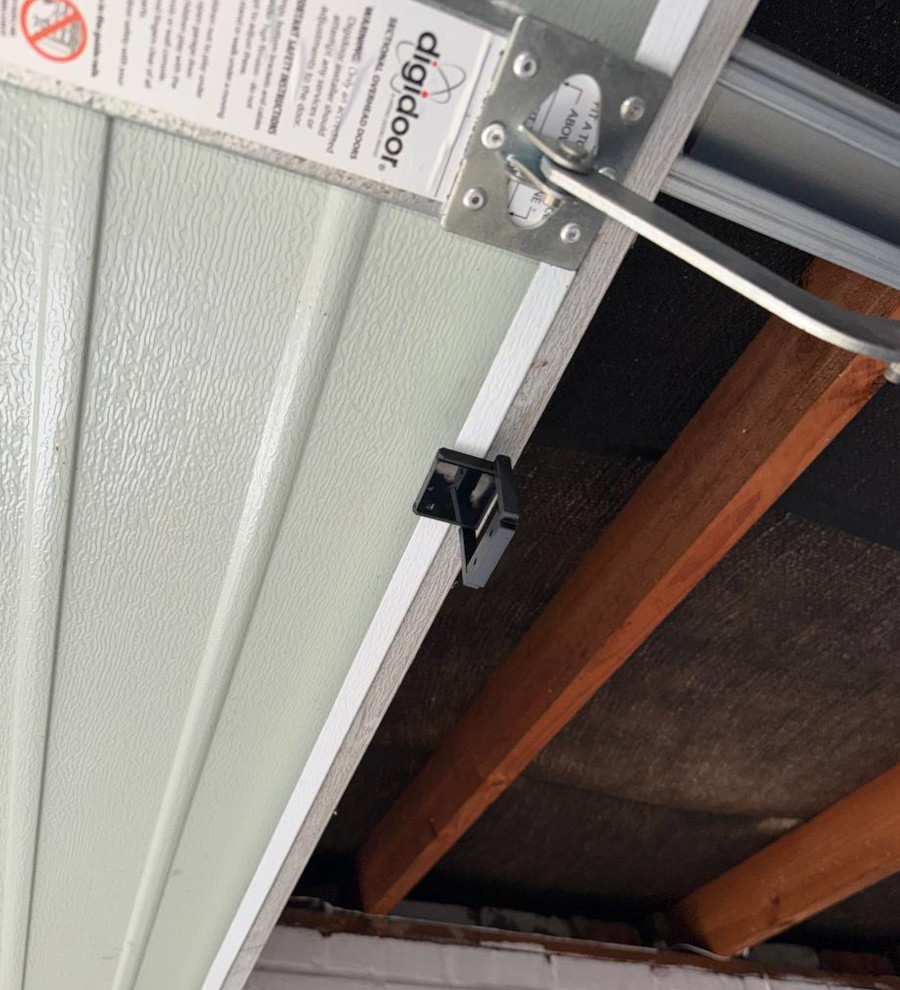
Combine the Shelly BLU Door/Window Sensor with our bespoke Shelly BLU Door/Window Hinged Bracket, stick or drill it onto your garage door, connect the FREE Shelly App and you have peace of mind.

Parts Needed

  • Shelly BLU Door/Window Sensor: A Bluetooth-based sensor used to detect the open or closed state of your garage door (available at Stratlec Online).
  • Shelly BLU Door/Window Hinged Bracket: A specialized mounting bracket designed to accommodate the unique physical movement and angles of a garage door (available at Stratlec Online).

Skills Needed

  • Basic smartphone navigation (downloading apps and enabling Bluetooth).
  • Simple mechanical installation (peel-and-stick adhesive mounting or screwing brackets into place).

Tools Needed

  • Smartphone (iOS or Android) with Bluetooth enabled.
  • Screwdriver or power drill (optional, depending on whether you choose to screw the bracket in or use heavy-duty double-sided tape).
  • Cleaning cloth and rubbing alcohol (to prep the mounting surface on the garage door).

Shelly App Installation

  • Open the App Store (iOS) or Google Play Store (Android) on your smartphone.
  • Search for Shelly Smart Control and download/install the application.
  • Open the app and create a new account or log in if you already have an existing profile.
  • Turn on your phone’s Bluetooth and follow the on-screen prompts to pair and set up your new Shelly BLU Door/Window Sensor
Shelly BLU Door/Window Sensor AND Shelly BLU Hinged Bracket – no wires, no hassles, no subscriptons, remote monitoring. Photo: Stratlec Online

Boilerplate:

Released on behalf of: Stratlec Online

Company Web site: https://stratlec.co.za/shop/

Link to More Information: https://stratlec.co.za/shop/shelly-blu-door-window/

Submitted by: Alan Straton

Contact Alan Straton: alan@stratlec.co.za

CLICK HERE to submit your BUDGET FEATURED Press Release to MyPR.co.za.

Track Your Press Release HERE:

Check Online Visibility

Verify where this release is currently indexed:

My Press Release (MyPR) provides free South African targeted content and press releases for on and off line publishers and media.

Registering on MyPR enables public relations companies and practitioners to post articles under their own author name.

Public Relations Companies and practitioners, event organisers, sports and political writers use MyPR as a distribution mechanism for their press releases, content, images and news.

A forever free subscription allows publishers and media free access to all press releases, content and images on MyPR.

Category: NewsTag: addo, mypr, news, press release
August 29, 2026 by Addo and Kirkwood Blogger

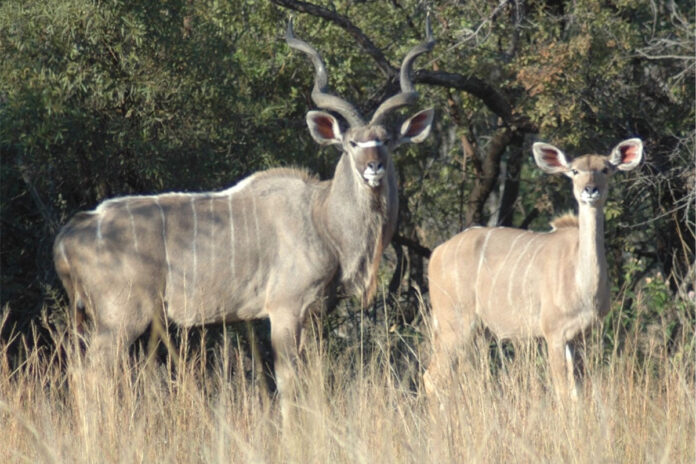
Cases of lameness in kudu in Addo Elephant National Park investigated

SANParks is investigating an increase in cases of lameness among kudu in the Addo Elephant National Park in the Eastern Cape. The development comes as the province continues to deal with an outbreak of foot-and-mouth disease (FMD), prompting SANParks to notify the State Veterinary Department. READ | How much does it cost to: Visit South …

SANParks is investigating an increase in cases of lameness among kudu in the Addo Elephant National Park in the Eastern Cape.

The development comes as the province continues to deal with an outbreak of foot-and-mouth disease (FMD), prompting SANParks to notify the State Veterinary Department.

READ | How much does it cost to: Visit South Africa’s national parks in 2026/27?

ADVERTISEMENT

Samples were collected from affected kudu and tested for FMD.

All tests have returned negative, SANParks confirmed.

Despite the negative results, authorities are continuing to investigate what may be causing the unusual increase in lameness.

Vehicles sprayed at Addo Elephant National Park

SANParks said it has also strengthened its biosecurity measures at the park in response to the ongoing FMD outbreak in the Eastern Cape.

Since earlier this month, all vehicles entering Addo Elephant National Park have been required to undergo mandatory spraying.

The measure is intended to reduce the risk of FMD being introduced into the park and to protect its wildlife and ecological integrity.

ADVERTISEMENT

While FMD testing on the affected kudu has been negative, SANParks said it is taking a precautionary approach while veterinary investigations continue.

Cause of lameness still unknown

The organisation is working with veterinary authorities to establish the underlying cause of the lameness.

“Samples were collected from affected animals for testing, which have since returned as negative for FMD,” SANParks said.

“Investigations into the cause of the lameness are ongoing.”

SANParks said it will continue working closely with the relevant veterinary authorities as the investigation progresses.

For now, the negative FMD results provide some reassurance, but the cause of the kudu’s condition remains under investigation.

Have you ever visited

Cases Of Lameness In Kudu In Addo Elephant National Park Investigated

South African National Parks (SANParks) is aware of the increase in cases of lameness among kudu in Addo Elephant National Park in the Eastern Cape.

Due to the ongoing Foot-and-Mouth Disease (FMD) outbreak… pic.twitter.com/MdIAuQcoA7

— SANParks (@SANParks) August 28, 2026

Read More at the Source

Category: NewsTag: addo, news
August 20, 2026 by Addo and Kirkwood Blogger

Who Actually Saves When Smart Meters are Installed?

Smart Tools vs Less Smart Meters Is Shelly Smarter than Eskom? Table of Contents Eskom’s Claim Eskom Smart Meter Photo: Eskom Eskom are actively encouraging consumers to switch to Smart Meters. Listening to SAFM this morning one of the presenters read out Eskom’s advert (radio’s version of editorial!) and one of the claim in the …

  • Smart Tools vs Less Smart Meters
  • Is Shelly Smarter than Eskom?

Table of Contents

Eskom’s Claim

Eskom Smart Meter Photo: Eskom

Eskom are actively encouraging consumers to switch to Smart Meters. Listening to SAFM this morning one of the presenters read out Eskom’s advert (radio’s version of editorial!) and one of the claim in the script, amongst others, was that Smart Meters “save energy”. The way that it was worded made me wonder just how Smart Meters will save me energy (money) or magically make individual appliances more energy efficient if installed.

Is this correct?

The bottom line is that ultimately, a smart meter does not inherently generate electricity or make individual appliances more energy-efficient on its own. Instead, it saves energy by modifying human behaviour, automating load reductions during critical peak times, and preventing system-wide overloads, effectively lowering overall demand on the national grid.

So, it could be said, that Eskom is using an obfuscation technique to ‘encourage’ consumers to sign up to being more controlled at the main electrical entry point into their properties.

So what is the actual story around Smart Meters?

When Eskom claims that smart meters “save energy,” they are referring to a combination of demand-side management, automated grid balancing, and behavioural changes enabled by two-way digital communication.

Unlike traditional mechanical meters – which simply record how much electricity has been used after the fact – smart meters actively change how energy is consumed through several practical mechanisms:

Load Limiting and Remote Control

Smart meters feature two-way communication capabilities that allow utilities like Eskom to manage grid constraints dynamically.

During periods of high grid strain, Eskom can initiate load limiting rather than plunging an entire neighbourhood into total darkness (load shedding).

The smart meter caps the maximum output power allowed into a home for a defined period, prompting consumers to manually or automatically turn off heavy-draw appliances (such as geysers, stoves, pool pumps, and washing machines).

If high-consumption appliances are left running past a warning threshold, the meter temporarily trips or disconnects supply to avoid a total system overload, directly forcing a reduction in energy demand.

Targeting High-Energy Assets (Geysers)

Water heating (geysers) accounts for a massive percentage of domestic electricity demand in South Africa – often up to 35% during peak periods. Smart meter and smart geyser projects allow utilities or homeowners to remotely monitor and control geysers. By scheduling heating cycles to off-peak hours or temporarily turning them off during grid emergencies, utilities drastically shave down peak-hour energy consumption without permanently cutting off essential power (like lights, routers, and medical devices).

Real-Time Consumer Awareness and Behaviour Shift

Traditional meters hide usage patterns until the monthly bill arrives. Smart meters give consumers (and automated home systems) granular, real-time data regarding when and how much electricity they are consuming. Studies show that when households have visibility into their consumption patterns – such as identifying “phantom loads” (appliances left on standby) or energy spikes – they naturally modify their behaviour to eliminate waste and lower costs.

A Better ROI From Shelly

Now, if Eskom really wanted to directly benefit consumers then they would be touting Smart Home Automation via products from Shelly.

These products will save significantly more energy for a consumer than just a smart meter alone.

While a smart meter provides visibility and passive tracking of electricity usage (or allows the utility to manage load limits), a smart automation ecosystem like Shelly actively intervenes to reduce consumption, eliminate waste, and automate energy efficiency.

Why Shelly products achieve greater energy savings:

Passive Monitoring vs. Active Automation

Smart Meter: A smart meter tells you how much electricity you used and when you used it, but it cannot turn off appliances for you or change your home’s behaviour on its own.

Shelly Products: Shelly devices feature smart relays, plugs, and switches (such as the Shelly 1PM or Shelly Plug) that actively control circuits and appliances. They can automatically shut off power based on schedules, timers, or triggers, removing human error (like forgetting to turn off an appliance or light).

Eliminating “Phantom Loads” (Standby Power)

Smart Meter: Cannot see individual appliance standby draws hidden inside your home’s total aggregate load.

Shelly Products: Smart plugs and switches can completely cut power to entertainment centres, computers, and kitchen appliances when they are not in use, entirely eliminating phantom/standby power consumption.

Granular Circuit and Appliance Control

Smart Meter: Measures total household consumption from the main distribution board.

Shelly Products: Devices can be installed on specific high-draw circuits or individual appliances – such as geysers, pool pumps, and air conditioners – allowing you to automate precise run-times (e.g., running a pool pump only during specific solar or off-peak hours).

Integration with Solar and Inverter Systems

Smart Meter: Standard utility meters simply measure net import/export.

Shelly Products: Using devices like the Shelly Pro 3EM alongside Shelly smart relays allows households with solar panels to track excess solar generation in real time and automatically divert surplus energy to heavy loads (like heating elements or pool pumps) rather than letting it go to waste.

A smart meter is an informational tool that helps you see your energy use, whereas Shelly automation products are intervention tools that actively stop energy waste. Combining them – or using Shelly’s own energy monitoring meters with their smart switches – yields a far greater reduction in overall energy consumption and electricity costs.

Shelly Pro 4PM

Shelly Pro 4PM. Photo: Stratlec

An example of a Smart Shelly Device is the Shelly Pro 4PM which has 4 channels with Power Monitoring. in addition you can see exactly how many Watts each of the four circuits is using; The Shelly 4 PM supports up to 16A per channel, with a total device limit of 40A and includes professional-grade protection against overpower, overvoltage, and overtemperature.

All the Shelly devices are capable of being live monitored and adjusted on your mobile device WITHOUT a cloud subscription of any kind.

Stratlec also has a range of Shelly Accessories to make installation simpler and faster.

Links:

Boilerplate and Editor’s Notes.
More Info on Who Actually Saves When Smart Meters are Installed? here:
X: https://twitter.com/MyPE
LinkedIn: https://www.linkedin.com/company/stratlec/
Facebook: https://www.facebook.com/StratonElectrical/

CLICK HERE to submit your press release to MyPR.co.za.

Track Your Press Release HERE:

Check Online Visibility

Verify where this release is currently indexed:

Pages: Page 1 Page 2

My Press Release (MyPR) provides free South African targeted content and press releases for on and off line publishers and media.

Registering on MyPR enables public relations companies and practitioners to post articles under their own author name.

Public Relations Companies and practitioners, event organisers, sports and political writers use MyPR as a distribution mechanism for their press releases, content, images and news.

A forever free subscription allows publishers and media free access to all press releases, content and images on MyPR.

Category: NewsTag: addo, mypr, news, press release
August 13, 2026 by Addo and Kirkwood Blogger

Let’s Chat About Special Needs Children (And My Special School Friend)

As a second time around parent to two Special Needs boys – one with mild Autism and one with ADHD deluxe I had a very rude (and earth shattering) awakening to this genre of education. My first two children excelled at traditional schools and went on to honours, masters and jobs that set them up …

As a second time around parent to two Special Needs boys – one with mild Autism and one with ADHD deluxe I had a very rude (and earth shattering) awakening to this genre of education.

My first two children excelled at traditional schools and went on to honours, masters and jobs that set them up for life.

My second time around sons have enabled me to find the depths of patience that I never knew existed. Admittedly they turned my life around – the first major change was getting used to being woken up at 4:00 am day after day, week after week, month after month and year after year. Thankfully that has eased off dramatically and sleep deprivation is slowly being cancelled.

Parents with Special Needs children have major added expenses in their lives – therapy, counselling, special schooling, medications that all result in tens of thousands or rands more per month than a comparable child in a traditional school.

Try R9000 a month per child for schooling that offers one teacher per less than 10 children or over a thousand rand a month for chronic medication that NO private medical aid or government dispensary will cover and you start to see why special needs parents are ‘heads down’ and focused on surviving and creating an environment for their children that will allow them to thrive and join society in a positive manner when they leave school.

The Saints of Elsen:

My school mate, Mark Barclay, is the Headmaster at Elsen Academy and, as I say to him every time we chat; “Mark you are a saint with patience exceeding that of Job!” Imagine a few hundred special needs children under your care and you will understand why Mark and his dedicated staff are candidates for sainthood.

Sainthood is probably an apt term as the Elsen Academy is presently housed in one of Ken Denton’s buildings – the old Holy Rosary Convent, slap bang in the Central area.

Now, Central has lost it’s charm and feeling of safety as the drug dealers and prostitutes roam Bird Street – not something that one wants impressionable children to be exposed to!

In addition there are no grassy fields for the children to play sport on – all they have for football games is an old tennis court with artificial turf thereon.

We all know that Ken marches to the slow beat of his own drum so the school is in a constant state of construction – it has been so since John and Nicholas started there 8 or so years ago. Once again not so wonderful for young children. Let me hasten to add, though, that the work that has been completed is excellent.

Headboy:

I have another friend from the Old Grey Class of ’81 – Michael Jarvis (we know him as Headboy). Now Michael also had a child at Elsen Academy. He recently asked the Class of ’81 if they could assist Elsen Academy with a dream that they have, saying; “You all know the extraordinary work that Mark Barclay has been doing with Elsen in Bird Street. My own son went there from junior school and this year successfully completed his Masters in the UK — a living example of what Mark’s vision, the school’s model and the dedication of his team can achieve.”

Headboy was the Chair of the Elsen Board for many years, and one of the boards great ambitions has always been to create a secure campus — a true home and the heart of the Alma Mater that means so much to all.

As Headboy says; “Despite our best efforts, during my time as Chairman we never quite managed to make that happen. Now, incredibly, the opportunity has presented itself.”

The Bottom Line – Act Fast:

Curro has closed the St. Georges Primary School in Park Drive and put the campus on the market. Elsen Academy made an offer before the auction date but were turned down. Now they estimate that they would have to up their offer by around R4 Million in order to secure the St. Georges Campus for the Elsen Academy and have embarked on a public appeal to the Elsen Community and the South African Public at large to assist with pledges by 24 August 2026 to reach that goal.

Insiders tell me that with the estimated purchase price the school will be paying less per month on a bond than what they pay for rental at present – so keen minds have been applied to make sure that the move is for all the right reasons that include financial!

The chance to acquire the St George’s School campus is not simply a property opportunity. It could be the defining moment in Elsen’s history — creating the secure, permanent campus these children need and giving this very special institution the platform to thrive for generations.

Imagine, if you will, just how much a school with a pool and grass will inspire these children to greater heights.

If you can assist please contact Mark directly on 082 874 1888 or mark@elsen.co.za

Do You Know Jannie Mouton?

Curro Holdings is owned by the Jannie Mouton Foundation, a philanthropic non-profit trust. The foundation acquired the private school network in a R7.2 billion deal that delisted Curro from the Johannesburg Stock Exchange (JSE) and transitioned it into a public benefit organization.

So, if you know Mr Mouton well enough to pick up the phone and have a chat I, for one, would be forever grateful if you could appeal to his kind heart and ask if he is willing to make a private deal with Elsen – no charity, just a deal that will ensure that Gqeberha’s beloved historical St Georges Park Campus will be preserved for generations to come and not fall prey to a developer who will rob future generations of this magnificent building.

The elegant Victorian mansion ‘Knockfierna’ in Park Drive is entirely suitable for Elsen Academy. It ushered in the 20th century as the home of a wealthy wool merchant and farmer, John Daverin. Daverin was also a Member of Parliament and philanthropist (like Jannie Mouton). Now largely forgotten, his legacy endured in the form of the St Georges Preparatory School, let’s continue the properties long standing use as a school and make Elsen Academy’s dream come true.

Images:


Video:

https://www.youtube.com/channel/UCGRtp5-7dZ86DU-pmAiEvqg/

Let’s Chat About Special Needs Children (And my Special School Friend)

Links:

Boilerplate and Editor’s Notes.
More Info on Let’s Chat About Special Needs Children (And my Special School Friend) here:

Facebook: https://www.facebook.com/Elsen.Academy

CLICK HERE to submit your press release to MyPR.co.za.

My Press Release (MyPR) provides free South African targeted content and press releases for on and off line publishers and media.

Registering on MyPR enables public relations companies and practitioners to post articles under their own author name.

Public Relations Companies and practitioners, event organisers, sports and political writers use MyPR as a distribution mechanism for their press releases, content, images and news.

A forever free subscription allows publishers and media free access to all press releases, content and images on MyPR.

Category: NewsTag: addo, mypr, news, press release
August 3, 2026 by Addo and Kirkwood Blogger

Zuurberg Trails

There are two trails in the Zuurberg section of the Addo Elephant National Park. The Cycad Trail is 2.4km long and takes about an hour. If it’s a longer, moderate hike you’re looking for, then the 12km Doringnek Trail via Otto’s Pool is the one for you. The trail takes about 5 hours and includes …

There are two trails in the Zuurberg section of the Addo Elephant National Park.

The Cycad Trail is 2.4km long and takes about an hour. If it’s a longer, moderate hike you’re looking for, then the 12km Doringnek Trail via Otto’s Pool is the one for you. The trail takes about 5 hours and includes some truly beautiful scenery.

Zuurberg Hiking Trail fees are charged as per Conservation/Entry Fees.

Photos by Theo Fourie

The post Zuurberg Trails appeared first on Addo Tourism.

Choose your Addo Experience:

  • Top 5 Cheapest Addo Accommodation Choices.
  • Top 7 Exclusive Addo Accommodation Choices.

Source: Addotourism.co.za.

Category: NewsTag: addo, Addo Tourism, news
July 17, 2026 by Addo and Kirkwood Blogger

Beyond The Big 5 – Five Extraordinary South African Safari Experiences.

No safari vehicles idled nearby. No radios crackling with reports of a leopard sighting. No queue of Land Cruisers waiting for the perfect lion photograph, and yet this felt every bit as wild as any … Read More at the Source

No safari vehicles idled nearby. No radios crackling with reports of a leopard sighting. No queue of Land Cruisers waiting for the perfect lion photograph, and yet this felt every bit as wild as any …

Read More at the Source

Category: NewsTag: addo, news
July 17, 2026 by Addo and Kirkwood Blogger

Beyond The Big Five: 5 Extraordinary South African Safari Experiences.

No safari vehicles idled nearby. No radios crackling with reports of a leopard sighting. No queue of Land Cruisers waiting for the perfect lion photograph, and yet this felt every bit as wild as any … Read More at the Source

No safari vehicles idled nearby. No radios crackling with reports of a leopard sighting. No queue of Land Cruisers waiting for the perfect lion photograph, and yet this felt every bit as wild as any …

Read More at the Source

Category: NewsTag: addo, news
July 17, 2026 by Addo and Kirkwood Blogger

Extraordinary South African Safari Experiences Beyond The Big 5

In South Africa’s Eastern Cape, Addo Elephant National Park is renowned for its thriving elephant population. But beyond the main section of the park, Hiddn in Addo offers a different kind of safari, … Read More at the Source

In South Africa’s Eastern Cape, Addo Elephant National Park is renowned for its thriving elephant population. But beyond the main section of the park, Hiddn in Addo offers a different kind of safari, …

Read More at the Source

Category: NewsTag: addo, news
July 16, 2026 by Addo and Kirkwood Blogger

In 1996, one man saved a doomed elephant herd: Now his legacy aids a rewilding reserve in South Africa’s Eastern Cape

Eastern Cape’s elephant population faced near extinction due to agricultural conflicts. Just eleven elephants survived, leading to the creation of Addo Elephant National Park. These elephants have … Read More at the Source

Eastern Cape’s elephant population faced near extinction due to agricultural conflicts. Just eleven elephants survived, leading to the creation of Addo Elephant National Park. These elephants have …

Read More at the Source

Category: NewsTag: addo, news
July 8, 2026 by Addo and Kirkwood Blogger

The Mackay Bridge over the Sundays River

Standing gracefully across the Sundays River between Colchester and Cannonville, the Mackay Bridge is one of the Eastern Cape’s most iconic historic river crossings. Although no longer open to vehicles, the bridge remains a favourite destination for walkers, photographers, birdwatchers and visitors looking to soak up the tranquil beauty of the Sundays River estuary. Before …

Standing gracefully across the Sundays River between Colchester and Cannonville, the Mackay Bridge is one of the Eastern Cape’s most iconic historic river crossings. Although no longer open to vehicles, the bridge remains a favourite destination for walkers, photographers, birdwatchers and visitors looking to soak up the tranquil beauty of the Sundays River estuary.

Before a bridge existed, travellers making the journey between Port Elizabeth (now Gqeberha) and Grahamstown (now Makhanda) relied on a ferry, or pont, to cross the river. This crossing became a vital link on one of the Cape Colony’s busiest transport routes during the mid-1800s. However, repeated flooding proved disastrous, washing away the original ferry in 1874 and its replacement the following year, highlighting the urgent need for a permanent crossing.

After years of planning, the first Mackay Bridge was officially opened on 5 March 1895. It was named in honour of John Mackay, whose determination and advocacy were instrumental in securing its construction. The elegant steel and iron bridge was manufactured in Sheffield, England, before being shipped to South Africa and assembled across the Sundays River.

Nature, however, had other plans. Severe flooding during 1931–1932 badly damaged the bridge, necessitating its replacement. The present Mackay Bridge was completed at a cost of £25,000 and officially opened on 5 July 1938. For decades it served as the main road bridge across the Sundays River, carrying thousands of travellers heading between Gqeberha and the eastern parts of the province.

The construction of the nearby N2 bridge eventually took over this role, allowing the historic Mackay Bridge to retire from motor traffic. Today it is reserved for pedestrians and cyclists, offering uninterrupted views across the broad estuary, surrounding wetlands and distant sand dunes.

The bridge has become one of the best places in the area to enjoy spectacular sunsets over the Sundays River. Its peaceful surroundings also attract a rich variety of birdlife, making it a popular stop for birdwatchers, while photographers are drawn by its graceful steel structure framed against the ever-changing colours of the sky.

The post The Mackay Bridge over the Sundays River appeared first on Addo Tourism.

Choose your Addo Experience:

  • Top 5 Cheapest Addo Accommodation Choices.
  • Top 7 Exclusive Addo Accommodation Choices.

Source: Addotourism.co.za.

Category: NewsTag: addo, Addo Tourism, news
July 3, 2026 by Addo and Kirkwood Blogger

Akufo-Addo urges African youth to champion education for continental transformation

Former President Nana Addo Dankwa Akufo-Addo has challenged young people across Africa to become leading advocates for education, describing access to quality learning as the single most important … Read More at the Source

Former President Nana Addo Dankwa Akufo-Addo has challenged young people across Africa to become leading advocates for education, describing access to quality learning as the single most important …

Read More at the Source

Category: NewsTag: addo, news
June 17, 2026 by Addo and Kirkwood Blogger

MyPR Expands Regional Reach for Tourism Promoters with Exclusive Gqeberha Showcase on MyGQ.co.za

GQEBERHA, Eastern Cape – MyPR, a leading South African press release distribution platform, is pleased to announce a strategic partnership with MyGQ.co.za, a dedicated digital hub for the city of Gqeberha. Effective immediately, tourism-focused press releases submitted to MyPR can now be automatically showcased in a specialized Tourism Hub on MyGQ.co.za. Travel Category: This new …

GQEBERHA, Eastern Cape – MyPR, a leading South African press release distribution platform, is pleased to announce a strategic partnership with MyGQ.co.za, a dedicated digital hub for the city of Gqeberha. Effective immediately, tourism-focused press releases submitted to MyPR can now be automatically showcased in a specialized Tourism Hub on MyGQ.co.za.

Travel Category:

This new integration provides an invaluable and targeted visibility boost for the Eastern Cape’s vibrant tourism sector. To access this feature, tourism promoters, DMOs, accommodation providers, tour operators, and related businesses simply need to submit their releases through MyPR and select the “TRAVEL” category.

When the Travel category is selected, the release is queued for showcase on the MyGQ.co.za Tourism Hub. The showcase will display a designated snippet of the release to capture interest, while crucially preserving all active hyperlinks that lead directly back to the full press release hosted on MyPR. This ensures maximum traffic and SEO benefit for the originator.

“Gqeberha and the Eastern Cape have an incredible story to tell, and this partnership with MyGQ.co.za is a significant step forward in helping local tourism businesses tell it,” said Alan Straton at MyPR. “By simplifying the process to just ‘Submit and Select,’ we are providing a friction-free amplification channel that gets high-quality, relevant tourism news in front of a dedicated regional and national audience.”

This Gqeberha showcase on MyGQ.co.za is a premium addition to MyPR’s existing robust distribution network. All releases, regardless of category, will continue to be published on the primary MyPR platform and MyZA, as part of the Free Plan. Submissions under the Paid Plan retain their established access to a diverse array of various city-focused publications.

The partnership reinforces MyPR’s commitment to providing targeted, localized visibility solutions alongside broad national reach, empowering South African businesses of all sizes to control their narrative and connect with their audience.

About MyPR:

MyPR is a comprehensive press release distribution service in South Africa, offering a straightforward platform for businesses and PR professionals to publish and amplify their news across the digital landscape.

About MyGQ.co.za:

MyGQ.co.za is a focused digital publication and community resource serving the vibrant city of Gqeberha, covering news, lifestyle, and tourism.

Images:

Select the TRAVEL Category on MyPR to be Showcased on the MyGQ Tourismn Hub. Photo: MyPR/Gemini

Links:

Boilerplate and Editor’s Notes.
More Info on MyPR Expands Regional Reach for Tourism Promoters with Exclusive Gqeberha Showcase on MyGQ.co.za here:
X: https://twitter.com/MyPE
Facebook: https://www.facebook.com/StratonElectrical/

CLICK HERE to submit your press release to MyPR.co.za.

My Press Release (MyPR) provides free South African targeted content and press releases for on and off line publishers and media.

Registering on MyPR enables public relations companies and practitioners to post articles under their own author name.

Public Relations Companies and practitioners, event organisers, sports and political writers use MyPR as a distribution mechanism for their press releases, content, images and news.

A forever free subscription allows publishers and media free access to all press releases, content and images on MyPR.

Category: NewsTag: addo, mypr, news, press release
June 15, 2026 by Addo and Kirkwood Blogger

The Flightless Dung Beetle

There are over 800 species of dung beetle in Southern Africa. The Flightless Dung Beetle (Circellium bacchu) is a very rare subspecy only found in the Addo Elephant Park and surrounding reserve. The flightless dung beetle is regarded as one of the largest species of dung beetles in the world. They can roll up to …

There are over 800 species of dung beetle in Southern Africa. The Flightless Dung Beetle (Circellium bacchu) is a very rare subspecy only found in the Addo Elephant Park and surrounding reserve.

Addo Elephant National Park Flightless Dung Beetle

The flightless dung beetle is regarded as one of the largest species of dung beetles in the world. They can roll up to 50 times their own weight!

As opposed to wings, flightless dung beetles have a tightly sealed elytra (wing case), which creates a convective cooling system where heat is drawn away from their body. Thus, they are perfectly suited to hot regions.

They feed on elephant, rhino and buffalo excrement. The dung serves many purposes for these beetles, which include a source of nourishment, an ideal den for breeding, and a gift to lure in a female for some male species.

Addo Elephant National Park Flightless Dung Beetle

When they roll their dung along the ground, the movement helps to aerate the soil and fertilize the ground by spreading animal matter like compost.

According to recent studies in South Africa, dung beetles use the Milky Way to navigate their way at night and move in a line to reflect it. Astonishingly, they are the first known species to do this in the entire animal kingdom.

Source – Shamwari Private Game Reserve

The post The Flightless Dung Beetle appeared first on Addo Tourism.

Choose your Addo Experience:

  • Top 5 Cheapest Addo Accommodation Choices.
  • Top 7 Exclusive Addo Accommodation Choices.

Source: Addotourism.co.za.

Category: NewsTag: addo, Addo Tourism, news
June 14, 2026 by Addo and Kirkwood Blogger

Mandela Bay Ranked Third Most Murderous Capital – How We Will Turn That Around

Nelson Mandela Bay recently received the dishonour of being ranked the third most violent city in the world, with a murder rate climbing into the triple digits – a first for any South African city ranked. The city made the shocking climb on the annual ranking compiled by the Mexican Council for Public Security and …

Nelson Mandela Bay recently received the dishonour of being ranked the third most violent city in the world, with a murder rate climbing into the triple digits – a first for any South African city ranked.

The city made the shocking climb on the annual ranking compiled by the Mexican Council for Public Security and Criminal Justice in association with the Mexican Commission on Human Rights.

This on the back of the Nelson Mandela Bay murder rate surging to a record 119.8 per 100 000 citizens in 2025. Puerto Principe in Haiti leads the pack with 197.43 murders per 100 000 citizens followed by Bebhayo, Ecuador with 166.02 murders per 100 000 citizens.

How Do We Turn That Around?

For many years Port Elizabeth was known as; “The Friendly City”, “the Windy City”, “The Family Friendly Destination”.

Then we moved on to being; “The Ghost on the Coast” with many residents saying; “Will the last one to leave PE please turn off the lights!” And yet, through all this, we prevailed, together.

All through these dark times of political infighting and directionless City ‘Leaders’ we have clung to one small belief:

“Together we can prevail“.

We no longer attract huge events, the Springboks throw us scraps, Bafana Bafana are nowhere to be seen, Ironman is teetering on the edge, business is jittery, our automotive industry is experiencing unprecedented challenges, our infrastructure is failing, our city is a mess and yet we still believe that we WILL prevail.

Let’s make no mistake here – we are seeking to accomplish the first task to recovery and that is to PREVAIL, growth and stature will come later.

Why Invest in Gqeberha?

  • Pros: Strategic Location and Gateway Status, Steady Sector Growth, Infrastructure and Development Support, Industrial Foundation, Climate and Natural Assets, Incentives for Sustainability
  • Cons: Beachfront Safety and Vandalism, Public Infrastructure Reliability, Skills Gap, Socio-Economic Instability, Management and Policy Implementation.

How do We Turn it all Around?

For far too lomg we have relied on ‘government’ to enable tourism, events and other large movements of tourism – like cruise ships – to advertise, finance and manage.

For far too long we have relied on money and resources from government to market our city.

We have since found out that the old axiom of “Building your house on another man’s land” still holds true. If that other man changes allegiance or loses a dynamic player then a very large swathe of tourism products suffer.

We do not want or need Nelson Mandela Bay’s payoff line to become; “Will the last one to leave the city please cover the graves?”

So here is the Bottom Line:

We have built this resource – MyGQ.co.za – MyGQ positions itself as a tourism hub and was founded on a collaborative model. We believe that when local accommodation, transport, tour, and hospitality operators unite under a single banner, the entire local economy lifts. We want every operator in the Nelson Mandela Bay region to look at this platform and feel, “This belongs to us.”

So, all we need to do as a first step is to market Gqeberha in preference to to Nelson Mandela Bay – until the dust has settled around Nelson Mandela Bay being in the Top Three Murder Capital of the World.

Because we want to remove all financial barriers for local tourism, we don’t directly monetize the MyGQ Tourism Hub through commissions or expensive paywalls.

Everything for our tourism partners on MyGQ is free.

After all:

  • When the City prospers the incentive to do crime is lessened
  • When the City prospers we ALL prosper, and
  • Tourism needs to now step up and become that saviour.

Images:

Reasons to Invest in Gqeberha Tourism. Photo: Gemini


Links:

Boilerplate and Editor’s Notes.
More Info on Mandela Bay Ranked Third Most Murderous Capital – How We Will Turn That Around here:
X: https://twitter.com/MyPE
LinkedIn: https://www.linkedin.com/in/alanstraton/

CLICK HERE to submit your press release to MyPR.co.za.

My Press Release (MyPR) provides free South African targeted content and press releases for on and off line publishers and media.

Registering on MyPR enables public relations companies and practitioners to post articles under their own author name.

Public Relations Companies and practitioners, event organisers, sports and political writers use MyPR as a distribution mechanism for their press releases, content, images and news.

A forever free subscription allows publishers and media free access to all press releases, content and images on MyPR.

Category: NewsTag: addo, mypr, news, press release
June 10, 2026 by Addo and Kirkwood Blogger

Addo-Elefanten-Nationalpark: South Africa’s Big Seven Wilderness

At dawn in Addo-Elefanten-Nationalpark, better known locally as Addo Elephant National Park (“Addo-Elefanten-Nationalpark” in German usage), the air smells of dust and acacia as the first elephants emerge from the bush, their silhouettes glowing orange against the South African sky. A low rumble rolls across the valley, oxpeckers flash crimson on gray hides, and for …

At dawn in Addo-Elefanten-Nationalpark, better known locally as Addo Elephant National Park (“Addo-Elefanten-Nationalpark” in German usage), the air smells of dust and acacia as the first elephants emerge from the bush, their silhouettes glowing orange against the South African sky. A low rumble rolls across the valley, oxpeckers flash crimson on gray hides, and for a moment the only sound is the crunch of tusks on dry branches — a sensory overload that many American visitors describe as life?changing.

By the AD HOC NEWS Nature & Travel Desk — covers national parks, wildlife destinations, and nature-driven cultural travel worldwide for a U.S. and global English-speaking audience.

Addo-Elefanten-Nationalpark: The Iconic Landmark of Addo

Addo-Elefanten-Nationalpark, using the internationally known German designation for Addo Elephant National Park, is one of South Africa’s most remarkable conservation success stories and a rising favorite for U.S. travelers seeking a safari that feels both wild and manageable. The park lies in the Eastern Cape province near the small town of Addo, roughly an hour’s drive from the coastal city of Gqeberha (still widely known by its former name, Port Elizabeth). This is not just a place to check elephants off a list; it is a living landscape where centuries of ecological loss and restoration play out in real time.

According to South African National Parks (SANParks), the government agency that manages the park, Addo began as a small sanctuary for fewer than a dozen surviving elephants and has expanded into a multi?ecosystem reserve that stretches from inland bushveld to the Indian Ocean. While individual figures vary by year, official materials emphasize that Addo now protects one of the densest elephant populations in Africa alongside a full cast of other wildlife. Conservation organizations and publications such as National Geographic and the BBC have highlighted Addo’s unusual range of habitats, from spekboom thickets to sand dunes and offshore islands, which together support everything from flightless dung beetles to great white sharks.

For American travelers, the appeal of Addo-Elefanten-Nationalpark lies in this combination of accessibility and depth. The park is large enough to feel like true wilderness but compact enough that first?time visitors can self?drive, stay in comfortable rest camps, and still have a strong chance of seeing elephants, lions, buffalo, and more over a long weekend.

The History and Meaning of Addo Elephant National Park

The story of Addo Elephant National Park is inseparable from the wider history of wildlife in southern Africa. In the 19th and early 20th centuries, colonial expansion, commercial hunting, and agricultural development devastated elephant populations across the Eastern Cape. Historical accounts cited by South African environmental historians describe systematic culling campaigns aimed at protecting crops and farms, which left the Addo area’s elephants on the brink of extinction. By the 1920s, only a small remnant herd remained near Addo, and conflict with farmers intensified.

Responding to public concern and scientific advocacy, South African authorities declared a protected area for these elephants in the early 1930s, laying the foundation for what is now Addo Elephant National Park. Official SANParks histories explain that the park’s initial boundaries were modest and surrounded by farmland, and early management relied on methods that would be considered crude by today’s conservation standards. Yet the core idea — setting aside land where elephants and other wildlife could live without being hunted — mirrored the creation of major U.S. national parks like Yellowstone and Yosemite, which had emerged decades earlier for similar reasons of preservation.

Over the following decades, conservation strategies became more sophisticated. Fences were improved to reduce human–elephant conflict, veterinary science advanced, and ecologists began to understand the importance of restoring not only animals but also entire ecosystems. Expansion phases gradually added new land to the park, taking in more of the Albany thicket biome and eventually reaching down to the Indian Ocean coast. This process, documented in SANParks planning documents and South African conservation literature, transformed Addo from a small, embattled refuge into a major, multi?section national park.

Today, Addo Elephant National Park is widely recognized in South African tourism campaigns and wildlife research as a symbol of successful long?term conservation. It protects a continuum of habitats that includes inland bush, highland areas, coastal dunes, and marine zones with islands used by seabirds and seals. For U.S. readers, it may help to think of Addo as a combined Yellowstone?plus?Channel Islands scenario: a park that spans both land and sea, with iconic large mammals and important marine species under a single management umbrella.

Beyond biodiversity, Addo carries layered cultural meaning. Local communities, including descendants of indigenous Khoisan groups and later Xhosa and European settlers, maintain deep connections to this landscape. The park’s management has increasingly emphasized community engagement, job creation, and sustainable tourism. Public statements from SANParks stress that Addo’s success depends not only on protecting animals but also on supporting surrounding communities and balancing their needs with those of wildlife.

Architecture, Art, and Notable Features

Unlike urban landmarks or monumental buildings, Addo-Elefanten-Nationalpark is defined less by architecture and more by its natural features and park infrastructure. Still, the layout and design of visitor facilities play an important role in shaping the experience for American travelers. The main Addo Rest Camp, which hosts reception, lodging, a restaurant, and viewpoints, has been developed in a style that blends modestly with the landscape: low?rise buildings, thatched or metal roofs, and earth?tone materials designed to minimize visual intrusion on the surrounding bush. According to official descriptions by SANParks, accommodation ranges from simple chalets and rondavels (round huts typical of southern Africa) to more modern cottages and a campsite area, all designed with practical materials suitable for the sometimes harsh Eastern Cape climate.

One of the most distinctive human?made features in the park is its network of waterholes, some of which are artificially supplemented during dry periods to ensure wildlife can find water. Several of these waterholes are paired with hides or viewing areas near the main camp, allowing visitors to watch elephants, buffalo, and other animals at relatively close range while remaining safely behind barriers. Travel journalism from reputable outlets such as National Geographic and major newspapers has frequently highlighted the spectacle of 20, 30, or even more elephants crowding a single waterhole — a scene that can unfold in front of your cabin or from a designated lookout without the need for long game drives.

Art and interpretive displays at Addo tend to focus on education rather than grand aesthetic statements. Visitor centers and information boards present the story of elephant conservation, the role of species like the endangered flightless dung beetle, and the ecological importance of the succulent thicket vegetation that dominates much of the park. These materials, produced by SANParks and sometimes in collaboration with research institutions and NGOs, echo the interpretive style familiar to U.S. national park visitors: clear, accessible explanations supported by maps, photographs, and historical timelines.

Several notable natural features structure the park’s different sections. The main elephant area consists of undulating valleys covered in dense, greenish?gray thicket, ideal for elephants but surprisingly difficult for humans to penetrate on foot. Further south, coastal sections include long beaches, wind?sculpted dunes, and the cold, sometimes stormy waters of the Indian Ocean, where marine life such as whales, dolphins, and sharks are present. Offshore islands support breeding colonies of seabirds and seals. Together, these landscapes create a kind of open?air “gallery” of Southern African ecosystems.

Scientific institutions — including South African universities and international research groups — use Addo as a living laboratory. Peer?reviewed studies have examined everything from elephant behavior and vegetation dynamics to the genetics of smaller species. This research quietly shapes management decisions, such as how many elephants the ecosystem can support or how to manage predators like lions without causing excessive pressure on prey populations. For American readers accustomed to seeing the U.S. National Park Service collaborate with universities, this evidence?driven approach will feel familiar.

Visiting Addo-Elefanten-Nationalpark: What American Travelers Should Know

  • Location and how to get there: Addo Elephant National Park lies in South Africa’s Eastern Cape, near the town of Addo and about an hour by road from Gqeberha (Port Elizabeth). For U.S. travelers, reaching the park typically involves an international flight to a major gateway such as Johannesburg (O.R. Tambo International Airport) or Cape Town International Airport. From hubs like New York (JFK), Atlanta, or Washington, D.C., there are usually one?stop routes to Johannesburg or Cape Town via European or Middle Eastern carriers, with total travel times often in the 16–20 hour range depending on connections. From Johannesburg or Cape Town, domestic flights connect to Gqeberha, where rental cars and organized transfers are readily available. The final drive to the park entrance is on paved roads, making self?drive access straightforward for visitors comfortable with driving on the left.
  • Hours: As with many national parks, opening and closing times at Addo vary by season, often aligning with daylight hours to maximize safety and wildlife viewing. Park gates typically open early in the morning and close around sunset. Hours may change based on time of year, maintenance needs, or special circumstances — check directly with Addo-Elefanten-Nationalpark (via the SANParks official website or the park’s reception) for current information before your visit.
  • Admission: South African National Parks uses a system of daily conservation fees, which differ for local residents, regional visitors, and international tourists. While exact rates are adjusted periodically to account for inflation and policy changes, American travelers can expect to pay a per?person daily fee, usually quoted in South African rand and roughly equivalent to a modest national park entrance fee in the United States when converted to U.S. dollars. Some visitors purchase a multi?day or multi?park pass through SANParks; this can be economical if you plan to combine Addo with other South African parks. Because fees and exchange rates change, confirm current prices on the official SANParks site and convert the amount to U.S. dollars for your budgeting.
  • Best time to visit: The Eastern Cape has a relatively moderate climate compared with some of South Africa’s hotter interior regions. Wildlife viewing is often considered best during drier periods, when animals concentrate around water sources and vegetation is less dense, making sightings easier. However, Addo can be rewarding year?round. Cooler months can offer more comfortable mid?day temperatures, while warmer months may bring greener landscapes and the possibility of viewing young animals. Many experienced guides recommend early morning and late afternoon for game drives in any season, when animals are most active and the light is ideal for photography.
  • Practical tips: language, payment, tipping, and etiquette: English is one of South Africa’s official languages and is widely spoken by park staff, guides, and service workers, making navigation and booking easy for U.S. visitors. Credit and debit cards are commonly accepted at major facilities, including main gate offices, rest camp shops, and larger lodges; nonetheless, carrying some cash in South African rand is useful for tips or small local purchases. Tipping norms are similar to those in other parts of South Africa: modest gratuities are customary for guides, drivers, and restaurant staff when service has been good. As in U.S. national parks, visitors are expected to follow strict wildlife etiquette — never feeding animals, staying inside vehicles in designated areas, maintaining safe distances, and respecting posted speed limits. Photography is encouraged, but drones are typically prohibited in South African national parks due to safety and disturbance concerns.
  • Safety and health considerations: Addo is considered a generally safe park to visit when you follow official rules. Self?drive routes are clearly marked, and maps are available at entrance gates and rest camps. Standard safari precautions apply: keep limbs inside vehicles, do not approach big game on foot, and obey park staff instructions. The Eastern Cape is not among the highest?risk malaria regions of South Africa, but travelers should consult a medical professional and the latest health guidance to decide whether any prophylaxis is appropriate for their overall itinerary. Sun protection — hats, sunglasses, and high?SPF sunscreen — is essential, as is staying hydrated in the often dry climate.
  • Entry requirements: South Africa has specific entry rules for foreign nationals, including U.S. citizens. Requirements can change, and South African immigration officials enforce regulations on passports, visas, and in some cases documentation for traveling with minors. U.S. citizens should check current entry requirements at travel.state.gov and review the U.S. Department of State’s country information page for South Africa before booking travel.
  • Time zones and jet lag: South Africa operates on South Africa Standard Time, which does not observe daylight saving time. For most of the year, this places Addo 6–7 hours ahead of U.S. Eastern Time and 9–10 hours ahead of U.S. Pacific Time, depending on the U.S. season. Many travelers find that overnight flights eastward, followed by a day or two of lighter activity in a city such as Cape Town or Gqeberha, help ease the transition before early?morning game drives.

Why Addo Elephant National Park Belongs on Every Addo Itinerary

For U.S. travelers mapping out a South African adventure, Addo-Elefanten-Nationalpark offers an appealing middle ground between headline?famous reserves and off?the?grid wilderness. It may not have the name recognition of the Kruger National Park, but its more compact geography, relatively uncrowded roads, and mix of self?drive and guided options make it especially welcoming to first?time safari visitors and families. Reputable travel outlets frequently note that Addo’s elephants have become somewhat habituated to vehicles, which often allows for remarkably close yet safe viewing — an experience that can feel more intimate than the sometimes distant sightings in larger, more heavily trafficked parks.

Another reason Addo belongs on your itinerary is the diversity of experiences you can build around a single base. Within a few hours’ drive, visitors can combine classic safari drives with coastal hikes, visits to nearby private reserves, or detours into the historic towns and wine regions of the Eastern Cape and Western Cape. For Americans used to road?tripping across national parks in the United States, Addo can serve as both a destination and a hub in a broader South African loop.

Wildlife enthusiasts are drawn by the possibility of encountering what some South African tourism materials call the “Big Seven” — the traditional “Big Five” safari animals (elephant, lion, buffalo, leopard, and rhino) plus great white sharks and southern right whales in the marine extensions of the park and surrounding waters. While seeing all seven on one trip is rare and requires both time and luck, the concept underscores how unusual it is for a single protected area system to encompass both land megafauna and large marine predators under one banner.

Families and multi?generational groups appreciate Addo’s relatively user?friendly infrastructure. Well?maintained roads, clearly marked loops, picnic sites, and fenced rest camps make it easier to balance wildlife viewing with downtime for children or older travelers. Many chalets have basic kitchen facilities, allowing visitors to prepare simple meals, and the main camp’s restaurant and shop offer familiar comforts. For those seeking more seclusion or luxury, privately operated lodges in concessions around the park provide full?service experiences with guided drives, bush walks where permitted, and elevated cuisine.

Ethically minded travelers increasingly look for destinations that align with conservation and community values. Addo scores strongly on this front. By choosing park accommodation or reputable surrounding lodges, American visitors directly support SANParks’ conservation work and, indirectly, local jobs and small businesses that depend on tourism. Many operations highlight locally sourced food, South African wines, and crafts made by community artisans, giving travelers opportunities to connect with the human stories behind the landscapes.

Finally, there is the emotional impact. Standing at a waterhole as a matriarch elephant quietly leads her family to drink, watching dust rise around their feet while oxpeckers chatter on their backs, is the kind of scene that reorders a visitor’s mental map of the world. For travelers who grew up with African wildlife only in documentaries and zoo enclosures, Addo makes those images real — and then layers them with unexpected textures: the cool air after sunset, the crickets, the distant call of a jackal. Many American guests leave the park expressing a similar sentiment: that seeing elephants and other wildlife in a protected but unmanicured environment changes how they think about conservation everywhere, from African savannas to U.S. wilderness.

Addo-Elefanten-Nationalpark on Social Media: Reactions, Trends, and Impressions

Across social media platforms, Addo Elephant National Park has become a recurring backdrop for slow?rolling safari videos, close?up elephant portraits, and family road?trip reels that blend awe with the gentle humor of unexpected wildlife encounters at waterholes and camp fences.

Addo-Elefanten-Nationalpark — Reactions, moods, and trends across social media:

Frequently Asked Questions About Addo-Elefanten-Nationalpark

Where is Addo-Elefanten-Nationalpark located?

Addo-Elefanten-Nationalpark, internationally known as Addo Elephant National Park, is in South Africa’s Eastern Cape province near the town of Addo, roughly an hour by car from the coastal city of Gqeberha (Port Elizabeth). It forms part of a larger protected area system managed by South African National Parks.

What makes Addo Elephant National Park special compared with other safaris?

Addo stands out for its high density of elephants, its combination of land and marine protected areas, and its relatively compact, self?drive?friendly layout. Travelers have good chances of close?range elephant sightings, and with enough time and the right coastal excursions, it is possible to experience both traditional safari wildlife and marine species like whales and sharks linked to the broader Addo conservation landscape.

Is Addo a good choice for first?time U.S. safari travelers?

Yes. The park’s well?maintained roads, clear signage, fenced rest camps, and mix of accommodation levels make it welcoming for first?time visitors. English is widely spoken, and the park’s size allows travelers to see a lot in just a few days without the sometimes overwhelming scale of larger, more remote reserves.

How many days should I plan for Addo-Elefanten-Nationalpark?

Many travelers find that two to four nights in or near the park strikes a good balance between game drives, relaxation, and the chance to explore multiple sections. Shorter stays can still deliver memorable elephant encounters, while longer visits are ideal if you want to combine inland and coastal experiences or simply slow down and follow the rhythms of wildlife.

When is the best time of year to visit Addo?

Addo can be rewarding year?round, but many wildlife watchers prefer drier periods when vegetation is thinner and animals congregate around water sources, making them easier to spot. Cooler months may offer more comfortable mid?day temperatures, while warmer months can bring lush landscapes and young animals. Regardless of season, early morning and late afternoon are typically the best times of day for safaris.

More Coverage of Addo-Elefanten-Nationalpark on AD HOC NEWS

Disclaimer…

Read More at the Source

Category: NewsTag: addo, news
June 8, 2026 by Addo and Kirkwood Blogger

Connonville’s cannon in St Francis

This little cannon stands in the Anchor Garden in Cape St Francis, but has a close affiliation to the Sundays River Valley. This 18-pound smooth-bore cannon once stood, with another almost identical gun, at the drift over the Sundays River near Colchester, close to where the present road bridge crosses the river. This area became …

This little cannon stands in the Anchor Garden in Cape St Francis, but has a close affiliation to the Sundays River Valley.

This 18-pound smooth-bore cannon once stood, with another almost identical gun, at the drift over the Sundays River near Colchester, close to where the present road bridge crosses the river. This area became known as Cannonville, due to the presence of the two guns. The second gun is preserved at the Pearson farm on the Eastern heights overlooking the river.

The history of how these guns came to this position is lost. For many years, they were lying abandoned in the bushes close to the old drift. The guns, which date from about 1820, are what is known as a “civil” gun, as it would have belonged to a private owner as opposed to the military. One of the theories put forward is that they were placed there to fire a salute in honour of Queen Victoria’s son, Prince Alfred, when he visited the Eastern Cape. His party crossed the river in August 1860 on its way to Grahamstown. It was recorded that he spent the night at the well-known hostelry at Cappers on the opposite bank. The pontoon used by the Royal party was “tastefully decorated for the occasion with evergreens”, but no record of a salute has been found.

One of the guns was purchased by the late Scott Pearson and taken to his farm on the hill to the east, where it was mounted on a gun carriage looking down on the river. The other cannon was left lying in Edward Billet’s yard at his house in Cannonville. It remained in a neglected state until renovated by Bob Cheetham, who bought it and took it to his home in Summerstrand in Port Elizabeth.

There are a number of other possibilities as to its early history. It could have been mounted on some remote outpost or farm during one of the Frontier Wars. At one stage, the settlement in Algoa Bay was under threat from Xhosa warriors, and the guns could have formed part of the defensive measures placed at strategic points. This crossing was an important part of the Eastern Cape’s commercial trade with Algoa Bay. During any one of the Frontier Wars, the river crossing was the obvious place to set up a defensive Military Position.

The post Connonville’s cannon in St Francis appeared first on Addo Tourism.

Choose your Addo Experience:

  • Top 5 Cheapest Addo Accommodation Choices.
  • Top 7 Exclusive Addo Accommodation Choices.

Source: Addotourism.co.za.

Category: NewsTag: addo, Addo Tourism, news
June 8, 2026 by Addo and Kirkwood Blogger

Xenophhobia: 342 Ghanaian Evacuees Arrive From South Africa

On 7th June, 2026 the third batch of Ghanaian nationals evacuated from the Republic of South Africa due to xenophobic attacks arrived in Ghana and were met by the Deputy Chief of Staff in charge of … Read More at the Source

On 7th June, 2026 the third batch of Ghanaian nationals evacuated from the Republic of South Africa due to xenophobic attacks arrived in Ghana and were met by the Deputy Chief of Staff in charge of …

Read More at the Source

Category: NewsTag: addo, news
June 8, 2026 by Addo and Kirkwood Blogger

South Africa: Search Continues for Man Swept Off Addo Bridge – South African News Briefs – June 8, 2026

Search Continues for Man Swept Off Addo Bridge. The search continues for a Zimbabwean man who was swept away when a bakkie plunged off a flooded low-water bridge in Addo in the Ea … Read More at the Source

Search Continues for Man Swept Off Addo Bridge. The search continues for a Zimbabwean man who was swept away when a bakkie plunged off a flooded low-water bridge in Addo in the Ea …

Read More at the Source

Category: NewsTag: addo, news
June 8, 2026 by Addo and Kirkwood Blogger

Search continues for man swept off Addo Bridge – South African news briefs – June 8, 2026

Search Continues for Man Swept Off Addo BridgeThe search continues for a Zimbabwean man who was swept away when a bakkie plunged off a flooded low-water bridge in Addo in the Eastern Cape, reports EWN … Read More at the Source

Search Continues for Man Swept Off Addo BridgeThe search continues for a Zimbabwean man who was swept away when a bakkie plunged off a flooded low-water bridge in Addo in the Eastern Cape, reports EWN …

Read More at the Source

Category: NewsTag: addo, news
  • Page 1
  • Page 2
  • Page 3
  • Interim pages omitted …
  • Page 45
  • Next
WE LOVE ELEPHANTS.

COPYRIGHT MyAddo.co.za · DESIGN Reach Trust
All Rights Reserved · Powered by Stratlec Online