• Skip to main content
  • Skip to site footer
  • Home
    • Images
    • Video
  • Accommodation
  • Exclusive
  • Top 5
  • Add Business
  • Book a Review
MyAddo

MyAddo

Addo and Kirkwood Accommodation

You are here: Home / Archives for News

News

Addo & Lalibela Combo | Lalibela Game Reserve | Safari Lodge …

This Combo combines the best of Eastern Cape Big Five safaris: the large herds of elephant and buffalo found in Addo and the superb predator and rhino sightings at Lalibela. 

Addo and Lalibela ComboCamp Figtree (www.campfigtree.com) is a secluded private lodge set high on the stunning Zuurberg mountain range, adjacent to the Addo Elephant National Park.
The camp has breath-taking 270 degree views over the valley onto mountain slopes cloaked with dense indigenous vegetation.  Camp Figtree is a 1920s traditional colonial style camp with corrugated iron roofing and wide, sweeping verandahs.  Each of the spacious suites is uniquely decorated, featuring family antiques, Persian carpets, polished wooden furnishings and objets d’art.
The in-house restaurant offers superb cuisine and a well-stocked wine cellar.

The distance, by road, between Camp Figtree and Lalibela is  78km (50 miles) and travelling time-wise, it takes about 1 hour.

During your time at Camp Figtree, you can take part in the following activities:-

  • Game Drives – Daily game drives into Addo Elephant National Park with an experienced game ranger in an open game-viewing vehicle.  Addo has a unique place in the story of the struggle to conserve the African elephant.  It is home to the densest population of elephant in the world.  Apart from elephants, other mammals in Addo include lion, the endangered Cape buffalo and black rhino, as well as zebra, jackal, warthog, suricate and numerous species of antelope.
  • Elephant Back Safaris – Walk with elephants in their natural environment and even enjoy an elephant ride at nearby Addo Elephant Back Safaris.  Visitors get to view, in intimate proximity, the elephants as they go about their business of walking, feeding and watering in the African bush.
  • Horse riding safaris – Addo Elephant National Park also offers horse trails for both experienced riders and beginners.  These trails offer the opportunity to view game at a safe distance from horseback.
  • Walking – Go on a sundowner walk following the paths that wander through Camp Figtree’s nature reserve.
  • Mountain biking – Explore the mountain bike trails on one of Camp Figtree’s bicycles
  • Picnics – Enjoy a bush picnic in safari style with a picnic basket from Cape Figtree’s kitchen.

Rate includes:

  • 2 or 3 nights at Camp Figtree (www.campfigtree.com) on a BB basis
  • 2 or 3 nights at Lalibela (includes accommodation, all meals, all drinks and 2 game drives a day)

ENQUIRIES: stay@lalibela.co.za or TEL: +27 41 581 8170

Please note:  The rates above are for Lentaba Lodge and Mark’s Camp (at Lalibela) – please contact us if you would like to stay at Tree Tops for the safari portion of your stay and we will send you the rates.

Kudu Ridge Game Ranch « travelingtribe

Location: 50 kilometers from Nelson Mandela Bay, in the Eastern Cape of South Africa. Take N2 in direction of Grahamstown.  Just past Blue Water Bay, take the turn-off to Addo.  Kudu Ridge is approximately 22 kilometers before the village of Addo on the left hand side of the road.

Date Visited: 8 – 10 June 2012 (Winter)

Accommodation: We stayed in comfortable safari tents.  Kudu Ridge also offers chalet accommodation.  The tents are neatly furnished and each tent have its own bathroom with shower, as well as coffee-making area veranda.

What we Drove: The Jeep Wrangler from Maritime Motors

What we did: We lounged, talked, read, drove through Addo Elephant National Park enjoyed the company of friends family.

Recommendation: Kudu Ridge is very well positioned in proximity to the Addo Elephant National Park.  It is well suited for a relaxed family weekend and perfect for conferencing or team building in groups of forty or less.  There is no ‘self-catering’ option, which is nice, since Brian Jenny create wonderful food and not having dishes or clean up is part of the fun of spending time at Kudu Ridge.

Website: Kudu Ridge

Tribe Special: Mention the ‘Traveling Tribe’ claim free accommodation meals for your own children under the age of twelve for a 2-night stay, for a family of minimum two adults, until the end of August 2012.

We met the Stevnsons at the corner of Westmead Old Seaview Road.

It was just after two on this cold winter’s afternoon.

We’d been looking forward to this weekend.  For both our families it would be a weekend of firsts.  Our first time to travel together.  our first time to stay in safari-tent accommodation.

Our children were ecstatic.  They were looking forward to the opportunity to spend a whole weekend with Gary Jane’s daughter.

Our worlds are somewhat different.

Ashleigh is schooled at one of our city’s well-known private schools.  Our children find education under Zuko’s guidance in the privacy of our little wooden house on the not so little hill.

Gary Jane both run their own companies.

Gary runs Organic Footprint.

Jane runs with Jane Stevenson Associates.

I do radio Zuko, when she’s not guiding our four children in the world of discovering knowledge insight, takes pictures.

Even though our worlds are somewhat different, our values or what we value is surprisingly similar.

This is something I’ve noticed more more.  People finding each other in what they value not so much in where they come from or how they would be defined in archaic social terms.

We all value our children’s education.

We give expression to this in different ways, but our high regard for the education our children receive our willingness to adjust our lifestyle, so that an exceptional education may be had, is something we share.

As is a love for our environment.

An awareness of how contaminated life living could be.

Of how central relationship is to our being joy.

How often this is less than what we hoped for yet exceptional and surprising in other ways.

We all believe fiercely, but despise cheap lip-service empty religiousness.

Or so we see our friends experience them this weekend as we talk share discover throughout this weekend at Kudu Ridge.

That is the wonderfulness of spending time with friends family in a place which is not familiar.

It is as if, in a new space, we are more relaxed, more willing to share and be honest intimate.

It is only three in the afternoon as we arrive at Kudu Ridge.

The Jeep Wrangler which Vaughan hand-picked for us from his sales floor for this weekend, was an easy comfortable drive.  The powerful 3.8 liter engine accelerating easily.   The automatic gearbox shifting almost unnoticed on a very short drive to a very lovely destination.

This slideshow requires JavaScript.

= 410 ? ‘410px’ : ‘auto’);
}
]]>

Brian Jenny gives us a warm welcome.

They show us to our safari-tents allow us to settle in.

We meet up at the main lodge area where we find steaming hot coffee a warm fire.

Brian explains the menu for the evening.

Butternut Soup freshly baked bread.

Kudu Fillet with hand-cut chips fresh vegetables and salad.

Ice cream chocolate sauce is desert.

The afternoon dwindles into evening.

We discover that coming to Kudu Ridge is returning to his first love for Brian his family.

They’d been here no more than a year.

He spent years in the corporate world.

Before that he was a game-rangers for the Natal Parks Board.

That is what his heart hankered after winter after cold winter spent in offices board rooms.

Now they spend time in nature.

Entertaining guests.

Growing their flock of antelope.

Over supper we talk of the joy Brian Jenny find in their refound passion.

The evening is cold, but the conversation is warm.

It is evident that this couple hope to come alongside corporates companies as they create a fresh environment in which people can rediscover themselves, unwind, dream plan.

‘What we have to offer, is a completely new environment, a place where people can get in touch with who they really are,’ he explains as we enjoy desert.

Then it is off to bed.

Our first night in our safari-tented accommodation.

The kids are tired.

Andrew, Brian Jenny’s son who shares this dream with them, took the children for a discovery walk in the late afternoon.  Then they fed the latest addition to the Kudu Ridge Family.  A baby owl who was rescued is being hand raised by the falconer who hopes to establish an activity with falcons a very interesting pointer which he is training.

‘Soon we’ll be able to hunt with the pointer a falcon.  Man, bird dog in the perfect collaboration.  Perhaps it would unlock something in people’s minds of how we can collaborate in the workplace in families.

In their family collaboration is certainly the norm.

The meal is cooked together.  The guests are cared for alongside each other.

Saturday morning is slow easy.

We hide from the cold in the warmth of our safari-tents.

Pippin makes coffee.

Zuko I talk.

Of what we hope for.

What we dream of.

Then a hearty breakfast welcomes us in the dining room.

As we eat we decide to drive to the Addo Elephant National Park for the day.

Brian unfolds a map shows us where he believes we’ll spot the lion the elephant the buffalo.

We enjoy a last cup of coffee then we’re off.

We huddle together in the Jeep Wrangler.  It is no fun to go wildlife spotting in separate vehicles.

The girls jump in the back.

Zuko Jane take the back-seat with Maddi Theunsie.

Gary I take shotgun driver’s position.

10 minutes later we’re in the park.

Despite the weather we see herds of elephant, Kudu, Zebra, Blesbok, Hartebeest Blesbok.

A black backed jackal surprises us a secretary bird takes notes on our arrival.

The drive is easy comfortable.

The Jeep Wrangler as at home on tar as it is on gravel.

We stop for a late lunch at the Park’s Tiger’s Eye Restaurant.

Every time I stop here, I am surprised by the quality of service.  The excellence of the well-trained staff their friendliness knowledgeably.

I am also astounded by the effort investment we make as a country into conservation.

And I am proud to be an African in general a South African in particular.

It inspires hope.

If we can get this right (conservation tourism), then there is hope that we might get the other things right as well.

If only we would believe it.

Dream it.

Reach for it.

Imagine a South Africa in which our education healthcare resembled the same excellence so very evident on this Saturday afternoon in one of our National Parks?

Gary orders a venison hotpot.

Jane takes the fish of the day.

Zuko chooses a vegetarian wrap I go for the Thai Chicken Salad.

The children enjoy chicken nuggets.

We eat slowly.

Talking.  Remembering.  Sharing the moment.

We’re in no hurry.  Kudu Ridge is a few minutes away.

We resolve to take an afternoon nap as we get home we take our resolve seriously as the Jeep Wrangler brings us home to our weekend-destination, each family heading off to their respective tents.

The hunger for time together and conversation is too strong though moments later we’re together again at the warmth of the fire at the lodge-area.

Conversation is easy.

We talk of how we came to where we are.

Of what we face from day-to-day.

Of what we hope for, dream of, for our own tomorrow.

The optimism in our circle makes me smile.

Where there is hope, there is hope.

That we would still be journeying.

That we may even one day find our dream a reality, as Brian Jenny found it at Kudu Ridge.

The afternoon becomes evening.

Supper is served.

The children play pool darts, hide-and-seek and truth-or-dare.

Theunsie beats me at a game of pool.

Then his mom.

At the dinner table we share stories from our lives.

Beautiful stories of exquisite experiences.

In the silence of a moment I think about how no one is talking about what they own.  Everyone is talking about what they shared.  A moment.  An emotion.  A disappointment.  A breakthrough.

Perhaps we need to hang on to that more tightly.

That it is in moments shared that life exists.

It is late cold when we head to bed.

The rain pours down throughout the night, but we sleep warm dry in our safari-tents.

Even Maddi only wakes once for a midnight feast.

And then it is Sunday.

The day I always dread, for it signals the end of another journey.

And it always comes too soon.

Breakfast is intentionally slow this morning. Brian Jenny Andrew act like old friends who do not want their loved ones to go just yet.

The sun is out for the first time this weekend.

After breakfast we take a game drive on Kudu Ridge.

They show us the ‘Bus Bar’ created by Andrew.  The excavation area where fossils were found.  A Kudu some Impala greet us on a clearing.

Brian talks with love of this wonderous new place they are transforming into a getaway for corporates families as we drive along the ridge.

Then it is time to pack greet.

Ashleigh still has a project to finish.

Zuko wants to stop at her parent’s before we go home.

We say our goodbyes.

And as we drive off in the Jeep Wrangler I remember moments shared I hope for more.

More moments.

Of honesty.

And intimacy.

For it is in moments shared that life unfolds.

The Island Explorer: The African Safari Experience


Of course, the highlight of the park are the elephants that roam freely in the reserve. They usually congregate in water holes, such as the one above.


We exited the Addo National Park after around an hour. We were told that we were to go to the next game reserve, the Tooth and Claw Safari which featured, of course, the predators. On the way, we stopped by this lovely store, the Nanaga Farm Stall.


The Nanaga Farm Stall sold a lot of goods, from jams, to bread, to wine and a whole lot of snacks.


But I was most intrigued by their bread. I forgot what it was called, but think of it as soft bread or long pandesals with butter filling. They were served fresh from the oven. Yummy indeed!


We then entered the Tooth and Claw Safari at the Schotia game reserve beside the Addo Elephant National Park. You see, game reserves are like open zoos. They are fenced sot hat the animals cannot get out. Hence, they stay inside acres of land grazing back and forth within the confines of the reserve.


The Schotia Tooth and Claw Safari commences late int he afternoon, since most of the predators hunt at dusk. As we’ve been told, predators such as lions prefer to stay in the shade when it’s hot. Thus, they don’t hunt.


There were more wildlife in Schotia, but it was a smaller game reserve. Probably because of the smaller size, the animals were concentrated more in particular areas, hence we could see more of them.


We were the first to spot the rhinos, which our guide hunted for in the entire park. The rhinos are really a sight to see, as they were bigger than I expected. We were told to stay still, as the rhinos get disturbed easily.


After getting up close with the rhinos, we entered their rest house in another secured area. Here, coffee, hot chocolate, juices and pastries were served.


And it wasn’t just one, but 4 giraffes moving towards us in a relaxing trek across the hillside. We stopped for a few minutes to see some of the giraffes eat from a tree. We got close again, but the giraffes tend to move away whenever we would go near.


We then got a message from the radio that we should move to the central plains for probably, the only reason why the Schotia Tooth and Claw safari is popular.


And as we descended, the hillside, we didn’t need to look for it. The king of the jungle approached us in a very exciting scene.


It was a nice scene, and we spent a good 30 minutes there, watching the cubs feed on their mom. There was also another male lion who woke up from his sleep and stared at us, while we took pictures. The animals seem tame, but we still told to behave properly.

The Schotia Tooth and Claw Safari actually ends after the sun has set, because the second part of the tour is a night safari. I wasn’t able to take pictures though because there wasn’t any light, except for the powerful light beam from the vehicle. We didn’t see much as well, though one of the lions passed us by again on the way back.

Addo & Lalibela Combo | Lalibela

This Combo combines the best of Eastern Cape Big Five safaris: the large herds of elephant and buffalo found in Addo and the superb predator and rhino sightings at Lalibela. 

Camp Figtree (www.campfigtree.com) is a secluded private lodge set high on the stunning Zuurberg mountain range, adjacent to the Addo Elephant National Park.  The camp has breath-taking 270 degree views over the valley onto mountain slopes cloaked with dense indigenous vegetation.  Camp Figtree is a 1920s traditional colonial style camp with corrugated iron roofing and wide, sweeping verandahs.  Each of the spacious suites is uniquely decorated, featuring family antiques, Persian carpets, polished wooden furnishings and objets d’art. The in-house restaurant offers superb cuisine and a well-stocked wine cellar.

During your time at Camp Figtree, you can take part in the following activities:-

  • Game Drives – Daily game drives into Addo Elephant National Park with an experienced game ranger in an open game-viewing vehicle.  Addo has a unique place in the story of the struggle to conserve the African elephant.  It is home to the densest population of elephant in the world.  Apart from elephants, other mammals in Addo include lion, the endangered Cape buffalo and black rhino, as well as zebra, jackal, warthog, suricate and numerous species of antelope.
  • Elephant Back Safaris – Walk with elephants in their natural environment and even enjoy an elephant ride at nearby Addo Elephant Back Safaris.  Visitors get to view, in intimate proximity, the elephants as they go about their business of walking, feeding and watering in the African bush.
  • Horse riding safaris – Addo Elephant National Park also offers horse trails for both experienced riders and beginners.  These trails offer the opportunity to view game at a safe distance from horseback.
  • Walking – Go on a sundowner walk following the paths that wander through Camp Figtree’s nature reserve.
  • Mountain biking – Explore the mountain bike trails on one of Camp Figtree’s bicycles
  • Picnics – Enjoy a bush picnic in safari style with a picnic basket from Cape Figtree’s kitchen.

Rate includes:

  • 2 or 3 nights at Camp Figtree (www.campfigtree.com) on a BB basis
  • 2 or 3 nights at Lalibela (includes accommodation, all meals, all drinks and 2 game drives a day)

ENQUIRIES: stay@lalibela.co.za or TEL: +27 41 581 8170

Please note:  The rates above are for Lentaba Lodge and Mark’s Camp (at Lalibela) – please contact us if you would like to stay at Tree Tops for the safari portion of your stay and we will send you the rates.

Elephant experiences « Kate on Conservation

Image

A few months into my Australia travels I journeyed over to Bali, whilst there I had the opportunity to ride a Sumatran elephant.

I absolutely adore elephants, and this is not the first time I’ve been able to get up close to these loving creatures. My first encounter was at an animal sanctuary in Spain – Rio Safari, where I got to sit on an Indian Elephant’s back. I think from the way it nuzzled it’s trunk against my shoulder, neck and cheek as I got close may have been a sign it liked me too.

ImageIndian elephant at Rio Safari

During my Bali trip I got to actually ride on an elephant, on a seat upon it’s back. Sumatran elephants are sub-species of Asian Elephant. Asian elephants are categorized by a twin domed head with an indent in the middle, and long and tapered lower lips. They differ from African elephant in height (African elephant bulls growmup to 4m tall whereas the biggest Asian males reach no more than 3.5m) and ear shape and size (African elephants have much larger ears). As of the 23rd of January this year the Sumatran elephant’s status was moved to critically endangered due to loss of habitation.

ImageSumatran Elephant in Bali

There is a clear difference from the powerful gigantic African elephants. Whilst volunteering at Shamwari I was able to spend a day at the nearby Addo Elephant Safari where we got to feed and ride the elephants (although in this case with no seat, sitting bareback with a guide behind me. I was surprised to find that the elephants have sharp, coarse hairs growing from their backs, which were sharp enough to penetrate my trouser leg and spike me!

Image

African Elephant at Addo Elephant Park

The elephants were all so gentle and it’s sad to think how endangered they are. Born Free have an elephant campaign and explain on their website (http://www.bornfree.org.uk/campaigns/elephants/):

“Born Free’s Elephant project was set up in 1989 when reports showed 200 elephants a day were being slaughtered for ivory.  Today it fights the ivory trade in Africa and Asia and campaigns against captivity.“

Born Free’s Elephant Project:

  • Protects wild elephants and their habitat
  • Fights the brutal ivory trade
  • Exposes the plight of captive elephants
  • Helps care for rescued elephants

Born Free Elephant Achievements:

  • Huge campaign and press coverage helped ensure an international ivory trade ban (1989); our 1.9 million name petition ensured it was upheld (1992)
  • Support of the world’s longest wild elephant study, by Cynthia Moss, Amboseli National Park, Kenya (since 1992)
  • The Ele-Truck mobile vehicle repair unit to maintain anti-poaching patrol unit vehicles in Africa (1990)
  • The East 17 elephant translocation vehicle, moving elephants from areas of conflict to safe havens within Kenya (1995)
  • The return of Nina the elephant to the wild, supported by Martin Clunes and watched by 13 million BBC viewers (1997)
  • Kenya’s largest ever elephant relocation, moving 29 threatened animals to a new home (2000)
  • Successfully campaigning to stop London Zoo keeping elephants, ending a 172-year era (2003)
  • Publishing ‘Tip of the Tusk’, one of the most comprehensive complilations of elephant poaching and ivory smuggling data (2004)

Image

Elephant Lover: The Perks of Staying in Addo Guest House …


Every year, thousands of tourists flock through the gates to observe the wildlife that have made themselves at home in the largest elephant sanctuary in the world. Many visitors pop into the Addo Elephant Park en route to other destinations while others choose to stay in Addo Guest House Accommodation that enables them to have an even fuller experience in the park.


By choosing to stay in Addo guest house accommodation guests will be treated to a truly unforgettable experience in the Addo Elephant National Park. Whilst staying in luxurious accommodation and having every indulgence at their beck and call, guests start to find themselves relaxing and feeling one with nature. One of the benefits of staying in the Addo Accommodation is that you’ll be taken on game drives through the park with professional game rangers. Not only will you be able to enjoy the landscape of Addo, but you’ll also be able to observe its unique wildlife and learn interesting information about them. This is the ultimate African safari experience and will enable guests to have a truly remarkable and unique adventure in the Addo Elephant National Park.

Just one of the perks of staying in Addo guest house accommodation is that you’ll be treated to an incredible dining experience. Woodall-Addo is just one Addo guest house accommodation that goes out of its way to provide guests with unforgettable dining experiences and cuisine while staying in Addo. By making use of local produce and their vegetable and herb garden, Woodall-Addo makes sure that each meal that is prepared is fresh and nutritional. No effort or expense is too much in their kitchens and planning; from Karoo venison, east-coast fish, home-made stocks, to freshly baked bread, local cheese and wine from the Cape Winelands, everything is at hand to create delicious and unforgettable dining experiences.

When going on holiday, many of us enjoy the luxury of being pampered by spa and beauty treatments. Finding the time for being pampered during the work week or during our action packed weekends is often difficult and even stressful; however, while on holiday we can finally kick back and indulge in beauty treatments and letting go of all tension. Many lodges in game reserves even go as far as to install gyms for their guests to enjoy as many guests enjoy keeping fit while on vacation.
While staying in Addo guest house accommodation you’ll be informed about the interesting activities and attractions in the surrounding areas of the park. For instance, just around the corner from the Addo Elephant National park is a game reserve where you can go on elephant back safaris. There are also several seaside towns just a couple hours drive away such as Port Alfred and Kenton. Many of the Addo guest houses make sure that they make a contribution towards underprivileged schools and communities in the surrounding areas; knowing that a percentage of the cost of your stay will go towards helping another is just one of the perks of staying in Addo guest house accommodation – you can enjoy your holiday with the knowledge that you’ll also be giving something to somebody in need.

Most guests visit the Addo Elephant National Park to observe Africa’s unique wildlife in their natural surroundings; however in recent years guests have also been visiting the park to enjoy its luxurious accommodation and guest houses. Teaming the authenticity of African safaris and the serenity of park with luxury and indulgence, Addo guest house accommodation offers holidaymakers the African safari experience they’ve been dreaming of.

10 of the best places to view wildlife in Africa this winter | Getaway …

You may be disheartened by the decline in temperatures and that getting up happens in the dark. Some may even go as far as saying that this is the worst time of year. But not for gaming viewing. In fact, winter is said to be the best time of year to go on a safari in Africa. In the game-rich areas of the Southern and East Africa, the start of winter means the end of the wet season, and that means that the bush is thinner, the roads are accessible, and the wild animals in our game parks are the easiest to spot.

Also, in these areas it gets mild (sometimes even warm) during the day, providing pleasant temperatures for game drives. So to get you inspired for your winter safari break, here are the top places to go wildlife-viewing for both luxury-orientated and budget-conscious travellers.

You can book all these camps and lodges through Getaway Accommodation.

1. Kruger National Park

Limpopo Province and Mpumalanga

Kruger National Park

Kruger National Park

Surely South Africa’s prime wildlife viewing destination, the Kruger Park never fails to impress when it comes to spotting animals, especially in the dry season. Kruger has an impressive range of accommodation options, from camping to luxury lodges and they promise the best safari experience in the country. Because of its size and ample accommodation options, we’ll give you four.

Budget accommodation

Lower Sabie Rest Camp
This relaxed rest camp is situated on the banks of the Sabie River and offers camping, caravanning and self-catering bungalows starting at R200 per person sharing.
Book here

Punda Maria Rest Camp
Situated in the northernmost part of the park, you’ll find self-catering, camping and caravan options starting at R160 per person.
Book here

Luxury accommodation

Imbali Lodge
This exclusive lodge is situated in the Imbali safari concession and offers spacious, private chalets overlooking the N’waswitsontso River bend.
Book here

Lukimbi Safari Lodge
Situated in the southern region of the Kruger, this lodge combines luxury and elegance with modern African decor and beautiful river views.
Book here


Click here for packages to Kruger National Park with Getaway Adventures starting from R4250.

Click here for a comprehensive guide to Kruger National Park.


2. Kgalagadi Transfrontier Park

Northern Cape and the South of Botswana


Kgalagadi Transfrontier Park

Kgalagadi Transfrontier Park


This was the first formally declared trans-border conservation area and is the amalgamation of the Kalahari Gemsbok National Park in South Africa and the Gemsbok National Park in Botswana. The park is renowned for sightings of predators and the seasonal movements of blue wildebeest, springbok, eland and red hartebeest.

Budget accommodation

Mata Mata Rest Camp
This camp is situated on the banks of the Aoub River on the western boundary of the park and offers tented accommodation, camping, caravanning and self-catering chalets starting at R180 per person sharing.
Book here

Luxury accommodation

Grootkolk Wilderness Camp
Situated 20km from Union’s End, where South Africa, Botswana and Namibia meet, this tented accommodation overlooks a waterhole and offers a tranquil stay.
Book here


Click here for photographic safaris to the Kgalagadi Transfrontier Park with Getaway Adventures, starting from R14 950.

Click here for beautiful images of the Kgalagadi Transfrontier Park.

3. Thornybush Private Game Reserve

Limpopo Province

Thornybush Private Game ReserveThornybush Private Game Reserve

Photographer: Tom Coetzee


Being one of the private reserves adjacent to Kruger National Park, accommodation tends to be pricey. But a clever solution to this is finging a place to stay just outside the park and heading out on game drives daily to search for wildlife. Expect to see the Big 5 and a large variety of plains game.

Budget accommodation

Nyati Pools
Situated only 5km from the Thornybush gates, this tented accommodation is peaceful and relaxed and starts at R200 per person sharing.
Book here

Luxury accommodation

Shumbalala Game Lodge
Situated within the Thornybush Private Game Reserve, you’ll enjoy an intimate stay in luxury, thatched chalets with fireplaces and air-conditioning.
Book here


Click here to win a trip for two to Thornybush Game Lodge, worth R20 000.


4. Kibale Forest National Park

Uganda

Kibale National Park

Kibale National Park


For those who are tired of the standard South African safari, this is the ideal way to explore a different country and discover a national park where the lead characters are primates. Exploring on foot is the preferred method and chimp trekking expeditions come highly recommended.

Budget accommodation

Kibale Forest Camp
Enjoy a classic canvassed stay in this tented camp that is surrounded by dense forest vegetation. Tents go for R376 per person sharing.
Book here

Luxury accommodation

Chimp’s Nest
Situated on the border of the reserve, this lodge enjosy views of the snow-capped peaks of the Rwenzori Mountains and is often visited by monkeys, chimps and forest elephants.
Book here

Click here for packages to Uganda with Getaway Adventures, starting at R11 750.

Click here to read Justin Fox’s story on Kibale Forest National Park.


5. Etosha National Park

Namibia

Etosha National Park

Etosha National Park

This is Namibia’s prime wildlife viewing destination and is situated in the north of the country. The many waterholes attract the animals living in this fairly dry region, especially during the dry winter months. Many of the waterholes are floodlit, providing excellent night time game viewing.

Budget accommodation

Mamselle Nature Camp
These bungalows are shaded by Mopane and White Syringa trees and are situated just outside the park along the main road. Prices start at R70 per person to camp and R130 per person to stay in a self-catering bungalow.
Book here

Luxury accommodation

Andersson’s Camp
This luxury tented camp is situated within the private Ongava Reserve, adjacent to Etosha and looks out over a frequented waterhole.
Book here


Click here for travel packages to Etosha National Park with Getaway Adventures, starting at R7650.

Click here for a comprehensive guide to Etosha National Park.


6. Addo Elephant National Park

Eastern Cape

Addo Elephant National Park

Addo Elephant National Park


Contrary to what the name may suggest, you’ll get to see much more than elephants at Addo. The park is easily accessible and also hosts lion, buffalo, black rhino, spotted hyena and a variety of antelope and zebra species.  It is the third largest national park in the country and incidentally hosts around 550 elephants.

Budget accommodation

Addo Main Rest Camp
Here you’ll have a wide range of accommodation options to choose from, with camping and caravanning being the most affordable at R175 per person.
Book here

Luxury accommodation

River Bend Lodge
Situated on a private concession within the Addo Elephant Park, you’ll stay in one of eight luxury suites, each with a private veranda and some with bush showers.
Book here

Click here for a recent blog with awesome images of Addo Elephant National Park.


7. Mapungubwe National Park

Limpopo Province

Mapungubwe National Park

Mapungubwe National Park


Mapungubwe used to be a flourishing metropolis in the Iron Age, but today this site consists of a vast expanse of savanna at the confluence of the Limpopo and Shashe Rivers. If you’re not admiring the elephant, giraffe, white rhino, eland and gemsbok then you can visit some of the cultural sites, thereby enjoying not only game viewing, but also a history lesson or two.

Budget accommodation

Mazhou Camping Site
Situated in the western section of the park, this campsite caters for 10 tents or caravans and prices R170 per person sharing.
Book here

Luxury accommodation

Vhembe Wilderness Camp
This camp is situated in the eastern section of the park and is walking distance from the Limpopo River and the historically significant Mapugubwe Hill.
Book here

8. Lake Kariba

Zimbabwe

Lake Kariba

Lake Kariba


This incredible lake in the Zambezi River is surrounded by national parks both on Zimbabwe and Zambia’s side and provides some excellent water-based game viewing, for those who are looking for something that doesn’t involved hours in a car. Apart from boating safaris and nature walks, you might also enjoy some excellent bird watching and even a spot of fishing.

Budget stay

Kariba Bush Club
A wide range of accommodation options are available, ranging from camping to cabins on the houseboat. Camping costs R71 per person and the grounds are on the banks of the lake.
Book here

Luxury stay

Karibeer House Boat
This family friendly pontoon house boat is intimate, with only three cabins and an open-air sleeping area (with mosquito nets) on the deck.
Book here


Click here for packages to Zimbabwe and Lake Kariba with Getaway Adventures, starting from R8450.


9. Waterberg Biosphere Reserve

Limpopo Province


Waterberg Biosphere Reserve

Waterberg Biosphere Reserve


This is the world’s only savanna biosphere reserve and offers not only game viewing, but also a strong culture injection. Habitats here are incredibly diverse and include wetlands and rivers, steep cliffs and slopes and even bushveld. The area also hosts many endangered species, like the African wild dog, black and white rhino and leopard.

Budget accommodation

Madikela Game Lodge
Situated on an ancient limestone plateau, you’ll stay in one of six self-catering cottages starting at R160 per person sharing.
Book here

Luxury accommodation

Shibula Lodge and Bush Spa
This luxurious lodge is surrounded by greenery and mountains and offers nine, individually designed, thatched chalets.
Book here

10. Pilanesberg Game Reserve

North West Province

Pilansberg Game Reserve

Pilansberg Game Reserve


The park lies adjacent to Sun City, providing something different to do in the area. You’ll find a vast variety of animals, including the Big 5 and many other predators and antelope. The roads are well looked after, making self-drive game viewing easy and enjoyable.

Budget accommodation

Makinky Manzi
This tented camp is close to a waterfall where you can swim in the rock pools and tents are priced from R220 per person sharing.
Book here

Luxury accommodation

Pilanesberg Private Lodge
Situated at the foot of the Pilansberg Mountains, this private lodge has five rooms and offers a luxurious and secluded stay.
Book here

Previous post by Adel Groenewald – Digital intern:

« 10 of the best World Heritage Sites in Africa

Next post by Adel Groenewald – Digital intern:

15 of the best eco hotels in Southern Africa »

Tags: African safaris, budget game park accommodation, Kruger, luxury game park accommodation, winter game viewing

Addo Elephant National Park: from hell to paradise | Getaway Travel …

Addo Elephant National Park is most famous for its conservation of the last remaining wild elephants in the Eastern Cape. A few hundred years ago there were thousands of the earth’s largest land mammal in this area of South Africa, as well as plenty of other wildlife like lions, leopards, rhinos, buffaloes and springbok. But rapid colonial expansion after 1820 meant most of this diverse landscape was transformed into dairy farms and citrus fruit estates.

The elephants had a penchant for oranges in particular, and understandably they couldn’t resist raiding the farmers’ crops.  The farmers got fed up, and put pressure on the government to sort out the problem. The first solution was predictable – for the times. The Administrator of the Cape Province – Sir Frederick de Waal – started paying hunters to exterminate the elephants.

In particular, a certain bloodthirsty Major Pretorius shot 120 elephants in his first eleven months in the Addo area. During one hunt, according to the archives, he was ‘once forced to lame an elephant by shooting it through the vertebral column, then like lightning he jumped on the beast’s back, ran to its head and killed it with a shot through the neck.’ In another instance Pretorius shot 16 elephants within 30 seconds – or so his journal records.

Eventually, after decades of hunting and harassment, the remaining elephants – just 11 of them in the whole region – retreated to the almost impenetrable thicket of the Addo region, where hunters and humans couldn’t reach them. Yet they still made their forays into the farmers’ fields at night to raid the crops.

By that stage fortunately, the public had woken up to the tragedy, and quickly there were calls for the establishment of a reserve. In 1931, the national park was proclaimed, extending just over 2000 hectares. However, the reserve wasn’t fenced, so the big animals still posed a problem, frequently moving onto farm lands.

The reserve’s ranger Harold Trollope wrote in 1931 how farmers and their staff still tried to kill the elephants: ‘Farmers in some instances fired at the elephants on sight often wounding them and supplied boys with rifles giving instructions that they were to shoot any elephant they came across, and that these orders were carried out. The elephants were shot at in a most cowardly manner, from safe distances, as for instance across a kloof, but never at close quarters, and were it not for the protection offered by…the difficult bush, the Addo elephants would not have existed today.’

Addo Elephant National Park

Addo Elephant National Park

Elephants in Addo are accustomed to vehicles, unlike in the past

Trollope succeeded in driving the remaining elephants into the area marked for the reserve, and for the most part he and his team of park rangers managed to keep them safe. But the elephants had to wait until 1951 for complete sanctuary from the guns of farmers.

At that stage, the reserve’s ranger Graham Armstrong had devised a unique type of fence constructed of railway sleepers sunk several feet into the ground, and attached to these were old wire cables supplied free-of-charge by the Otis lift company in Port Elizabeth. This design proved so effective that eventually the entire reserve was fenced off, and the elephants weren’t able to break out – finally, after a few hundred years, both the elephants and people were happy. And today, the Armstrong fence is still used.

Today the Addo Elephant National Park conserves the Big Five, including lions (reintroduced into the area from Kgalagadi, and buffalo, which, unlike the lions, were never exterminated). However, the emphasis has shifted from species conservation towards habitat protection and restoration.  The huge increase in the park’s size from 2 000 hectares to more than 180 000 hectares is indicative of the national trend to conserving “corridors” of biodiversity. (Addo is now the third-largest national park in the country, although Garden Route National Park is not far behind).

Similar to the Baviaanskloof Mega-Reserve and Gouritz Initiative, Addo conserves, by design, a marvelous diversity of natural habitat: stretching from Nama Karoo in the Darlington Dam section in the far north, to fynbos and forest in the mountainous Zuurberg wilderness area, to subtropical thicket in the middle, and finally coastal dune forest and beaches in the Woody Cape section along the coast. This coastal section has the largest sand dune complex in the southern hemisphere, and it also includes a group of offshore islands that protects the largest populations of African penguins and Cape gannets in the world, as well as a sizeable Cape fur seal colony.

All these different habitats are now connected to each other over conserved land, joined together in a contiguous fashion, whereas in the past there were only isolated pieces of protected areas in a vast area that was transformed into monoculture and urban development. (Granted, the national N2 highway still divides the coastal section from the rest of the park).

The reasoning goes that ‘islands’ or ‘pockets’ of nature will eventually die out and become sterile.  Species and habitats need to be connected if they are to survive, thrive and adapt. Especially nowadays with global warming, which is predicted to have a desiccating and heating affect over much of Southern Africa. Unless species can move to other areas, and adapt at the same time, South Africa will lose most of its biological diversity over the next few hundred years or so, with potentially disastrous consequences for humans.

However, as conservation manager John Adendorff told me, even Addo’s 180 000 hectares is not a very big piece of land if one considers the huge amount of urban and agricultural development around the park. ‘It’s a highly managed park, and we monitor animal populations very closely to see how they are impacting on the vegetation.’

Addo Elephant National Park

Addo Elephant National Park

An Elephant takes a lunch break

Today there are more than 600 elephants in Addo, at a density of about 2,8 elephants per square kilometre, perhaps the highest in Africa. ‘They’ve got it pretty good here,’ John said smiling. It’s incredible to think that at one stage there were only 11 left in the whole Eastern Cape. Hell has turned into paradise for the ellies.

The only reason that park authorities aren’t more worried about an overpopulation of elephant is because of the thicket biome. It’s a remarkable habitat, and at its core is spekboom, a succulent bush which not only sequestrates as much carbon from the atmosphere as rainforests, but also sustains some of the highest densities of wildlife in the world.

Park manager Norman Johnson tells me that “the elephants now are so successful that they’re becoming a nice problem. At some stage, we’ll need to look at controlling the population.”

But culling is not even considered as one of the options – instead, SANParks are looking to drop more fences between the different sections of the park, allowing the elephants to roam more widely, and also thereby introducing natural stresses into the elephant’s reproduction cycles. By forcing the elephants to roam further for water and food, growth rates in the population should slow down. And then there’s always contraception, which is the next best alternative.

The last few days I’ve had some good sightings of elephant and buffalo, and although it’s been raining a lot, today there was some sunshine.

I’ve had a chance to explore the main sections, where the Big Five hang out, and also the Zuurberg mountain section, where I went for a short horse ride this afternoon with ranger Thembelane Keye. It’s quite amazing to drive twenty odd kilometres from the subtropical heat of the main section, and in no time enter the cool, windy mountains where fynbos and grassland plateaus are the norm. Reminds me of the Baviaanskloof and Gamkaberg Nature Reserve.

Well, that’s a long blog from me today, but I’ve been hibernating from the rain like the rest of the animals here. But now that the rain has stopped, I hope to post more photos and blogs. The sun’s just about to go down, and I’m going to put some kudu wors on my braai. Addo Main Camp is pretty, and the chalets looks over a little valley, where hyenas and jackal seem to hang out at night (I can hear both species calling while I lie in bed).

‘The history of the preservation of the elephants is assuredly an epic in game conservation. In this manner, the bush, clad in hazy myster, is being preserved for future generations as an unspoilt facet on the face of the Masterly creation.’ – The Addo Elephants, A National Parks Board publication (published at a time when this little book cost 50c!)
For more, go to www.yearinthewild.com and www.facebook.com/yearinthewild. Thanks again to my sponsors for making it all possible. CapeNature, South African National Parks, Ezemvelo KZN Wildlife, Eastern Cape Parks, iSimangaliso Wetland Park, Ford, Total, Evosat, Conqueror Trailers, Vodacom, Digicape, Lacie, Frontrunner, Safari Centre Cape Town, K-Way, EeziAwn, National Luna, Nokia , Garmin, Goodyear, Global Fleet Sales, Hetzner, Clearstream Consulting, and Escape Gear


Have you been to the Addo Elephant National Park? Tell us about your experience there in the comment box below.


Previous post by Scott Ramsay:

« The coast at Kogelberg Nature Reserve

Next post by Scott Ramsay:

Exploring the unexplored Great Fish River Nature Reserve »

Tags: Addo Elephant National Park, Scott Ramsay, Year in the Wild

Addo Elephant National Park: from hell to paradise | Getaway Travel …

Addo Elephant National Park is most famous for its conservation of the last remaining wild elephants in the Eastern Cape. A few hundred years ago there were thousands of the earth’s largest land mammal in this area of South Africa, as well as plenty of other wildlife like lions, leopards, rhinos, buffaloes and springbok. But rapid colonial expansion after 1820 meant most of this diverse landscape was transformed into dairy farms and citrus fruit estates.

The elephants had a penchant for oranges in particular, and understandably they couldn’t resist raiding the farmers’ crops.  The farmers got fed up, and put pressure on the government to sort out the problem. The first solution was predictable – for the times. The Administrator of the Cape Province – Sir Frederick de Waal – started paying hunters to exterminate the elephants.

In particular, a certain bloodthirsty Major Pretorius shot 120 elephants in his first eleven months in the Addo area. During one hunt, according to the archives, he was ‘once forced to lame an elephant by shooting it through the vertebral column, then like lightning he jumped on the beast’s back, ran to its head and killed it with a shot through the neck.’ In another instance Pretorius shot 16 elephants within 30 seconds – or so his journal records.

Eventually, after decades of hunting and harassment, the remaining elephants – just 11 of them in the whole region – retreated to the almost impenetrable thicket of the Addo region, where hunters and humans couldn’t reach them. Yet they still made their forays into the farmers’ fields at night to raid the crops.

By that stage fortunately, the public had woken up to the tragedy, and quickly there were calls for the establishment of a reserve. In 1931, the national park was proclaimed, extending just over 2000 hectares. However, the reserve wasn’t fenced, so the big animals still posed a problem, frequently moving onto farm lands.

The reserve’s ranger Harold Trollope wrote in 1931 how farmers and their staff still tried to kill the elephants: ‘Farmers in some instances fired at the elephants on sight often wounding them and supplied boys with rifles giving instructions that they were to shoot any elephant they came across, and that these orders were carried out. The elephants were shot at in a most cowardly manner, from safe distances, as for instance across a kloof, but never at close quarters, and were it not for the protection offered by…the difficult bush, the Addo elephants would not have existed today.’

Addo Elephant National Park

Addo Elephant National Park

Elephants in Addo are accustomed to vehicles, unlike in the past

Trollope succeeded in driving the remaining elephants into the area marked for the reserve, and for the most part he and his team of park rangers managed to keep them safe. But the elephants had to wait until 1951 for complete sanctuary from the guns of farmers.

At that stage, the reserve’s ranger Graham Armstrong had devised a unique type of fence constructed of railway sleepers sunk several feet into the ground, and attached to these were old wire cables supplied free-of-charge by the Otis lift company in Port Elizabeth. This design proved so effective that eventually the entire reserve was fenced off, and the elephants weren’t able to break out – finally, after a few hundred years, both the elephants and people were happy. And today, the Armstrong fence is still used.

Today the Addo Elephant National Park conserves the Big Five, including lions (reintroduced into the area from Kgalagadi, and buffalo, which, unlike the lions, were never exterminated). However, the emphasis has shifted from species conservation towards habitat protection and restoration.  The huge increase in the park’s size from 2 000 hectares to more than 180 000 hectares is indicative of the national trend to conserving “corridors” of biodiversity. (Addo is now the third-largest national park in the country, although Garden Route National Park is not far behind).

Similar to the Baviaanskloof Mega-Reserve and Gouritz Initiative, Addo conserves, by design, a marvelous diversity of natural habitat: stretching from Nama Karoo in the Darlington Dam section in the far north, to fynbos and forest in the mountainous Zuurberg wilderness area, to subtropical thicket in the middle, and finally coastal dune forest and beaches in the Woody Cape section along the coast. This coastal section has the largest sand dune complex in the southern hemisphere, and it also includes a group of offshore islands that protects the largest populations of African penguins and Cape gannets in the world, as well as a sizeable Cape fur seal colony.

All these different habitats are now connected to each other over conserved land, joined together in a contiguous fashion, whereas in the past there were only isolated pieces of protected areas in a vast area that was transformed into monoculture and urban development. (Granted, the national N2 highway still divides the coastal section from the rest of the park).

The reasoning goes that ‘islands’ or ‘pockets’ of nature will eventually die out and become sterile.  Species and habitats need to be connected if they are to survive, thrive and adapt. Especially nowadays with global warming, which is predicted to have a desiccating and heating affect over much of Southern Africa. Unless species can move to other areas, and adapt at the same time, South Africa will lose most of its biological diversity over the next few hundred years or so, with potentially disastrous consequences for humans.

However, as conservation manager John Adendorff told me, even Addo’s 180 000 hectares is not a very big piece of land if one considers the huge amount of urban and agricultural development around the park. ‘It’s a highly managed park, and we monitor animal populations very closely to see how they are impacting on the vegetation.’

Addo Elephant National Park

Addo Elephant National Park

An Elephant takes a lunch break

Today there are more than 600 elephants in Addo, at a density of about 2,8 elephants per square kilometre, perhaps the highest in Africa. ‘They’ve got it pretty good here,’ John said smiling. It’s incredible to think that at one stage there were only 11 left in the whole Eastern Cape. Hell has turned into paradise for the ellies.

The only reason that park authorities aren’t more worried about an overpopulation of elephant is because of the thicket biome. It’s a remarkable habitat, and at its core is spekboom, a succulent bush which not only sequestrates as much carbon from the atmosphere as rainforests, but also sustains some of the highest densities of wildlife in the world.

Park manager Norman Johnson tells me that “the elephants now are so successful that they’re becoming a nice problem. At some stage, we’ll need to look at controlling the population.”

But culling is not even considered as one of the options – instead, SANParks are looking to drop more fences between the different sections of the park, allowing the elephants to roam more widely, and also thereby introducing natural stresses into the elephant’s reproduction cycles. By forcing the elephants to roam further for water and food, growth rates in the population should slow down. And then there’s always contraception, which is the next best alternative.

The last few days I’ve had some good sightings of elephant and buffalo, and although it’s been raining a lot, today there was some sunshine.

I’ve had a chance to explore the main sections, where the Big Five hang out, and also the Zuurberg mountain section, where I went for a short horse ride this afternoon with ranger Thembelane Keye. It’s quite amazing to drive twenty odd kilometres from the subtropical heat of the main section, and in no time enter the cool, windy mountains where fynbos and grassland plateaus are the norm. Reminds me of the Baviaanskloof and Gamkaberg Nature Reserve.

Well, that’s a long blog from me today, but I’ve been hibernating from the rain like the rest of the animals here. But now that the rain has stopped, I hope to post more photos and blogs. The sun’s just about to go down, and I’m going to put some kudu wors on my braai. Addo Main Camp is pretty, and the chalets looks over a little valley, where hyenas and jackal seem to hang out at night (I can hear both species calling while I lie in bed).

‘The history of the preservation of the elephants is assuredly an epic in game conservation. In this manner, the bush, clad in hazy myster, is being preserved for future generations as an unspoilt facet on the face of the Masterly creation.’ – The Addo Elephants, A National Parks Board publication (published at a time when this little book cost 50c!)
For more, go to www.yearinthewild.com and www.facebook.com/yearinthewild. Thanks again to my sponsors for making it all possible. CapeNature, South African National Parks, Ezemvelo KZN Wildlife, Eastern Cape Parks, iSimangaliso Wetland Park, Ford, Total, Evosat, Conqueror Trailers, Vodacom, Digicape, Lacie, Frontrunner, Safari Centre Cape Town, K-Way, EeziAwn, National Luna, Nokia , Garmin, Goodyear, Global Fleet Sales, Hetzner, Clearstream Consulting, and Escape Gear


Have you been to the Addo Elephant National Park? Tell us about your experience there in the comment box below.


Previous post by Scott Ramsay:

« The coast at Kogelberg Nature Reserve

Next post by Scott Ramsay:

Exploring the unexplored Great Fish River Nature Reserve »

Tags: Addo Elephant National Park, Scott Ramsay, Year in the Wild

Addo Elephant National Park: from hell to paradise

Addo Elephant National Park is most famous for its conservation of the last remaining wild elephants in the Eastern Cape. A few hundred years ago there were thousands of the earth’s largest land mammal in this area of South Africa, as well as plenty of other wildlife like lions, leopards, rhinos, buffaloes and springbok. But rapid colonial expansion after 1820 meant most of this diverse landscape was transformed into dairy farms and citrus fruit estates.

The elephants had a penchant for oranges in particular, and understandably they couldn’t resist raiding the farmers’ crops.  The farmers got fed up, and put pressure on the government to sort out the problem. The first solution was predictable – for the times. The Administrator of the Cape Province – Sir Frederick de Waal – started paying hunters to exterminate the elephants.

In particular, a certain bloodthirsty Major Pretorius shot 120 elephants in his first eleven months in the Addo area. During one hunt, according to the archives, he was ‘once forced to lame an elephant by shooting it through the vertebral column, then like lightning he jumped on the beast’s back, ran to its head and killed it with a shot through the neck.’ In another instance Pretorius shot 16 elephants within 30 seconds – or so his journal records.

Eventually, after decades of hunting and harassment, the remaining elephants – just 11 of them in the whole region – retreated to the almost impenetrable thicket of the Addo region, where hunters and humans couldn’t reach them. Yet they still made their forays into the farmers’ fields at night to raid the crops.

By that stage fortunately, the public had woken up to the tragedy, and quickly there were calls for the establishment of a reserve. In 1931, the national park was proclaimed, extending just over 2000 hectares. However, the reserve wasn’t fenced, so the big animals still posed a problem, frequently moving onto farm lands.

The reserve’s ranger Harold Trollope wrote in 1931 how farmers and their staff still tried to kill the elephants: ‘Farmers in some instances fired at the elephants on sight often wounding them and supplied boys with rifles giving instructions that they were to shoot any elephant they came across, and that these orders were carried out. The elephants were shot at in a most cowardly manner, from safe distances, as for instance across a kloof, but never at close quarters, and were it not for the protection offered by…the difficult bush, the Addo elephants would not have existed today.’

Addo Elephant National Park

Addo Elephant National Park

Elephants in Addo are accustomed to vehicles, unlike in the past

Trollope succeeded in driving the remaining elephants into the area marked for the reserve, and for the most part he and his team of park rangers managed to keep them safe. But the elephants had to wait until 1951 for complete sanctuary from the guns of farmers.

At that stage, the reserve’s ranger Graham Armstrong had devised a unique type of fence constructed of railway sleepers sunk several feet into the ground, and attached to these were old wire cables supplied free-of-charge by the Otis lift company in Port Elizabeth. This design proved so effective that eventually the entire reserve was fenced off, and the elephants weren’t able to break out – finally, after a few hundred years, both the elephants and people were happy. And today, the Armstrong fence is still used.

Today the Addo Elephant National Park conserves the Big Five, including lions (reintroduced into the area from Kgalagadi, and buffalo, which, unlike the lions, were never exterminated). However, the emphasis has shifted from species conservation towards habitat protection and restoration.  The huge increase in the park’s size from 2 000 hectares to more than 180 000 hectares is indicative of the national trend to conserving “corridors” of biodiversity. (Addo is now the third-largest national park in the country, although Garden Route National Park is not far behind).

Similar to the Baviaanskloof Mega-Reserve and Gouritz Initiative, Addo conserves, by design, a marvelous diversity of natural habitat: stretching from Nama Karoo in the Darlington Dam section in the far north, to fynbos and forest in the mountainous Zuurberg wilderness area, to subtropical thicket in the middle, and finally coastal dune forest and beaches in the Woody Cape section along the coast. This coastal section has the largest sand dune complex in the southern hemisphere, and it also includes a group of offshore islands that protects the largest populations of African penguins and Cape gannets in the world, as well as a sizeable Cape fur seal colony.

All these different habitats are now connected to each other over conserved land, joined together in a contiguous fashion, whereas in the past there were only isolated pieces of protected areas in a vast area that was transformed into monoculture and urban development. (Granted, the national N2 highway still divides the coastal section from the rest of the park).

The reasoning goes that ‘islands’ or ‘pockets’ of nature will eventually die out and become sterile.  Species and habitats need to be connected if they are to survive, thrive and adapt. Especially nowadays with global warming, which is predicted to have a desiccating and heating affect over much of Southern Africa. Unless species can move to other areas, and adapt at the same time, South Africa will lose most of its biological diversity over the next few hundred years or so, with potentially disastrous consequences for humans.

However, as conservation manager John Adendorff told me, even Addo’s 180 000 hectares is not a very big piece of land if one considers the huge amount of urban and agricultural development around the park. ‘It’s a highly managed park, and we monitor animal populations very closely to see how they are impacting on the vegetation.’

Addo Elephant National Park

Addo Elephant National Park

An Elephant takes a lunch break

Today there are more than 600 elephants in Addo, at a density of about 2,8 elephants per square kilometre, perhaps the highest in Africa. ‘They’ve got it pretty good here,’ John said smiling. It’s incredible to think that at one stage there were only 11 left in the whole Eastern Cape. Hell has turned into paradise for the ellies.

The only reason that park authorities aren’t more worried about an overpopulation of elephant is because of the thicket biome. It’s a remarkable habitat, and at its core is spekboom, a succulent bush which not only sequestrates as much carbon from the atmosphere as rainforests, but also sustains some of the highest densities of wildlife in the world.

Park manager Norman Johnson tells me that “the elephants now are so successful that they’re becoming a nice problem. At some stage, we’ll need to look at controlling the population.”

But culling is not even considered as one of the options – instead, SANParks are looking to drop more fences between the different sections of the park, allowing the elephants to roam more widely, and also thereby introducing natural stresses into the elephant’s reproduction cycles. By forcing the elephants to roam further for water and food, growth rates in the population should slow down. And then there’s always contraception, which is the next best alternative.

The last few days I’ve had some good sightings of elephant and buffalo, and although it’s been raining a lot, today there was some sunshine.

I’ve had a chance to explore the main sections, where the Big Five hang out, and also the Zuurberg mountain section, where I went for a short horse ride this afternoon with ranger Thembelane Keye. It’s quite amazing to drive twenty odd kilometres from the subtropical heat of the main section, and in no time enter the cool, windy mountains where fynbos and grassland plateaus are the norm. Reminds me of the Baviaanskloof and Gamkaberg Nature Reserve.

Well, that’s a long blog from me today, but I’ve been hibernating from the rain like the rest of the animals here. But now that the rain has stopped, I hope to post more photos and blogs. The sun’s just about to go down, and I’m going to put some kudu wors on my braai. Addo Main Camp is pretty, and the chalets looks over a little valley, where hyenas and jackal seem to hang out at night (I can hear both species calling while I lie in bed).

‘The history of the preservation of the elephants is assuredly an epic in game conservation. In this manner, the bush, clad in hazy myster, is being preserved for future generations as an unspoilt facet on the face of the Masterly creation.’ – The Addo Elephants, A National Parks Board publication (published at a time when this little book cost 50c!)
For more, go to www.yearinthewild.com and www.facebook.com/yearinthewild. Thanks again to my sponsors for making it all possible. CapeNature, South African National Parks, Ezemvelo KZN Wildlife, Eastern Cape Parks, iSimangaliso Wetland Park, Ford, Total, Evosat, Conqueror Trailers, Vodacom, Digicape, Lacie, Frontrunner, Safari Centre Cape Town, K-Way, EeziAwn, National Luna, Nokia , Garmin, Goodyear, Global Fleet Sales, Hetzner, Clearstream Consulting, and Escape Gear


Have you been to the Addo Elephant National Park? Tell us about your experience there in the comment box below.


Previous post by Scott Ramsay:

« The coast at Kogelberg Nature Reserve

Next post by Scott Ramsay:

Exploring the unexplored Great Fish River Nature Reserve »

Tags: Addo Elephant National Park, Scott Ramsay, Year in the Wild

Article source: http://blog.getaway.co.za/environment/addo-elephant-national-park-hell-paradise/

4-Day Addo & Lalibela Combo | Lalibela

This Combo combines the best of Eastern Cape Big Five safaris: the large herds of elephant and buffalo found in Addo and the superb predator and rhino sightings at Lalibela.  Add 2 nights at Camp Figtree to a 2-night stay at Lalibela.Camp Figtree (www.campfigtree.com) is a secluded private lodge set high on the stunning Zuurberg mountain range, adjacent to the Addo Elephant National Park.  The camp has breath-taking 270 degree views over the valley onto mountain slopes cloaked with dense indigenous vegetation.  Camp Figtree is a 1920s traditional colonial style camp with corrugated iron roofing and wide, sweeping verandahs.  Each of the spacious suites is uniquely decorated, featuring family antiques, Persian carpets, polished wooden furnishings and objets d’art. The in-house restaurant offers superb cuisine and a well-stocked wine cellar.

During your time at Camp Figtree, you can take part in the following activities:-

  • Game Drives – Daily game drives into Addo Elephant National Park with an experienced game ranger in an open game-viewing vehicle.  Addo has a unique place in the story of the struggle to conserve the African elephant.  It is home to the densest population of elephant in the world.  Apart from elephants, other mammals in Addo include lion, the endangered Cape buffalo and black rhino, as well as zebra, jackal, warthog, suricate and numerous species of antelope.
  • Elephant Back Safaris – Walk with elephants in their natural environment and even enjoy an elephant ride at nearby Addo Elephant Back Safaris.  Visitors get to view, in intimate proximity, the elephants as they go about their business of walking, feeding and watering in the African bush.
  • Horse riding safaris – Addo Elephant National Park also offers horse trails for both experienced riders and beginners.  These trails offer the opportunity to view game at a safe distance from horseback.
  • Walking – Go on a sundowner walk following the paths that wander through Camp Figtree’s nature reserve.
  • Mountain biking – Explore the mountain bike trails on one of Camp Figtree’s bicycles
  • Picnics – Enjoy a bush picnic in safari style with a picnic basket from Cape Figtree’s kitchen.

Rate includes:

  • 2 or 3 nights at Camp Figtree (www.campfigtree.com) on a BB basis
  • 2 or 3 nights at Lalibela (includes accommodation, all meals, all drinks and 2 game drives a day)

ENQUIRIES: stay@lalibela.co.za or TEL: +27 41 581 8170

Please note:  The rates above are for Lentaba Lodge and Mark’s Camp (at Lalibela) – please contact us if you would like to stay at Tree Tops for the safari portion of your stay and we will send you the rates.

Prize buffalo bulls for Absa Kirkwood game auction | Port Elizabeth


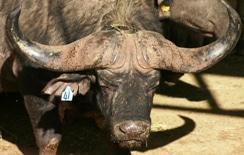
Two Addo Elephant National Park buffalo bulls with near record horn spans are expected to attract breeders and reserve owners from throughout Southern Africa to the annual Absa Kirkwood Wildsfees auction.

The biggest has been nick-named “Bismarck,” and has a horn span of 46 inches, while Hercules has one of 45 inches. Both have been captured, and are in a boma at the Addo Elephant National Park, according to auction organiser Johan Swart.

He says new blood and a new date bring a new era to the annual Absa Kirkwood Wildsfees game auction, which is one of the top three wildlife auctions in the country.

For the first 10 years of the Absa Kirkwood Wildsfees, brought to you in association with DSTV in 2012, the auction has been hosted on the Saturday of the festival weekend. This has been moved to the Friday to accommodate out of town bidders – many of whom also want to bring their families to enjoy the many attractions at the Absa Kirkwood Wildsfees, according to auction organiser Johan Swart.

“We have listened to what the industry has told us, and moved the auction a day forward.

“The trend in the industry is to hold auctions on week days.

“This also helps with the movement of the game after it has been bought,” he says.

The auction is one of the few in the country where buyers are able to see the majority of the prize animals, which are kept in bomas for the sale.

This year, around 40 disease-free Add Elephant National Park buffalo will go under the hammer of Brandon Leer of Brandon Leer Auction Services. Leer is widely regarded as one of the best livestock auctioneers in the country, and a specialist in game sales. He will be taking over the hammer from Roy Hayes who handled the auctions for the first 10 years.

“Roy helped put the Kirkwood wildlife auction on the map, and the fact that we could attract an auctioneer with the experience of Brandon is a tribute to the solid foundation Roy built,” says Swart.

Leer was schooled in the Eastern Cape and grew up in the Port Elizabeth area.

Other well-known auctions in which he has been involved include Madikwe, Thaba Tholo, Piet du Toit, Ezemvelo KZN Wildlife, SANParks auctions in Kimberley and Pretoria, the North West Buffalo Auction at Molemane Eye, the Polokwane Municipality auction, and auctions at the Shamwari and Kwandwe game reserves in the Eastern Cape.

The 2012 Absa Kirkwood Wildsfees runs from June 29 to July 1, and offers a wild weekend for the whole family. Entry fees for the festival on Friday and Sunday are R70 for adults and R35 for children; and R100 for adults and R50 for children on Saturday. Visit www.wildsfess.co.za for more information.

Elephant Ivory Stockpile Sales Help Create a Deadly New Chinese Currency

In a world of economic uncertainty, elephant ivory has become a new investment vehicle in China, which coincides with an extraordinary surge in the number of elephants being killed for their ivory.

A new ivory market investigation report released Monday by the International Fund for Animal Welfare (IFAW – www.ifaw.org) shows the legal sale of ivory stockpiles in 2008 has spurred demand, particularly in China where ivory is increasingly coveted by wealthy Chinese as “white gold.”

“Elephant ivory has, in a manner of speaking, become a new currency in China,” said Grace Gabriel, Asia Regional Director for IFAW. “The escalating demand has sent the price of ivory soaring. Couple that with the strengthening of the Chinese Yuan (RMB) against an ailing U.S. dollar, and suddenly buying illegal ivory in Africa and selling it at a huge profit in China becomes an extremely lucrative business.”

IFAW says the blame lies firmly at the door of the Convention on the International Trade in Endangered Species (CITES), which in 2008 gave the go-ahead for the legal sale of ivory stockpiles by four South African countries to China and Japan.

Since 2009, when China took delivery of its purchase, the market for ivory there – legally traded or not–has exploded. Worldwide seizures of illegal ivory have matched this trend, with the media reporting that 5,259 ivory tusks (an astounding 23 tons) were confiscated in 2011 alone.

The Chinese regulatory system, introduced in 2004 with the intention of strictly controlling the domestic ivory market in line with CITES required conditions, has been rendered virtually impotent against the demand for ivory.

“Of the 158 ivory trade facilities visited in five cities by Chinese experts, 101 did not have government issued licenses and were operating illegally. Among licensed facilities, the majority abused the ivory control system in some way,” continued Gabriel. “The illicit ivory trading activities in both unlicensed and licensed but non-compliant facilities outnumbered properly legal facilities nearly six to one (135/23).”

IFAW’s 2011 survey (the fifth in Asia in 10 years) shows clearly how illegal ivory, once smuggled into China, is now easily laundered through the legal market. The report also sheds light on the strong economic incentive for Chinese engaging in ivory trafficking.

While the wholesale price per kilogram of ivory in RMB has tripled (4,500 yuan – 15,000 yuan) from 2006 to 2011, the RMB is increasing in value against the USD. In the overseas market where ivory is sourced, the strengthened Chinese currency provides more purchasing power to Chinese buyers who convert RMB to USD for ivory purchases. This, coupled with the ease with which smuggled ivory can be easily laundered in the legal market, means huge profits for criminals involved in illegal ivory trade.

“The CITES stockpile sales were supposed to reduce the illegal trade and the slaughter of elephants by saturating the market with legal ivory; in fact, the exact opposite has occurred,” remarked Gabriel.

“Legal ivory imports have provided opportunities for illegal ivory to be whitewashed in China. The insatiable demand for ivory as an investment has tripled the wholesale price of ivory, and currencies in flux have mixed to create a lethal combination that is decimating wild elephant populations,” she said.

10 of the best places to view wildlife in Africa this winter

You may be disheartened by the decline in temperatures and that getting up happens in the dark. Some may even go as far as saying that this is the worst time of year. But not for gaming viewing. In fact, winter is said to be the best time of year to go on a safari in Africa. In the game-rich areas of the Southern and East Africa, the start of winter means the end of the wet season, and that means that the bush is thinner, the roads are accessible, and the wild animals in our game parks are the easiest to spot.

Also, in these areas it gets mild (sometimes even warm) during the day, providing pleasant temperatures for game drives. So to get you inspired for your winter safari break, here are the top places to go wildlife-viewing for both luxury-orientated and budget-conscious travellers.

You can book all these camps and lodges through Getaway Accommodation.

1. Kruger National Park

Limpopo Province and Mpumalanga

Kruger National Park

Kruger National Park

Surely South Africa’s prime wildlife viewing destination, the Kruger Park never fails to impress when it comes to spotting animals, especially in the dry season. Kruger has an impressive range of accommodation options, from camping to luxury lodges and they promise the best safari experience in the country. Because of its size and ample accommodation options, we’ll give you four.

Budget accommodation

Lower Sabie Rest Camp
This relaxed rest camp is situated on the banks of the Sabie River and offers camping, caravanning and self-catering bungalows starting at R200 per person sharing.
Book here

Punda Maria Rest Camp
Situated in the northernmost part of the park, you’ll find self-catering, camping and caravan options starting at R160 per person.
Book here

Luxury accommodation

Imbali Lodge
This exclusive lodge is situated in the Imbali safari concession and offers spacious, private chalets overlooking the N’waswitsontso River bend.
Book here

Lukimbi Safari Lodge
Situated in the southern region of the Kruger, this lodge combines luxury and elegance with modern African decor and beautiful river views.
Book here


Click here for packages to Kruger National Park with Getaway Adventures starting from R4250.

Click here for a comprehensive guide to Kruger National Park.


2. Kgalagadi Transfrontier Park

Northern Cape and the South of Botswana


Kgalagadi Transfrontier Park

Kgalagadi Transfrontier Park


This was the first formally declared trans-border conservation area and is the amalgamation of the Kalahari Gemsbok National Park in South Africa and the Gemsbok National Park in Botswana. The park is renowned for sightings of predators and the seasonal movements of blue wildebeest, springbok, eland and red hartebeest.

Budget accommodation

Mata Mata Rest Camp
This camp is situated on the banks of the Aoub River on the western boundary of the park and offers tented accommodation, camping, caravanning and self-catering chalets starting at R180 per person sharing.
Book here

Luxury accommodation

Grootkolk Wilderness Camp
Situated 20km from Union’s End, where South Africa, Botswana and Namibia meet, this tented accommodation overlooks a waterhole and offers a tranquil stay.
Book here


Click here for photographic safaris to the Kgalagadi Transfrontier Park with Getaway Adventures, starting from R14 950.

Click here for beautiful images of the Kgalagadi Transfrontier Park.

3. Thornybush Private Game Reserve

Limpopo Province

Thornybush Private Game ReserveThornybush Private Game Reserve

Photographer: Tom Coetzee


Being one of the private reserves adjacent to Kruger National Park, accommodation tends to be pricey. But a clever solution to this is finging a place to stay just outside the park and heading out on game drives daily to search for wildlife. Expect to see the Big 5 and a large variety of plains game.

Budget accommodation

Nyati Pools
Situated only 5km from the Thornybush gates, this tented accommodation is peaceful and relaxed and starts at R200 per person sharing.
Book here

Luxury accommodation

Shumbalala Game Lodge
Situated within the Thornybush Private Game Reserve, you’ll enjoy an intimate stay in luxury, thatched chalets with fireplaces and air-conditioning.
Book here


Click here to win a trip for two to Thornybush Game Lodge, worth R20 000.


4. Kibale Forest National Park

Uganda

Kibale National Park

Kibale National Park


For those who are tired of the standard South African safari, this is the ideal way to explore a different country and discover a national park where the lead characters are primates. Exploring on foot is the preferred method and chimp trekking expeditions come highly recommended.

Budget accommodation

Kibale Forest Camp
Enjoy a classic canvassed stay in this tented camp that is surrounded by dense forest vegetation. Tents go for R376 per person sharing.
Book here

Luxury accommodation

Chimp’s Nest
Situated on the border of the reserve, this lodge enjosy views of the snow-capped peaks of the Rwenzori Mountains and is often visited by monkeys, chimps and forest elephants.
Book here

Click here for packages to Uganda with Getaway Adventures, starting at R11 750.

Click here to read Justin Fox’s story on Kibale Forest National Park.


5. Etosha National Park

Namibia

Etosha National Park

Etosha National Park

This is Namibia’s prime wildlife viewing destination and is situated in the north of the country. The many waterholes attract the animals living in this fairly dry region, especially during the dry winter months. Many of the waterholes are floodlit, providing excellent night time game viewing.

Budget accommodation

Mamselle Nature Camp
These bungalows are shaded by Mopane and White Syringa trees and are situated just outside the park along the main road. Prices start at R70 per person to camp and R130 per person to stay in a self-catering bungalow.
Book here

Luxury accommodation

Andersson’s Camp
This luxury tented camp is situated within the private Ongava Reserve, adjacent to Etosha and looks out over a frequented waterhole.
Book here


Click here for travel packages to Etosha National Park with Getaway Adventures, starting at R7650.

Click here for a comprehensive guide to Etosha National Park.


6. Addo Elephant National Park

Eastern Cape

Addo Elephant National Park

Addo Elephant National Park


Contrary to what the name may suggest, you’ll get to see much more than elephants at Addo. The park is easily accessible and also hosts lion, buffalo, black rhino, spotted hyena and a variety of antelope and zebra species.  It is the third largest national park in the country and incidentally hosts around 550 elephants.

Budget accommodation

Addo Main Rest Camp
Here you’ll have a wide range of accommodation options to choose from, with camping and caravanning being the most affordable at R175 per person.
Book here

Luxury accommodation

River Bend Lodge
Situated on a private concession within the Addo Elephant Park, you’ll stay in one of eight luxury suites, each with a private veranda and some with bush showers.
Book here

Click here for a recent blog with awesome images of Addo Elephant National Park.


7. Mapungubwe National Park

Limpopo Province

Mapungubwe National Park

Mapungubwe National Park


Mapungubwe used to be a flourishing metropolis in the Iron Age, but today this site consists of a vast expanse of savanna at the confluence of the Limpopo and Shashe Rivers. If you’re not admiring the elephant, giraffe, white rhino, eland and gemsbok then you can visit some of the cultural sites, thereby enjoying not only game viewing, but also a history lesson or two.

Budget accommodation

Mazhou Camping Site
Situated in the western section of the park, this campsite caters for 10 tents or caravans and prices R170 per person sharing.
Book here

Luxury accommodation

Vhembe Wilderness Camp
This camp is situated in the eastern section of the park and is walking distance from the Limpopo River and the historically significant Mapugubwe Hill.
Book here

8. Lake Kariba

Zimbabwe

Lake Kariba

Lake Kariba


This incredible lake in the Zambezi River is surrounded by national parks both on Zimbabwe and Zambia’s side and provides some excellent water-based game viewing, for those who are looking for something that doesn’t involved hours in a car. Apart from boating safaris and nature walks, you might also enjoy some excellent bird watching and even a spot of fishing.

Budget stay

Kariba Bush Club
A wide range of accommodation options are available, ranging from camping to cabins on the houseboat. Camping costs R71 per person and the grounds are on the banks of the lake.
Book here

Luxury stay

Karibeer House Boat
This family friendly pontoon house boat is intimate, with only three cabins and an open-air sleeping area (with mosquito nets) on the deck.
Book here


Click here for packages to Zimbabwe and Lake Kariba with Getaway Adventures, starting from R8450.


9. Waterberg Biosphere Reserve

Limpopo Province


Waterberg Biosphere Reserve

Waterberg Biosphere Reserve


This is the world’s only savanna biosphere reserve and offers not only game viewing, but also a strong culture injection. Habitats here are incredibly diverse and include wetlands and rivers, steep cliffs and slopes and even bushveld. The area also hosts many endangered species, like the African wild dog, black and white rhino and leopard.

Budget accommodation

Madikela Game Lodge
Situated on an ancient limestone plateau, you’ll stay in one of six self-catering cottages starting at R160 per person sharing.
Book here

Luxury accommodation

Shibula Lodge and Bush Spa
This luxurious lodge is surrounded by greenery and mountains and offers nine, individually designed, thatched chalets.
Book here

10. Pilanesberg Game Reserve

North West Province

Pilansberg Game Reserve

Pilansberg Game Reserve


The park lies adjacent to Sun City, providing something different to do in the area. You’ll find a vast variety of animals, including the Big 5 and many other predators and antelope. The roads are well looked after, making self-drive game viewing easy and enjoyable.

Budget accommodation

Makinky Manzi
This tented camp is close to a waterfall where you can swim in the rock pools and tents are priced from R220 per person sharing.
Book here

Luxury accommodation

Pilanesberg Private Lodge
Situated at the foot of the Pilansberg Mountains, this private lodge has five rooms and offers a luxurious and secluded stay.
Book here

Previous post by Adel Groenewald – Digital intern:

« 10 of the best World Heritage Sites in Africa

Next post by Adel Groenewald – Digital intern:

No next posts by this author

Tags: African safaris, budget game park accommodation, Kruger, luxury game park accommodation, winter game viewing

Addo accommodation | Around the Mulberry Tree

Woodall Country House lies tucked away on a peaceful citrus farm where miles of citrus trees bear fruit all winter and scent the air with blossoms in the springtime.

Addo accommodation is only 45 minutes away from Port Elizabeth, East London you’ll find the hidden gem of Addo Elephant park accommodation. It is the ideal base from which to explore the adjacent Addo Elephant Park.Woodall guest house offers five star luxury accommodation and high standards of service, leaving you unwilling to leave and eager to return, whether for leisure or business. Honeymooners are especially pampered at our Addo Elephant Park Lodge is in an environment of peace and privacy.

Source:  Woodall-Addo


Five Star Lodge in the Addo Elephant National Park: Lion update….!!

RiverBend Lodge is a mere 55 minutes’ drive from Port Elizabeth and is an ideal malaria-free safari addition to a Garden Route holiday. Personalised game drives are led by enthusiastic and experienced guides, who will ensure you have a truly memorable safari experience.

The Elephants of Addo « Jeffreys Bay News

The Hapoor Dam, named after the legendary leader of the Addo Elephant herd is a hive of activity in the summer months in the Addo Elephant Park.

Hundreds of elephant taking mud baths and drinking copious amounts of water can be observed from the car park, together with buffalo and birds all sharing what is probably Addo’s most popular water hole.

There is a good chance visitors could even spot Valli Moosa, one of the new dominant males in Addo, who originally hails from the Kruger National Park.

Vali Moosa, one of the dominant bulls in Addo Elephant Park

With over 500 elephant in the Park, Addo boasts one of the highest concentrations of African elephant in the world.

The Addo Elephant Park was proclaimed by the South African Government in 1931 to save the last 11 elephant that had not been exterminated by hunters. The great herds of elephants and other animal species had been all but decimated over the 1700’s and 1800’s by hunters.

In the late 1800’s, farmers began to colonise the area around the park, also taking their toll on the elephant population due to competition for water and crops. In 1954, Graham Armstrong (the park manager at the time) developed an elephant-proof fence constructed using tram rails and lift cables and an area of 2270 hectares was fenced in.

Hapoor Dam in the hot summer Eastern Cape summer

There were only 22 elephants in the Park. This Armstrong fence, named after its developer, is still used around the park today. The only elephant to have managed to climb the fence was Hapoor, who was dethroned as the dominant bull by Lanky, who then drove Hapoor out of the herd.

Being a loner did not suit Hapoor, who decided to climb over the Armstrong fence. Knowing that no fence would ever hold Hapoor, and knowing his aggressive nature, the sad decision was made to shoot him.

A fight breaks out at Hapoor Dam

There is a cast of Hapoor in the information centre at Addo that clearly shows the missing piece (hap) of his ear (oor). It is believed that a bullet shot by a hunter caused the wound, leading to Hapoor hating humans for most of his life.

On more than one occasion park staff was forced to flee when Hapoor made his appearance! With elephants needing to drink up to 200 litres of water per day, most visitors to Addo Elephant Park manage to see the giants of the African wild.

A mud bath at Addo Elephant Park

Situated a mere 120 km from Jeffreys Bay, Addo is perfect for a day trip for locals and tourists alike. Jbay News will be continuing with a series of articles about Addo, its animals and accommodation.

To make sure you don’t miss an article, subscribe to jbaynews by entering your email address in the block on the right hand side of this page. Once you confirmed your email, you will receive the articles in your inbox to peruse at your convenience.

This entry was posted on Sunday, June 3rd, 2012 at 10:41 am and is filed under News, Travel Tourism. You can follow any responses to this entry through the RSS 2.0 feed.
You can leave a response, or trackback from your own site.

Post navigation

« Previous Post

Prize Buffalo Bulls for Absa Kirkwood game auction

Two Addo Elephant National Park buffalo bulls with near record horn spans are expected to attract breeders and reserve owners from throughout Southern Africa to the annual Absa Kirkwood Wildsfees auction.

The biggest has been nick-named “Bismarck,” and has a horn span of 46 inches, while Hercules has one of 45 inches. Both have been captured, and are in a boma at the Addo Elephant National Park, according to auction organiser Johan Swart.

He says new blood and a new date bring a new era to the annual Absa Kirkwood Wildsfees game auction, which is one of the top three wildlife auctions in the country.

For the first 10 years of the Absa Kirkwood Wildsfees, brought to you in association with DSTV in 2012, the auction has been hosted on the Saturday of the festival weekend. This has been moved to the Friday to accommodate out of town bidders – many of whom also want to bring their families to enjoy the many attractions at the Absa Kirkwood Wildsfees, according to auction organiser Johan Swart.

“We have listened to what the industry has told us, and moved the auction a day forward.

“The trend in the industry is to hold auctions on week days.

“This also helps with the movement of the game after it has been bought,” he says.

The auction is one of the few in the country where buyers are able to see the majority of the prize animals, which are kept in bomas for the sale.

This year, around 40 disease-free Add Elephant National Park buffalo will go under the hammer of Brandon Leer of Brandon Leer Auction Services. Leer is widely regarded as one of the best livestock auctioneers in the country, and a specialist in game sales. He will be taking over the hammer from Roy Hayes who handled the auctions for the first 10 years.

“Roy helped put the Kirkwood wildlife auction on the map, and the fact that we could attract an auctioneer with the experience of Brandon is a tribute to the solid foundation Roy built,” says Swart.

Leer was schooled in the Eastern Cape and grew up in the Port Elizabeth area.

Other well-known auctions in which he has been involved include Madikwe, Thaba Tholo, Piet du Toit, Ezemvelo KZN Wildlife, SANParks auctions in Kimberley and Pretoria, the North West Buffalo Auction at Molemane Eye, the Polokwane Municipality auction, and auctions at the Shamwari and Kwandwe game reserves in the Eastern Cape.

The 2012 Absa Kirkwood Wildsfees runs from June 29 to July 1, and offers a wild weekend for the whole family. Entry fees for the festival on Friday and Sunday are R70 for adults and R35 for children; and R100 for adults and R50 for children on Saturday.

Addo Elephant National Park in South Africa: See Elephants and …

㰡䑏䍔奐䔠桴浬㸊㱨瑭氾਼桥慤㸊㱭整愠桴瑰ⵥ煵楶㴢䍯湴敮琭呹灥∠捯湴敮琽≴數琯桴浬㬠捨慲獥琽畴昭ㄶ∾਼瑩瑬放䅤摯⁅汥灨慮琠乡瑩潮慬⁐慲欠楮⁓潵瑨⁁晲楣愺⁓敥⁅汥灨慮瑳⁡湤•䉩朠䙩癥∠摵物湧⁓慦慲椠瑯⁅慳瑥牮⁃慰攠偲潶楮捥†簠卵楴攱〱⹣潭㰯瑩瑬放਼汩湫⁲敬㴢捡湯湩捡氢⁨牥昽≨瑴瀺⼯獵楴攱〱⹣潭⽡牴楣汥⽡摤漭敬数桡湴⵮慴楯湡氭灡牫⵩渭獯畴栭慦物捡ⵡ㤷㘰㈢ 㸊㱭整愠湡浥㴢摥獣物灴楯渢⁣潮瑥湴㴢卯畴栠䅦物捡❳⁁摤漠䕬数桡湴⁎慴楯湡氠偡牫⁨慳⁴桥慲来獴⁣潮捥湴牡瑩潮映敬数桡湴猠潦⁡湹⁰慲欠睯牬摷楤攬⁡猠睥汬⁡猠汩潮Ⱐ扬慣欠牨楮潣敲潳Ⱐ汥潰慲搬⁡湤⁃慰攠扵晦慬漢㸊㱭整愠湡浥㴢步祷潲摳∠捯湴敮琽∢㸊㱳捲楰琠瑹灥㴢瑥硴⽪慶慳捲楰琢⁳牣㴢桴瑰㨯⽡橡砮杯潧汥慰楳⹣潭⽡橡砯汩扳⽪煵敲礯ㄮ㜮㈯橱略特⹭楮⹪猢㸼⽳捲楰琾਼浥瑡⁰牯灥牴礽≦戺慰灟楤∠捯湴敮琽∱㈳〸㐰㤴㌸㠷ㄱ∾਼浥瑡⁰牯灥牴礽≯机獩瑥彮慭攢⁣潮瑥湴㴢獵楴攱〱⹣潭∾਼浥瑡⁰牯灥牴礽≯机瑩瑬攢⁣潮瑥湴㴢䅤摯⁅汥灨慮琠乡瑩潮慬⁐慲欠楮⁓潵瑨⁁晲楣愢㸊㱭整愠灲潰敲瑹㴢潧㩴祰攢⁣潮瑥湴㴢慲瑩捬攢㸠਼浥瑡⁰牯灥牴礽≯机畲氢⁣潮瑥湴㴢桴瑰㨯⽳畩瑥㄰ㄮ捯洯慲瑩捬支慤摯ⵥ汥灨慮琭湡瑩潮慬⵰慲欭楮⵳潵瑨ⵡ晲楣愭愹㜶〲∾਼浥瑡⁰牯灥牴礽≯机業慧攢⁣潮瑥湴㴢桴瑰㨯⽩浡来献獵楴攱〱⹣潭⼹㔶㠲ㅟ捯浟敬数桡湴〰⹪灧∾਼浥瑡⁰牯灥牴礽≯机摥獣物灴楯渢⁣潮瑥湴㴢卯畴栠䅦物捡❳⁁摤漠䕬数桡湴⁎慴楯湡氠偡牫⁨慳⁴桥慲来獴⁣潮捥湴牡瑩潮映敬数桡湴猠潦⁡湹⁰慲欠睯牬摷楤攬⁡猠睥汬⁡猠汩潮Ⱐ扬慣欠牨楮潣敲潳Ⱐ汥潰慲搬⁡湤⁃慰攠扵晦慬漢㸊㱭整愠湡浥㴢慵瑨潲∠捯湴敮琽≋慲敮⁂敲来爢㸊㱬楮欠牥氽≳捨敭愮䑃∠桲敦㴢桴瑰㨯⽰畲氮潲术摣⽥汥浥湴猯ㄮ猱⼢ 㸊㱭整愠湡浥㴢䑃⹴楴汥∠捯湴敮琽≁摤漠䕬数桡湴⁎慴楯湡氠偡牫⁩渠卯畴栠䅦物捡∾਼浥瑡慭攽≄䌮摥獣物灴楯渢⁣潮瑥湴㴢卯畴栠䅦物捡❳⁁摤漠䕬数桡湴⁎慴楯湡氠偡牫⁨慳⁴桥慲来獴⁣潮捥湴牡瑩潮映敬数桡湴猠潦⁡湹⁰慲欠睯牬摷楤攬⁡猠睥汬⁡猠汩潮Ⱐ扬慣欠牨楮潣敲潳Ⱐ汥潰慲搬⁡湤⁃慰攠扵晦慬漢㸊㱭整愠湡浥㴢䑃⹣牥慴潲∠捯湴敮琽≋慲敮⁂敲来爢㸊㱭整愠湡浥㴢䑃⹰畢汩獨敲∠捯湴敮琽≳畩瑥㄰ㄮ捯洢㸊㱭整愠湡浥㴢䑃⹴祰攢⁣潮瑥湴㴢慲瑩捬攢㸊㱭整愠湡浥㴢䑃⹤慴攢⁣潮瑥湴㴢䩵氠㐬′〰㤢㸊㱭整愠湡浥㴢䑃⹩摥湴楦楥爢⁣潮瑥湴㴢桴瑰㨯⽳畩瑥㄰ㄮ捯洯慲瑩捬支慤摯ⵥ汥灨慮琭湡瑩潮慬⵰慲欭楮⵳潵瑨ⵡ晲楣愭愹㜶〲∾਼浥瑡慭攽≄䌮獵扪散琢⁣潮瑥湴㴢併瑤潯爠☠剥捲敡瑩潮Ⱐ䅤癥湴畲攠呲慶敬Ⱐ卡晡物猯䩵湧汥⁔牡癥氢㸊㱭整愠桴瑰ⵥ煵楶㴢灲慧浡∠捯湴敮琽≮漭捡捨攢㸊㱭整愠桴瑰ⵥ煵楶㴢捡捨攭捯湴牯氢⁣潮瑥湴㴢湯ⵣ慣桥Ⱐ浵獴⵲敶慬楤慴攬漭瑲慮獦潲洢㸊㱭整愠湡浥㴢獹獴敭⵳瑡瑵猢⁣潮瑥湴㴢潮汩湥∠⼾਼浥瑡慭攽≰畢汩獨敲∠捯湴敮琽≓畩瑥㄰ㄢ㸊㱭整愠湡浥㴢牯扯瑳∠捯湴敮琽≩湤數ⱦ潬汯眬湯潤瀬湯祤楲∾਼浥瑡慭攽≶敲楦礭瘱∠捯湴敮琽≤剃䙙䝭㍮搫睕卙乳⭐橨卡湶っ敲散婐慏摂灖偷牍㴢㸊㱭整愠湡浥㴢祟步礢⁣潮瑥湴㴢㈵㝥昲ぢ攰㌲㝥〴∾਼浥瑡慭攽≭獶慬楤慴攮〱∠捯湴敮琽∲〵䕅㕁䐲㈵㤹䌷䈷䐶㈲䙃㑄䄸䅄䙃㐢㸠਼汩湫⁲敬㴢獨潲瑣畴⁩捯渢⁨牥昽≨瑴瀺⼯獵楴攱〱⹣潭⽦慶楣潮弲⹩捯∾਼汩湫⁲敬㴢慬瑥牮慴攢⁴祰攽≡灰汩捡瑩潮⽲獳⭸浬∠瑩瑬攽≓畩瑥㄰ㄺ⁓慦慲楳⽊畮杬攠呲慶敬∠桲敦㴢桴瑰㨯⽲獳⹳畩瑥㄰ㄮ捯洯獡晡物猭橵湧汥⵴牡癥氮硭氢 㸊㱬楮欠牥氽≳瑹汥獨敥琢⁴祰攽≴數琯捳猢敤楡㴢獣牥敮∠桲敦㴢桴瑰㨯⽳瑡瑩挲⹳畩瑥㄰ㄮ捯洯捳猯㔶攷㑤〶㍥慥㑦昰昴㄰㘹㔴ㅤ㉡㔴散⹣獳∾਼獣物灴⁴祰攽≴數琯橡癡獣物灴∠獲挽≨瑴瀺⼯獴慴楣㈮獵楴攱〱⹣潭⽪猯㜸㔶㡡㝢㈵㈰㍡攲挵昴㐵扤㙣敢摦㠷⹪猢㸼⽳捲楰琾਼汩湫⁨牥昽≨瑴瀺⼯獴慴楣㈮獵楴攱〱⹣潭⽣獳⽰物湴⹣獳∠牥氽≳瑹汥獨敥琢⁴祰攽≴數琯捳猢敤楡㴢灲楮琢㸊㰡ⴭ孩映䥅崾਼汩湫⁨牥昽≨瑴瀺⼯獴慴楣㈮獵楴攱〱⹣潭⽣獳⽩攮捳猢⁲敬㴢獴祬敳桥整∠瑹灥㴢瑥硴⽣獳∾਼⅛敮摩晝ⴭ㸊㱳捲楰琠瑹灥㴢瑥硴⽪慶慳捲楰琢㸊癡爠彧慱‽ 条焠籼⁛崻੟条焮灵獨⡛❟獥瑁捣潵湴✬‧啁ⴳ〵㠵ⴱ❝⤻੟条焮灵獨⡛❟獥瑄潭慩湎慭攧Ⱐ✮獵楴攱〱⹣潭❝⤻੧潯杬敟慮慬祴楣獟摯浡楮彮慭攽∮獵楴攱〱⹣潭∻਼⽳捲楰琾਼獣物灴⁴祰攽≴數琯橡癡獣物灴∠獲挽≨瑴瀺⼯灡牴湥爮杯潧汥慤獥牶楣敳⹣潭⽧慭灡搯杯潧汥彳敲癩捥⹪猢㸼⽳捲楰琾਼獣物灴⁴祰攽≴數琯橡癡獣物灴∾ 㰡ⴭ 杯潧汥彡摟捬楥湴‽‧灵戭㜳㌲〲㜳ㄳ㜲ㄳ㔷✻ 杯潧汥彡摟瑹灥‽‧瑥硴✻ 杯潧汥彡摟潵瑰畴‽‧橳✻ 杯潧汥彡摟捨慮湥氠㴠❳彯畴摯潲牥捲敡瑩潮⭰彮敷彴潰彡牴弱⭷弰〰〰〰〰〸㌴⭴敳瑟愧㬊杯潧汥彭慸彮畭彡摳‽‧㄰✻ 杯潧汥彦敥摢慣欠㴠❯渧㬠⼯‭ⴾ 㰯獣物灴㸠਼獣物灴⁴祰攽≴數琯橡癡獣物灴∠獲挽≨瑴瀺⼯灡来慤㈮杯潧汥獹湤楣慴楯渮捯洯灡来慤⽳桯睟慤献橳∾㰯獣物灴㸠਼獣物灴⁴祰攽❴數琯橡癡獣物灴✾ 䝓彧潯杬敁摤䅤卥湳敓敲癩捥⠢灵戭㜳㌲〲㜳ㄳ㜲ㄳ㔷∩㬠ੇ卟杯潧汥䕮慢汥䅬汓敲癩捥猨⤻ 㰯獣物灴㸠਼獣物灴⁴祰攽≴數琯橡癡獣物灴∾ 䝁彧潯杬敁摤䅴瑲⠢猱〱䍨慮湥氢Ⱐ≴敳瑟愢⤻ 䝁彧潯杬敁摤䅴瑲⠢捯湣数琢Ⱐ≳慦慲楳⵪畮杬攭∩㬊䝁彧潯杬敁摤䅴瑲⠢獥捴楯渢Ⱐ≯畴摯潲牥捲敡瑩∩㬠ੇ䅟杯潧汥䅤摁瑴爨≴潰楣∬•癯汵湴敥牥捯瑲愢⤻ੇ䅟杯潧汥䅤摁瑴爨≣慴敧潲礢Ⱐ≳慦慲楳⵪畮杬攭∩㬠ੇ䅟杯潧汥䅤摁瑴爨≷物瑥牳形慴捨ㄢⰠ≷弰〰〰〰〰〸㌴∩㬠ੇ䅟杯潧汥䅤摁瑴爨≰慧整祰攢Ⱐ≡牴楣汥∩㬠਼⽳捲楰琾਼獣物灴⁴祰攽❴數琯橡癡獣物灴✾ 䝁彧潯杬敆整捨䅤猨⤻਼⽳捲楰琾਼獣物灴⁴祰攽≴數琯橡癡獣物灴∠獲挽≨瑴瀺⼯睷眳㔮杬慭⹣潭⽧慤⽧污浡摡灴彪獡灩⹡捴㽡晩搽ㄶ㈶㔲㔳〵∾㰯獣物灴㸠††† 㱳捲楰琾ੇ污浃牥慴敓汯琨∱㘲㘵㈵㌰㔢Ⱐ∷㈸砹〢Ⱐ≣潭彮潳散瑩潮彴潰彁呆強㈸砹〢⤻ੇ污流摤䕶敮瑌楳瑥湥爨≇污浉獁癡楬慢汥⠧捯浟湯獥捴楯湟瑯灟䅔䙟㜲㡸㤰✩•Ⱐ≇䅟杯潧汥䅤摁瑴爨❇污浃慬江瑯瀷㈸✬‧奥猧⤻∩㬊䝬慭䍲敡瑥卬潴⠢ㄶ㈶㔲㔳〵∬•㌰へ㈵〢Ⱐ≣潭彮潳散瑩潮彁呆弳〰砲㔰∩㬊䝬慭䅤摅癥湴䱩獴敮敲⠢䝬慭䥳䅶慩污扬攨❣潭彮潳散瑩潮彁呆弳〰砲㔰✩•Ⱐ≇䅟杯潧汥䅤摁瑴爨❇污浃慬江瑯瀳〰✬‧奥猧⤻∩㬊䝬慭䍲敡瑥卬潴⠢ㄶ㈶㔲㔳〵∬•㌰へ㈵〢Ⱐ≣潭彮潳散瑩潮彂呆弳〰砲㔰∩㬊䝬慭䅤摅癥湴䱩獴敮敲⠢䝬慭䥳䅶慩污扬攨❣潭彮潳散瑩潮彂呆弳〰砲㔰✩•Ⱐ≇䅟杯潧汥䅤摁瑴爨❇污浃慬江扯瑴潭㌰〧Ⱐ❙敳✩㬢⤻ੇ污浇整䍯湴敮琨∱㘲㘵㈵㌰㔢⤻†††††††††††††††††††††††††††††††††††††††††਼⽳捲楰琾਼獣物灴㸊彧慱⹰畳栨嬢彳整䍵獴潭噡爢Ⱐㄬ•卥捴楯渢Ⱐ≯畴摯潲牥捲敡瑩潮∬″崩㬊彧慱⹰畳栨嬢彳整䍵獴潭噡爢Ⱐ㈬•呯灩挢Ⱐ≶潬畮瑥敲散潴牡癥氢Ⱐ㍝⤻੟条焮灵獨⡛≟獥瑃畳瑯浖慲∬″Ⱐ≃慴敧潲礢Ⱐ≳慦慲楳⵪畮杬攭瑲慶敬∬″崩㬊彧慱⹰畳栨嬢彳整䍵獴潭噡爢Ⱐ㐬•呥浰污瑥彆楬攢Ⱐ≡牴楣汥弴㘮捦洢Ⱐ㍝⤻੟条焮灵獨⡛≟獥瑃畳瑯浖慲∬‵Ⱐ≐畢汩獨彄慴攢Ⱐ∲〰㤰㜰㐢Ⱐ㍝⤻਼⽳捲楰琾਼ℭⴠ扡獥⁴牡捫⁶楥眠慮搠慲瑩捬攠慮慬祴楣猠獴慲琠ⴭ㸊㱳捲楰琠瑹灥㴢瑥硴⽪慶慳捲楰琢㸊癡爠彧慱‽ 条焠籼⁛崻੟条焮灵獨⡛❟瑲慣歐慧敶楥眧Ⱐ✯慤摯彥汥灨慮瑟湡瑩潮慬彰慲歟楮彳潵瑨彡晲楣愯睩摟㘵㜳㌳⽡楤弹㜶〲⽰楤弲❝⤻੟条焮灵獨⡛❟獥瑁捣潵湴✬‧啁ⴲ㤷㐱ㄱ〭ㄧ崩㬊彧慱⹰畳栨嬧彳整䑯浡楮乡浥✬‧獵楴攱〱⹣潭❝⤻੟条焮灵獨⡛❟瑲慣歐慧敶楥眧Ⱐ✯慤摯彥汥灨慮瑟湡瑩潮慬彰慲歟楮彳潵瑨彡晲楣愯睩摟㘵㜳㌳⽡楤弹㜶〲⽰楤弲❝⤻਼⽳捲楰琾਼ℭⴠ扡獥⁴牡捫⁶楥眠慮搠慲瑩捬攠慮慬祴楣猠敮搮‭ⴾ਼ℭⴠ睲楴敲⁡湡汹瑩捳⁳瑡牴‭ⴾ਼獣物灴⁴祰攽≴數琯橡癡獣物灴∾੶慲 条焠㴠彧慱⁼簠孝㬊彧慱⹰畳栨嬧彳整䅣捯畮琧Ⱐ❕䄭㌰㈷㜳ㄵⴱ❝⤻੟条焮灵獨⡛❟獥瑄潭慩湎慭攧Ⱐ❳畩瑥㄰ㄮ捯洧崩㬊彧慱⹰畳栨嬧彴牡捫偡来癩敷❝⤻਼⽳捲楰琾਼ℭⴠ睲楴敲⁡湡汹瑩捳⁥湤‭ⴾ਼ℭⵛ楦瑥⁉䔠㡝㸊㱳瑹汥⁴祰攽≴數琯捳猢㸊⍭慩渭捯湴敮琠筢潲摥爭汥晴㨱灸⁳潬楤‣敥攻扯牤敲⵲楧桴㨱灸⁳潬楤‣敥攻紊⹳敡牣桢潸⁩湰畴⍳敡牣桟瑥硴⁻灡摤楮机㕰砠〠〠㕰砻紊㰯獴祬放਼⅛敮摩晝ⴭ㸊㰯桥慤㸊㱢潤社਼摩瘠楤㴢晢⵲潯琢㸼⽤楶㸊㱳捲楰琾⡦畮捴楯渨搬⁳Ⱐ楤⤠笊癡爠橳Ⱐ晪猠㴠搮来瑅汥浥湴獂祔慧乡浥⡳⥛そ㬊楦
搮来瑅汥浥湴䉹䥤⡩搩⤠筲整畲渻紊橳‽⁤⹣牥慴故汥浥湴⡳⤻献楤‽⁩搻੪献獲挠㴠∯⽣潮湥捴⹦慣敢潯欮湥琯敮录匯慬氮橳⍸晢浬㴱♡灰䥤㴱㈳〸㐰㤴㌸㠷ㄱ∻੦橳⹰慲敮瑎潤攮楮獥牴䉥景牥⡪猬⁦橳⤻੽⡤潣畭敮琬‧獣物灴✬‧晡捥扯潫⵪獳摫✩⤻㰯獣物灴㸊㱤楶⁩搽≷牡灰敲∾਼摩瘠楤㴢浡楮ⵣ潮瑥湴∠獴祬攽≭慲杩渭瑯瀺ㄲ㡰砢㸊㱤楶⁩搽≡摭慮慧敲彬敡摥牢潡牤∾਼獣物灴⁴祰攽≴數琯橡癡獣物灴∾ੇ䅟杯潧汥䅤摓汯琨≣愭灵戭㜳㌲〲㜳ㄳ㜲ㄳ㔷∬•捯浟湯獥捴楯湟瑯灟䅔䙟㜲㡸㤰∩㬊䝁彧潯杬敆楬汓汯琨≣潭彮潳散瑩潮彴潰彁呆強㈸砹〢⤻਼⽳捲楰琾਼⽤楶㸊㱤楶⁩搽≣潮瑥湴∾਼摩瘠楤㴢穯湥形∾†਼栱⁩搽≴楴汥∾䅤摯⁅汥灨慮琠乡瑩潮慬⁐慲欠楮⁓潵瑨⁁晲楣愼⽨ㄾ਼栲㹓敥⁅汥灨慮瑳⁡湤•䉩朠䙩癥∠摵物湧⁓慦慲椠瑯⁅慳瑥牮⁃慰攠偲潶楮捥‼⽨㈾਼摩瘠楤㴢汩湫彡摟灬慣敨潬摥爢㸠 㱤楶⁩搽≬楮歡摳彰污捥桯汤敲彨楤摥渢㸊㱳捲楰琠瑹灥㴢瑥硴⽪慶慳捲楰琢㸊㰡ⴭ ⼊杯潧汥彡摟捬楥湴‽•捡⵰畢ⴷ㌳㈰㈷㌱㌷㈱㌵㜢㬊⼪⁴敳琠汩湫⁡搠㐶㡸ㄠ⨯੧潯杬敟慤彳汯琠㴠∲㠵㜴㌷㘶㐢㬊杯潧汥彡摟睩摴栠㴠㐶㠻੧潯杬敟慤彨敩杨琠㴠ㄵ㬊杯潧汥彡摟捨慮湥氠㴠❷弰〰〰〰〰〸㌴⭴敳瑟戧㬊⼯ⴭ㸊㰯獣物灴㸊㰯摩瘾਼獣物灴⁴祰攽≴數琯橡癡獣物灴∠獲挽≨瑴瀺⼯灡来慤㈮杯潧汥獹湤楣慴楯渮捯洯灡来慤⽳桯睟慤献橳∾㰯獣物灴㸊㰯摩瘾਼摩瘠捬慳猽≳桡物湧∠楤㴢慲瑩捬敓桡物湧∾†਼摩瘠捬慳猽≳潣楡氢㸊㰡ⴭ⁴睩瑴敲‭ⴾ਼愠桲敦㴢桴瑰猺⼯瑷楴瑥爮捯洯獨慲攢⁣污獳㴢瑷楴瑥爭獨慲攭扵瑴潮∠摡瑡⵴數琽≁摤漠䕬数桡湴⁎慴楯湡氠偡牫⁩渠卯畴栠䅦物捡∠摡瑡⵵牬㴢桴瑰㨯⽳畩瑥㄰ㄮ捯洯慲瑩捬支慤摯ⵥ汥灨慮琭湡瑩潮慬⵰慲欭楮⵳潵瑨ⵡ晲楣愭愹㜶〲∠摡瑡⵨慳桴慧猽≓畩瑥㄰ㄢ⁤慴愭污湧㴢敮∾呷敥琼⽡㸊㱳捲楰琾Ⅶ畮捴楯渨搬猬楤⥻癡爠橳ⱦ橳㵤⹧整䕬敭敮瑳䉹呡李慭攨猩嬰崻楦⠡搮来瑅汥浥湴䉹䥤⡩搩⥻橳㵤⹣牥慴故汥浥湴⡳⤻橳⹩搽楤㭪献獲挽∯⽰污瑦潲洮瑷楴瑥爮捯洯睩摧整献橳∻晪献灡牥湴乯摥⹩湳敲瑂敦潲攨橳ⱦ橳⤻絽⡤潣畭敮琬≳捲楰琢Ⱒ瑷楴瑥爭睪猢⤻㰯獣物灴㸊㰡ⴭ⁦慣敢潯欠ⴭ㸊㱤楶⁳瑹汥㴢晬潡琺物杨琢⁣污獳㴢晢⵬楫攢⁤慴愭桲敦㴢桴瑰㨯⽳畩瑥㄰ㄮ捯洯慲瑩捬支慤摯ⵥ汥灨慮琭湡瑩潮慬⵰慲欭楮⵳潵瑨ⵡ晲楣愭愹㜶〲∠摡瑡⵳敮搽≦慬獥∠摡瑡⵬慹潵琽≢畴瑯湟捯畮琢⁤慴愭睩摴栽∹〢⁤慴愭獨潷ⵦ慣敳㴢晡汳攢㸼⽤楶㸊㰡ⴭ⁇潯杬攠⬠ㄠⴭ㸊㱧㩰汵獯湥†獩穥㴢浥摩畭∾㰯机灬畳潮放਼獣物灴⁴祰攽≴數琯橡癡獣物灴∾ਨ晵湣瑩潮⠩⁻੶慲⁰漠㴠摯捵浥湴⹣牥慴故汥浥湴⠧獣物灴✩㬠灯⹴祰攠㴠❴數琯橡癡獣物灴✻⁰漮慳祮挠㴠瑲略㬊灯⹳牣‽‧桴瑰猺⼯慰楳⹧潯杬攮捯洯橳⽰汵獯湥⹪猧㬊癡爠猠㴠摯捵浥湴⹧整䕬敭敮瑳䉹呡李慭攨❳捲楰琧⥛そ㬠献灡牥湴乯摥⹩湳敲瑂敦潲攨灯Ⱐ猩㬊紩⠩㬊㰯獣物灴㸊㰯摩瘾਼獣物灴㸊彧慱⹰畳栨嬧彳整䅣捯畮琧Ⱐ❕䄭㌰㔸㔭ㄧ崩㬊彧愮瑲慣歓潣楡氨⤻਼⽳捲楰琾਼⽤楶㸊㱵氠楤㴢慲瑩捬敟浥瑡摡瑡∠獴祬攽≨敩杨琺′ば砻⁰慤摩湧⵴潰㨠㕰砻∾਼汩㸠䩵氠㐬′〰㤼⽬椾਼汩㸊㱡⁲敬㴢慵瑨潲∠桲敦㴢桴瑰㨯⽫慲敮扥牧敲⹳畩瑥㄰ㄮ捯洢‾䭡牥渠䉥牧敲㰯愾਼⽬椾਼⽵氾਼摩瘠楤㴢慲瑩捬攭扯摹∾਼摩瘠楤㴢物杨琭浥瑡䉬潣欢㸊㱤楶⁩搽≡牴楣汥彩浡来∾਼摴㸊㱡⁨牥昽≨瑴瀺⼯業慧敳⹳畩瑥㄰ㄮ捯洯㤵㘸㈰彣潭彥汥灨慮琰〮橰朢⁲敬㴢汩杨瑢潸∠瑩瑬攽≅汥灨慮琠楮⁓潵瑨⁁晲楣愠‭⁋慲敮⁂敲来爢㸊㱩浧⁳牣㴢桴瑰㨯⽩浡来献獵楴攱〱⹣潭⼲〷㐴㐴彣潭彥汥灨慮琰〮橰朢⁡汴㴢䕬数桡湴⁩渠卯畴栠䅦物捡†ⴠ䭡牥渠䉥牧敲∠㸊㰯愾਼⽤琾਼摩瘠楤㴢業札獵扴數琢㹅汥灨慮琠楮⁓潵瑨⁁晲楣愠‭‼敭㹋慲敮⁂敲来爼⽥派㰯摩瘾਼⽤楶㸊㰯摩瘾਼摩瘠楤㴢獵浭慲祟桩杨汩杨瑳∾੓潵瑨⁁晲楣愧猠䅤摯⁅汥灨慮琠乡瑩潮慬⁐慲欠桡猠瑨攠污牧敳琠捯湣敮瑲慴楯渠潦⁥汥灨慮瑳映慮礠灡牫⁷潲汤睩摥Ⱐ慳⁷敬氠慳楯測⁢污捫⁲桩湯捥牯猬敯灡牤Ⱐ慮搠䍡灥⁢畦晡汯਼⽤楶㸊㱰㹁摤漠䕬数桡湴⁎慴楯湡氠偡牫⁣潶敲猠獯浥‱㘰ⰰ〰⁨散瑡牥猠湥慲⁴桥⁉湤楡渠佣敡渠䍯慳琠楮⁓潵瑨⁁晲楣愧猠䕡獴敲渠䍡灥⁐牯癩湣攮⁁⁍慲楮攠偲潴散瑥搠䅲敡⁣畲牥湴汹⁩湣汵摥猠捯慳瑡氠慲敡猬⁡猠睥汬⁡猠䉩牤⁉獬慮搬⁓敡氠䥳污湤Ⱐ慮搠却⸠䍲潩砠䥳污湤⸠周攠灲潰潳敤⁥硰慮獩潮映瑨攠䵡物湥⁐牯瑥捴敤⁁牥愠睩汬⁣潶敲‱㈰ⰰ〰⁨散瑵牥猠楮⁁汧潡⁂慹⸼⽰㸍㱨㌠捬慳猽≤祮慭楣∾䅦物捡❳…煵潴㭂楧⁆楶攦煵潴㬠䉥捯浥猠瑨攠♱畯琻䉩朠卥癥渦煵潴㬠慴⁁摤漼⽨㌾഼瀾周攠捯浢楮慴楯渠潦⁳畣栠愠污牧攠灲潴散瑥搠瑥牲敳瑲楡氠慲敡⁷楴栠愠湥楧桢潲楮朠灲潴散瑥搠潣敡湩挠桡扩瑡琠楳⁵湩煵攮⁁摤漠䕬数桡湴⁎慴楯湡氠偡牫⁩猠瑨攠潮汹⁰污捥⁩渠瑨攠睯牬搠睨敲攠癩獩瑬潲猠浩杨琠獥攠湯琠潮汹⁁晲楣愧猠獯ⵣ慬汥搠♱畯琻䉩朠䙩癥♱畯琻
汩潮猬⁃慰攠扵晦慬漬敯灡牤猬⁲桩湯捥牯猬⁡湤Ⱐ潦⁣潵牳攠瑨攠敬数桡湴猠瑨攠灡牫⁩猠湡浥搠景爩Ⱐ扵琠慬獯⁴睯瑨敲映瑨攠睯牬搧猠獯⁣慬汥搠♱畯琻䍨慲楳浡瑩挠浥条晡畮愮♱畯琻⁉渠灬慩渠䕮杬楳栬⁴桡琠浥慮猠污牧攠慮業慬猠瑨慴⁡牥⁳漠睥汬湯睮⁡湤⁡灰敡汩湧⁴漠癩獩瑯牳⁴桡琠瑨敹⁡瑴牡捴⁴潵物獴猠睨漠捯浥⁳業灬礠瑯⁳敥⁴桥活爠慮業慬猠瑨慴⁡瑴牡捴⁤潮慴楯湳⁦潲⁷楬摬楦攠捯湳敲癡瑩潮⸠啮摥爠瑨攠物杨琠捩牣畭獴慮捥猠慮搠睩瑨⁡潴映汵捫Ⱐ癩獩瑯牳⁷桯⁵湤敲瑡步⁡慲楮攠瑯畲楧桴⁣慴捨⁡⁧汩浰獥映瑨攠獯畴桥牮⁲楧桴⁷桡汥⁡湤⁴桥⁧牥慴⁷桩瑥⁳桡牫⁩渠瑨攠潣敡渠扯牤敲楮朠瑨攠灡牫⸼⽰㸍㱰㹂畴⁩琧猠瑨攠敬数桡湴猠浯獴⁶楳楴潲猠捯浥⁴漠獥攮⁍潲攠瑨慮‴㔰⁁晲楣慮⁥汥灨慮瑳楶攠楮⁁摤漬⁷桩捨⁷慳⁦潵湤敤⁩渠ㄹ㌰⸠䉹′〰㐬⁴桥⁰慲欧猠潲楧楮慬敡杲攠灯灵污瑩潮映ㄱ⁥汥灨慮瑳⁨慤⁥硰慮摥搠瑯潲攠瑨慮″〰Ⱐ慮搠汩潮猠睥牥⁲攭楮瑲潤畣敤⁴漠瑡步⁴桥楲⁰污捥⁡猠瑨攠獹獴敭❳⁡灥砠灲敤慴潲献㰯瀾㱤楶⁩搽≩湬楮敟慤∾†਼ℭⵧ潯杬敟慤彳散瑩潮獟獴慲琭ⴾ਼獣物灴⁴祰攽≴數琯橡癡獣物灴∾਼ℭⴠ⼯੧捡⹡摟睩摴栠㴠✶〰✻੧捡⹡摟獥瑟捬慳獥猠㴠❩湬楮攧㬠 ⼠捳猠捬慳猊杣愮慤彳瑹汥‽‴㬠 捲敡瑥彧潯杬敟慤彳整⠲⤻੧潯杬敟慮慬祴楣獟摯浡楮㴧⹳畩瑥㄰ㄮ捯洧㬊⼯‭ⴾ਼⽳捲楰琾਼ℭⵧ潯杬敟慤彳散瑩潮彥湤ⴭ㸊㰯摩瘾഼栳⁣污獳㴢摹湡浩挢㹗楬摬楦攠噩敷楮朠潮⁓慦慲椠慴⁁摤漼⽨㌾഼瀾䵡湹⁶楳楴潲猠瑯⁓潵瑨⁁晲楣愠桡癥⁡敮瑡氠業慧攠潦⁷桡琠慮⁁晲楣慮⁧慭攠灡牫⁩猬⁢畴⁴桡琠業慧攠潦瑥渠捯浥猠晲潭⁶楥睩湧⁷楬摬楦攠灲潧牡浳⁡扯畴⁅慳琠䅦物捡渠瑥汥癩獩潮⸠卯⁩琧猠睯牴栠湯瑩湧⁴桡琠瑨攠污湤獣慰攠楳⁤楦晥牥湴⁩渠卯畴栠䅦物捡Ⱐ慮搠慴⁁摤漬⁥獰散楡汬礮⁖敧整慴楯渠楳⁤敮獥爠瑨慮渠瑨攠灬慩湳映䭥湹愠慮搠呡湺慮楡Ⱐ慮搠瑨攠污湤⁨楬汩敲⸠卯⁩湳瑥慤映汯潫楮朠潵琠潶敲⁴桥灥渠數灡湳攠潦⁴桥⁓敲敮来瑩⁩渠呡湺慮楡爠瑨攠䵡獡椠䵡牡⁩渠䭥湹愬⁷桥牥⁨畧攠桥牤猠潦⁴牡癥汩湧⁷楬摥扥敳琠捡渠扥⁳敥渠牯慭楮朠慣牯獳⁡⁳敥浩湧汹⁥湤汥獳⁨潲楺潮Ⱐ瑨攠癩獩瑯爠瑯⁁摤漠浵獴潯欠浯牥⁣汯獥汹Ⱐ瑨牯畧栠瑨攠癥来瑡瑩潮⁡湤⁴牥敳⸼⽰㸍㱰㹎漠条浥⁤物癥⁩猠敮瑩牥汹⁰牥摩捴慢汥
慬瑨潵杨⁥慲汹潲湩湧⁡湤慴攠敶敮楮朠瑥湤⁴漠扥⁴桥⁢敳琠瑩浥献⤠周攠獡晡物⁶慮⁤物癥牳湯眠睨楣栠慮業慬猠睥牥⁷桥牥⁴桥⁰牥癩潵猠摡礬⁡湤⁴桥礠瑲慤攠楮景牭慴楯渠睩瑨⁥慣栠潴桥爮⁉琠楳⁡獴潮楳桩湧⁴漠牥慬楺攠桯眠捬潳攠潮攠捡渠扥⁴漠慮⁥汥灨慮琠♮摡獨㬠慮搠湯琠敶敮⁳敥⁩琡⁊畳琠睨敮⁩琠獥敭猠瑨慴⁡汬⁴桥⁡湩浡汳⁡牥⁩渠桩摩湧Ⱐ愠癩獩瑯爠捡渠獴畭扬攠異潮⁡⁨敲搠潦⁷楬搠摯杳
牡牥⁴漠獥攬⁢畴⁩渠牥獩摥湣攠桥牥⤬爠慮⁥湴楲攠晡浩汹映敬数桡湴Ⱐ物杨琠摯睮⁴漠湵牳楮朠扡扩敳⸼⽰㸍㱰㹂楲摥牳⁳桯畬搠湯瑥⁴桡琠楮⁡摤楴楯渠瑯⁴桥⁥硣楴敭敮琠潦⁁晲楣愧猠扩朠慮業慬⁣敬敢物瑩敳Ⱐ䅤摯⁩猠慮⁥硣敬汥湴⁨慢楴慴⁦潲⁢楲搠睡瑣桩湧㬠瑨敲攧猠愠扬楮搠湥慲⁴桥慩渠捡浰Ⱐ慮搠獥癥牡氠楮瑥牳散瑩湧⁥捯汯杩捡氠捯浭畮楴楥献⁏渠瑨攠浡物湥⁳楤攬⁩琧猠敶敮⁰潳獩扬攠瑯⁳敥⁁晲楣慮⁰敮杵楮献㰯瀾†਼摩瘠捬慳猽≢潸⁲敬慴敤⁲敡摟潮∠獴祬攽≷楤瑨㨳〰灸㬢㸠਼栲㹐潰畬慲⁴潰楣猼⽨㈾ 㱤楶⁣污獳㴢扯硟捯湴敮琢㸊㱵氠楤㴢慲瑩捬敟汩獴∾਼汩㸊㱡湣汩捫㴢彧慱⹰畳栨嬧彴牡捫䕶敮琧Ⱐ❒敬慴敤䅲瑩捬敳✬‧䍬楣欧Ⱐ❍楤ⵁ牴楣汥ⴱ❝⤻ 条焮灵獨⡛❟瑲慣歅癥湴✬‧剥污瑥摁牴楣汥獐慴栧Ⱐ✱㈰ㄸ㌧Ⱐ✹㜶〲✠崩㬢⁨牥昽≨瑴瀺⼯獵楴攱〱⹣潭⽡牴楣汥⽰潲琭敬楺慢整栭睩汤汩晥ⵣ牵楳攭數捵牳楯湳ⵡㄲ〱㠳∾੐潲琠䕬楺慢整栠坩汤汩晥⁃牵楳攠䕸捵牳楯湳਼⽡㸊㰯汩㸊㱬椾਼愠潮捬楣欽≟条焮灵獨⡛❟瑲慣歅癥湴✬‧剥污瑥摁牴楣汥猧Ⱐ❃汩捫✬‧䵩搭䅲瑩捬攭㈧崩㬠彧慱⹰畳栨嬧彴牡捫䕶敮琧Ⱐ❒敬慴敤䅲瑩捬敳偡瑨✬‧ㄸ㘷㈹✬‧㤷㘰㈧⁝⤻∠桲敦㴢桴瑰㨯⽳畩瑥㄰ㄮ捯洯慲瑩捬支慤摯ⵥ汥灨慮琭湡瑩潮慬⵰慲欭愱㠶㜲㤢㸊䅤摯⁅汥灨慮琠乡瑩潮慬⁐慲權㰯愾਼⽬椾਼汩㸊㱡湣汩捫㴢彧慱⹰畳栨嬧彴牡捫䕶敮琧Ⱐ❒敬慴敤䅲瑩捬敳✬‧䍬楣欧Ⱐ❍楤ⵁ牴楣汥ⴳ❝⤻ 条焮灵獨⡛❟瑲慣歅癥湴✬‧剥污瑥摁牴楣汥獐慴栧Ⱐ✱㈴㠳㐧Ⱐ✹㜶〲✠崩㬢⁨牥昽≨瑴瀺⼯獵楴攱〱⹣潭⽡牴楣汥⽬畸畲礭獡晡物⵶慣慴楯湳⵴漭慦物捡ⵡㄲ㐸㌴∾ੌ畸畲礠卡晡物⁖慣慴楯湳⁴漠䅦物捡਼⽡㸊㰯汩㸊㰯畬㸊㰯摩瘾਼⽤楶㸊㱰㹏灴楯湳⁦潲⁳敥楮朠瑨攠灡牫⁩湣汵摥⁧慭攠摲楶敳Ⱐ♱畯琻桯瀠潮♱畯琻⁤物癥猠⡷桥牥⁴桥⁧畩摥潩湳⁴桥⁶楳楴潲⁩渠瑨攠癩獩瑯爧猠癥桩捬攠慮搠灲潶楤敳⁴牡捫楮朠慤癩捥⁡湤⁣潭浥湴慲礩Ⱐ桯牳敢慣欠物摩湧Ⱐ㑸㐠瑲慩汳Ⱐ慮搠愠晥眠桩歩湧⁴牡楬献㰯瀾഼瀾䅤摯⁩猠汯捡瑥搠楮⁅慳瑥牮⁃慰攠偲潶楮捥Ⱐ愠獨潲琠摲楶攠晲潭⁐潲琠䕬楺慢整栬⁷桥牥⁴桥牥⁩猠愠牥杩潮慬⁡楲灯牴⸠䅣捯浭潤慴楯湳⁷楴桩渠瑨攠灡牫⁲慮来⁦牯洠扡獩挠捡浰⁦慣楬楴楥猠瑯畸畲礠汯摧敳⸼⽰㸍㱰㹍潲攠潮⁁摤漺‼愠桲敦㴢桴瑰㨯⽷睷⹳慮灡牫献潲术灡牫猯慤摯⼢㹓潵瑨⁁晲楣愠偡牫猼⽡㸼⽰㸍㱰㹍潲攠潮⁓潵瑨⁁晲楣愠呲慶敬㨠㱡⁨牥昽≨瑴瀺⼯獵楴攱〱⹣潭⽡牴楣汥⽴獩瑳楫慭浡⵩猭獯畴栭慦物捡猭慤癥湴畲攭捡灩瑡氭愹㘴㘶∾味楴獩歡浭愠䅤癥湴畲攠呲慶敬㰯愾⸼⽰㸍㱤楶⁩搽≡摭慮慧敲彡汬張㔰砲㔰∾਼獣物灴⁴祰攽≴數琯橡癡獣物灴∾ੇ䅟杯潧汥䅤摓汯琨≣愭灵戭㜳㌲〲㜳ㄳ㜲ㄳ㔷∬•捯浟慬江㔵へ㈵〢⤻ੇ䅟杯潧汥䙩汬卬潴⠢捯浟慬江㔵へ㈵〢⤻਼⽳捲楰琾਼⽤楶㸊㱤楶⁩搽≣潰祲楧桴∾⁃潰祲楧桴‼愠桲敦㴢桴瑰㨯⽫慲敮扥牧敲⹳畩瑥㄰ㄮ捯洢㹋慲敮⁂敲来爼⽡㸮⁃潮瑡捴⁴桥⁡畴桯爠瑯扴慩渠灥牭楳獩潮⁦潲⁲数畢汩捡瑩潮⸼⽤楶㸊㱤楶㸠†਼摩瘠楤㴢慵瑨潲ⵣ牥摥湴楡汳∠捬慳猽≣汥慲形潴栢㸊㱩浧⁩搽≡畴桯爭業慧攢⁳牣㴢桴瑰㨯⽩浡来献獵楴攱〱⹣潭⼳㌳㘸㈶彣潭彫慲敮扥牧攮橰朢⁡汴㴢䭡牥渠䉥牧敲Ⱐ批⁍慲礠䑯摡牯∠瑩瑬攽≋慲敮⁂敲来爢⁨敩杨琽∱㌳∠睩摴栽∱〰∠⼾਼瀾਼愠桲敦㴢⁨瑴瀺⼯歡牥湢敲来爮獵楴攱〱⹣潭∾ੋ慲敮⁂敲来爊㰯愾ਭ⁋慲敮⁂敲来爠楳⁴桥⁡畴桯爠潦‱㔠扯潫献⁐汥慳攠捬楣欠潮⁨敲慭攠瑯⁲敡搠桥爠晵汬⁢楯⸍㰯瀾਼摩瘠捬慳猽≷物瑥牟獯捩慬彷楤来琢㸊㰯摩瘾਼愠桲敦㴢桴瑰㨯⽲獳⹳畩瑥㄰ㄮ捯洯⁋慲敮䉥牧敲彷物瑥爮硭氢㸊㱩浧⁳牣㴧桴瑰㨯⽧牡灨楣献獵楴攱〱⹣潭⽲獳弱㘮灮朧⁡汴㴢牳猢㸊㰯愾਼⽤楶㸊㰯摩瘾਼摩瘠獴祬攽≨敩杨琺″ば砢㸊㱤楶⁣污獳㴢獨慲楮朠扯瑴潭∾਼摩瘠捬慳猽≡摤瑨楳彴潯汢潸⁡摤瑨楳彤敦慵汴彳瑹汥∾਼愠楤㴢灲楮琢⁨牥昽≨瑴瀺⼯獵楴攱〱⹣潭⽡牴楣汥⽡摤漭敬数桡湴⵮慴楯湡氭灡牫⵩渭獯畴栭慦物捡ⵡ㤷㘰㈯灲楮琢⁲敬㴢湯景汬潷∠獴祬攽≦汯慴㩬敦琻∠瑡牧整㴢形污湫∾偲楮琠䅲瑩捬攼⽡㸊㱡⁣污獳㴢慤摴桩獟扵瑴潮彥浡楬∾㰯愾਼⽤楶㸊㱳捲楰琠瑹灥㴢瑥硴⽪慶慳捲楰琢㸊癡爠慤摴桩獟獨慲攠㴠笊瑥浰污瑥猺⁻⁴睩瑴敲㨠❻筴楴汥絽㨠筻畲汽素癩愠䁳畩瑥㄰ㄧ⁽੽੶慲⁡摤瑨楳彣潮晩朠㴠笊畩彬慮杵慧攺•敮∬ੵ楟捯扲慮携•卵楴攱〱∬ੵ楟桥慤敲彣潬潲㨠∣䙆䙆䙆∬ੵ楟桥慤敲形慣歧牯畮携•⌳㌶㘶㘢Ⰺ摡瑡彴牡捫彣汩捫扡捫㨠瑲略੽਼⽳捲楰琾਼摩瘠捬慳猽≳潣楡氢㸊㰡ⴭ⁴睩瑴敲‭ⴾ਼愠桲敦㴢桴瑰猺⼯瑷楴瑥爮捯洯獨慲攢⁣污獳㴢瑷楴瑥爭獨慲攭扵瑴潮∠摡瑡⵴數琽≁摤漠䕬数桡湴⁎慴楯湡氠偡牫⁩渠卯畴栠䅦物捡∠摡瑡⵵牬㴢桴瑰㨯⽳畩瑥㄰ㄮ捯洯慲瑩捬支慤摯ⵥ汥灨慮琭湡瑩潮慬⵰慲欭楮⵳潵瑨ⵡ晲楣愭愹㜶〲∠摡瑡⵨慳桴慧猽≓畩瑥㄰ㄢ⁤慴愭污湧㴢敮∾呷敥琼⽡㸊㱳捲楰琾Ⅶ畮捴楯渨搬猬楤⥻癡爠橳ⱦ橳㵤⹧整䕬敭敮瑳䉹呡李慭攨猩嬰崻楦⠡搮来瑅汥浥湴䉹䥤⡩搩⥻橳㵤⹣牥慴故汥浥湴⡳⤻橳⹩搽楤㭪献獲挽∯⽰污瑦潲洮瑷楴瑥爮捯洯睩摧整献橳∻晪献灡牥湴乯摥⹩湳敲瑂敦潲攨橳ⱦ橳⤻絽⡤潣畭敮琬≳捲楰琢Ⱒ瑷楴瑥爭睪猢⤻㰯獣物灴㸊㰡ⴭ⁦慣敢潯欠ⴭ㸊㱤楶⁳瑹汥㴢晬潡琺物杨琢⁣污獳㴢晢⵬楫攢⁤慴愭桲敦㴢桴瑰㨯⽳畩瑥㄰ㄮ捯洯慲瑩捬支慤摯ⵥ汥灨慮琭湡瑩潮慬⵰慲欭楮⵳潵瑨ⵡ晲楣愭愹㜶〲∠摡瑡⵳敮搽≦慬獥∠摡瑡⵬慹潵琽≢畴瑯湟捯畮琢⁤慴愭睩摴栽∹〢⁤慴愭獨潷ⵦ慣敳㴢晡汳攢㸼⽤楶㸊㰡ⴭ⁇潯杬攠⬠ㄠⴭ㸊㱧㩰汵獯湥†獩穥㴢浥摩畭∾㰯机灬畳潮放਼獣物灴⁴祰攽≴數琯橡癡獣物灴∾ਨ晵湣瑩潮⠩⁻੶慲⁰漠㴠摯捵浥湴⹣牥慴故汥浥湴⠧獣物灴✩㬠灯⹴祰攠㴠❴數琯橡癡獣物灴✻⁰漮慳祮挠㴠瑲略㬊灯⹳牣‽‧桴瑰猺⼯慰楳⹧潯杬攮捯洯橳⽰汵獯湥⹪猧㬊癡爠猠㴠摯捵浥湴⹧整䕬敭敮瑳䉹呡李慭攨❳捲楰琧⥛そ㬠献灡牥湴乯摥⹩湳敲瑂敦潲攨灯Ⱐ猩㬊紩⠩㬊㰯獣物灴㸊㰯摩瘾਼獣物灴㸊彧慱⹰畳栨嬧彳整䅣捯畮琧Ⱐ❕䄭㌰㔸㔭ㄧ崩㬊彧愮瑲慣歓潣楡氨⤻਼⽳捲楰琾਼獣物灴⁴祰攽≴數琯橡癡獣物灴∠獲挽≨瑴瀺⼯猷⹡摤瑨楳⹣潭⽪猯㈵〯慤摴桩獟睩摧整⹪猣畳敲湡浥㵳畩瑥㄰ㅣ潭∾㰯獣物灴㸊㰯摩瘾਼⽤楶㸊㰯摩瘾਼摩瘾†਼摩瘠楤㴢慤浡湡来牟摦灟㔸㕸㈸〢⁣污獳㴢慤∾਼獣物灴⁴祰攽≴數琯橡癡獣物灴∾ੇ䅟杯潧汥䅤摓汯琨≣愭灵戭㜳㌲〲㜳ㄳ㜲ㄳ㔷∬•捯浟慬江㔸㕸㈸〢⤻ੇ䅟杯潧汥䙩汬卬潴⠢捯浟慬江㔸㕸㈸〢⤻਼⽳捲楰琾਼⽤楶㸊㱳灡渠捬慳猽≡摳灡渢⁳瑹汥㴢晬潡琺汥晴∾䅤癥牴楳敭敮琼⽳灡渾਼⽤楶㸊㱡慭攽≡湣桯牃潭浥湴∾㰯愾਼摩瘠楤㴢捯浭敮瑳彦潲洢㸠഼獣物灴⁴祰攽≴數琯橡癡獣物灴∾൩昨摯捵浥湴⹧整䕬敭敮瑂祉搨❣潭浥湴獆潲洧⤩൤潣畭敮琮来瑅汥浥湴䉹䥤⠧捯浭敮瑳䙯牭✩⹳瑹汥⹤楳灬慹㴧湯湥✻഼⽳捲楰琾഼⽤楶㸊㱤楶⁩搽≣潭浥湴獟汩獴∾†㰯摩瘾਼⽤楶㸊㱤楶⁩搽≺潮敟挢㸠 㱤楶⁩搽≡摭慮慧敲彁呆弳〰砲㔰∠捬慳猽≡搠浥摩畭彲散瑡湧汥∾਼獣物灴⁴祰攽≴數琯橡癡獣物灴∾ੇ䅟杯潧汥䅤摓汯琨≣愭灵戭㜳㌲〲㜳ㄳ㜲ㄳ㔷∬•捯浟湯獥捴楯湟䅔䙟㌰へ㈵〢⤻ੇ䅟杯潧汥䙩汬卬潴⠢捯浟湯獥捴楯湟䅔䙟㌰へ㈵〢⤻਼⽳捲楰琾਼⽤楶㸊㱳灡渠捬慳猽≡摳灡渢㹁摶敲瑩獥浥湴㰯獰慮㸊㰡ⴭ孩映䥅‷崾਼獴祬放੤楶⹢潸⹲敬慴敤‮扯硟捯湴敮琠汩⁩浧⁻ੰ慤摩湧ⵢ潴瑯洺‱㕰砻ੰ慤摩湧⵲楧桴㨠ㄵ灸㬊扯牤敲㨠湯湥㬊紊㰯獴祬放਼⅛敮摩晝ⴭ㸊㱤楶⁣污獳㴢扯砠牥污瑥搢㸠਼栲㹐潰畬慲⁴潰楣猼⽨㈾਼摩瘠捬慳猽≢潸彣潮瑥湴∾਼畬⁩搽≡牴楣汥彬楳琢㸊㱬椾਼業朠獲挽≨瑴瀺⼯業慧敳⹳畩瑥㄰ㄮ捯洯㈴ㄲ㔱㙟捯浟敬数桡湴⹪灧∠慬琽≋牵来爠乡瑩潮慬⁐慲欠楮⁓潵瑨⁁晲楣愠楳⁈潭攠潦⁴桥⁂楧⁆楶攢⁷楤瑨㴢㐰∠桥楧桴㴢㐰∠⼾਼愠潮捬楣欽≟条焮灵獨⡛❟瑲慣歅癥湴✬‧剥污瑥摁牴楣汥猧Ⱐ❃汩捫✬‧剩杨琭䍯汵浮ⴱ❝⤻ 条焮灵獨⡛❟瑲慣歅癥湴✬‧剥污瑥摁牴楣汥獐慴栧Ⱐ✲㠸㤷㔧Ⱐ✹㜶〲✠崩㬢⁨牥昽≨瑴瀺⼯獵楴攱〱⹣潭⽡牴楣汥⽫牵来爭湡瑩潮慬⵰慲欭楮⵳潵瑨ⵡ晲楣愭楳⵨潭攭潦⵴桥ⵢ楧ⵦ楶攭愲㠸㤷㔢㸊䭲畧敲⁎慴楯湡氠偡牫⁩渠卯畴栠䅦物捡⁩猠䡯浥映瑨攠䉩朠䙩癥਼⽡㸊㰯汩㸊㱬椾਼業朠獲挽≨瑴瀺⼯業慧敳⹳畩瑥㄰ㄮ捯洯㔲㐱㘲彣潭彲楶敲獯浡摪楮渮橰朢⁡汴㴢周攠䵩杨瑹⁚慭扥穩⁒楶敲Ⱐ䝲敡琠剩癥爠潦⁁晲楣愢⁷楤瑨㴢㐰∠桥楧桴㴢㐰∠⼾਼愠潮捬楣欽≟条焮灵獨⡛❟瑲慣歅癥湴✬‧剥污瑥摁牴楣汥猧Ⱐ❃汩捫✬‧剩杨琭䍯汵浮ⴲ❝⤻ 条焮灵獨⡛❟瑲慣歅癥湴✬‧剥污瑥摁牴楣汥獐慴栧Ⱐ✷㐲㌲✬‧㤷㘰㈧⁝⤻∠桲敦㴢桴瑰㨯⽳畩瑥㄰ㄮ捯洯慲瑩捬支瑨攭浩杨瑹⵺慭扥穩⵲楶敲ⵡ㜴㈳㈢㸊周攠䵩杨瑹⁚慭扥穩⁒楶敲Ⱐ䝲敡琠剩癥爠潦⁁晲楣愊㰯愾਼⽬椾਼⽵氾਼愠捬慳猽≭潲攢⁨牥昽≨瑴瀺⼯獵楴攱〱⹣潭⽳慦慲楳⵪畮杬攭瑲慶敬∠瑩瑬攽≭潲攠䅤癥湴畲攠呲慶敬⁁牴楣汥猢㸠浯牥⁩渠獡晡物猯橵湧汥⁴牡癥氠㱳灡渾♲慱畯㬼⽳灡渾㰯愾਼⽤楶㸊㰯摩瘾਼ℭⵧ潯杬敟慤彳散瑩潮獟獴慲琭ⴾ਼獣物灴⁴祰攽≴數琯橡癡獣物灴∾਼ℭⴠ⼯੧捡⹡摟睩摴栠㴠✳〰✻੧捡⹡摟獴祬攠㴠㤻†੣牥慴敟杯潧汥彡摟獥琨㜩㬊杯潧汥彡湡汹瑩捳彤潭慩渽✮獵楴攱〱⹣潭✻ਯ⼠ⴭ㸊㰯獣物灴㸊㰡ⴭ杯潧汥彡摟獥捴楯湟敮搭ⴾ਼摩瘠楤㴢捯湴敮瑟癥牴楣慬∾਼⽤楶㸊㱤楶⁩搽≡摭慮慧敲彂呆弳〰砲㔰∠捬慳猽≡搠浥摩畭彲散瑡湧汥∾਼獣物灴⁴祰攽≴數琯橡癡獣物灴∾ੇ䅟杯潧汥䅤摓汯琨≣愭灵戭㜳㌲〲㜳ㄳ㜲ㄳ㔷∬•捯浟湯獥捴楯湟䉔䙟㌰へ㈵〢⤻ੇ䅟杯潧汥䙩汬卬潴⠢捯浟湯獥捴楯湟䉔䙟㌰へ㈵〢⤻਼⽳捲楰琾਼⽤楶㸊㱳灡渠捬慳猽≡摳灡渢㹁摶敲瑩獥浥湴㰯獰慮㸊㱤楶⁣污獳㴢何呂剁䥎∠摡瑡⵳牣㴢桴瑰㨯⽳畩瑥㄰ㄮ捯洯慲瑩捬支慤摯ⵥ汥灨慮琭湡瑩潮慬⵰慲欭楮⵳潵瑨ⵡ晲楣愭愹㜶〲∠摡瑡⵷楤来琭楤㴢卂弱∠摡瑡ⵯ戭瑥浰污瑥㴢獵楴攱〱∾㰯摩瘾਼獣物灴⁴祰攽≴數琯橡癡獣物灴∠獲挽≨瑴瀺⼯睩摧整献潵瑢牡楮⹣潭⽯畴扲慩渮橳∾㰯獣物灴㸊㱳捲楰琠⁴祰攽≴數琯橡癡獣物灴∾佂彍偟晥敤‽•桴瑰㨯⽷睷⹳畩瑥㄰ㄮ捯洢㬼⽳捲楰琾਼⽤楶㸊㱤楶⁩搽≺潮敟搢㸼⽤楶㸊㰯摩瘾਼⽤楶㸊㱤楶⁩搽≺潮敟攢㸠‼摩瘠楤㴢景潴敲∾਼摩瘠楤㴢景潴敲彣潮瑥湴∾਼摩瘠捬慳猽≳異敲彦潯瑥爢㸊㱤楶⁩搽≦潯瑥牟物杨琢㸊㱤楶⁩搽≧污洢㸊㱳捲楰琠瑹灥㴢瑥硴⽪慶慳捲楰琢㸊杬慭彡晦楬楡瑥彩搠㴠✱㘲㘵㈵㌰㔧㬊杬慭彬潧潟瑹灥‽‧䝅湴敲✻੧污浟汯杯彳楺攠㴠✱㘰砲㐧㬊捯汯牟潲彧牡祳捡汥彦污朠㴧✻੧污浟汯杯彣潬潲‽‧睨琧㬊杬慭彧獟汯杯彣潬潲‽‧睨琧㬊杬慭彬潧潟捯畮瑲礠㴠❕匧㬊㰯獣物灴㸊㱳捲楰琠獲挽≨瑴瀺⼯睷眸⹧污洮捯洯橳⽷楤来瑳⽧污浟汯杯⹪猢㸼⽳捲楰琾਼⽤楶㸊㱳捲楰琠瑹灥㴧瑥硴⽪慶慳捲楰琧㸊晵湣瑩潮⁄楳慢汥䅬汄䥖䱩湫猨䑩癉搩⁻੶慲⁤楶‽⁤潣畭敮琮来瑅汥浥湴䉹䥤⡄楶䥤⤻੶慲⁡湣桯牌楳琠㴠摩瘮来瑅汥浥湴獂祔慧乡浥⠧愧⤻੦潲⡶慲⁩‽‰㬠椠㰠慮捨潲䱩獴⹬敮杴栻⁩⬫⤠笊慮捨潲䱩獴孩崮摩獡扬敤‽⁴牵攻੡湣桯牌楳瑛楝⹯湣汩捫‽‧✻੡湣桯牌楳瑛楝⹲敭潶敁瑴物扵瑥⠧桲敦✩㬊紊紊䑩獡扬敁汬䑉噌楮歳⠧杬慭✩㬊㰯獣物灴㸊㰯摩瘾਼摩瘠楤㴢景潴敲彬敦琢㸊㱡⁨牥昽≨瑴瀺⼯牳献獵楴攱〱⹣潭⽬慴敳瑡牴楣汥献硭氢⁣污獳㴢楣潮剓协牡湧攢㹌慴敳琠䅲瑩捬敳㰯愾ਦ扵汬㬊㱡⁨牥昽≨瑴瀺⼯獵楴攱〱⹣潭⽡扯畴⼢⁲敬㴢湯景汬潷∾䅢潵琠啳㰯愾ਦ扵汬㬊㱡⁨牥昽≨瑴瀺⼯獵楴攱〱⹣潭⽩湦漮捦洯瑥牭獟捯湤楴楯湳∠牥氽≮潦潬汯眢㹔敲浳…慭瀻⁃潮摩瑩潮猼⽡㸊♢畬氻਼愠桲敦㴢桴瑰㨯⽳畩瑥㄰ㄮ捯洯楮景⹣晭⽰物癡捹彰潬楣礢⁲敬㴢湯景汬潷∾偲楶慣礠偯汩捹㰯愾ਦ扵汬㬊㱡⁨牥昽≨瑴瀺⼯睷眮獵楴攱〱⹤攢㹳畩瑥㄰ㄮ摥㰯愾ਦ扵汬㬊㱡⁨牥昽≨瑴瀺⼯睷眮獵楴攱〱⹦爢㹳畩瑥㄰ㄮ晲㰯愾ਦ扵汬㬊㱡⁨牥昽≨瑴瀺⼯睷眮獵楴攱〱⹮整∾獵楴攱〱⹮整㰯愾ਦ扵汬㬊㱡⁨牥昽≨瑴瀺⼯扬潧⹳畩瑥㄰ㄮ捯洢㹓畩瑥㄰ㄠ䉬潧㰯愾਼⽤楶㸊㰯摩瘾਼⽤楶㸊㰯摩瘾† 㰡ⴭ⁣潭彴睩束ㅸㄠⴭ㸊㱳捲楰琠瑹灥㴧瑥硴⽪慶慳捲楰琧㸊䝁彧潯杬敁摤卬潴⠢捡⵰畢ⴷ㌳㈰㈷㌱㌷㈱㌵㜢Ⱐ≣潭彴睩束ㅸㄢ⤻ੇ䅟杯潧汥䙩汬卬潴⠢捯浟瑷楧弱砱∩㬊㰯獣物灴㸊㰯摩瘾਼摩瘠楤㴢穯湥彡∠獴祬攽≰潳楴楯渺慢獯汵瑥㬠瑯瀺‰灸㬠睩摴栺㄰〥∾†਼摩瘠楤㴢桥慤敲∾਼摩瘠楤㴢桥慤敲彣潮瑥湴∾਼摩瘠楤㴢扲慮摩湧∾਼愠楤㴢獥捴楯渢⁨牥昽≨瑴瀺⼯獵楴攱〱⹣潭⽶潬畮瑥敲散潴牡癥氢⁴楴汥㴢䅤癥湴畲攠呲慶敬∾䅤癥湴畲攠呲慶敬㰯愾਼獰慮⁳瑹汥㴢浡牧楮⵬敦琺㝰砻⁣潬潲㩷桩瑥㬠景湴⵳楺攺ㄱ灸㬠灯獩瑩潮㩲敬慴楶攻⁴潰㨱ば砻∾ੀ਼愠獴祬攽≭慲杩渭汥晴㨵灸㬢⁨牥昽≨瑴瀺⼯獵楴攱〱⹣潭⼢⁴楴汥㴢卵楴攱〱∾਼業朠獲挽≨瑴瀺⼯杲慰桩捳⹳畩瑥㄰ㄮ捯洮猳⹡浡穯湡睳⹣潭⽬潧潟湥睟瘲⹰湧∠獴祬攽≰潳楴楯渺牥污瑩癥㬠瑯瀺㍰砻∠慬琽≓畩瑥㄰ㄢ㸊㰯愾਼⽳灡渾਼⽤楶㸊㱵氠楤㴢畳敲⵬楮歳∾਼汩㸊㱡⁨牥昽≨瑴瀺⼯獵楴攱〱⹣潭⽦牥敬慮捥彷物瑩湧彪潢猢 牥氽≮潦潬汯眢㸊坲楴攠景爠卵楴攱〱਼⽡㸊㰯汩㸊㱬椾㱡⁨牥昽≨瑴瀺⼯捯浭畮楴礮獵楴攱〱⹣潭⽵獥爯汯杩渢⁲敬㴢湯景汬潷∾卩杮⁉渼⽡㸼⽬椾਼⽵氾਼摩瘠楤㴢湡癢慲∾਼畬⁩搽≳散瑩潮彮慶∾਼汩㸼愠桲敦㴢桴瑰㨯⽳畩瑥㄰ㄮ捯洯慤癥湴畲整牡癥氢㹁摶敮瑵牥⁁捴楶楴楥猼⽡㸼⽬椾਼汩㸼愠桲敦㴢桴瑰㨯⽳畩瑥㄰ㄮ捯洯湡瑵牥⵷楬摬楦攭瑯畲猢㹎慴畲支坩汤汩晥⁔潵牳㰯愾㰯汩㸊㱬椾㱡⁨牥昽≨瑴瀺⼯獵楴攱〱⹣潭⽩湴敲湡瑩潮慬⵶潬畮瑥敲楮朢㹉湴敲湡瑩潮慬⁖潬畮瑥敲楮朼⽡㸼⽬椾਼汩㸼愠桲敦㴢桴瑰㨯⽳畩瑥㄰ㄮ捯洯癯汵湴敥牥捯瑲慶敬∾䅤癥湴畲攠呲慶敬㰯愾㰯汩㸊㱬椠楤㴢瑯灩损浯牥∠捬慳猽≴潧杬攢㸼愠桲敦㴢⌢㹍潲攼⽡㸼⽬椾਼⽵氾਼畬⁩搽≴潰楣彭潲敟湡瘢⁣污獳㴢獵扮慶∾਼汩㸼愠桲敦㴢桴瑰㨯⽳畩瑥㄰ㄮ捯洯慬灩湥ⵡ摶敮瑵牥⵴牡癥氢㹁汰楮攠䅤癥湴畲攠呲慶敬㰯愾㰯汩㸊㱬椾㱡⁨牥昽≨瑴瀺⼯獵楴攱〱⹣潭⽥湶楲潮浥湴慬汹⵲敳灯湳楢汥⵴牡癥氢㹅湶楲潮浥湴慬汹⁒敳灯湳楢汥⁔牡癥氼⽡㸼⽬椾਼汩㸼愠桲敦㴢桴瑰㨯⽳畩瑥㄰ㄮ捯洯桯牳攭牡湣栭瑲慶敬∾䡯牳支剡湣栠呲慶敬㰯愾㰯汩㸊㱬椾㱡⁨牥昽≨瑴瀺⼯獵楴攱〱⹣潭⽳慦慲楳⵪畮杬攭瑲慶敬∾卡晡物猯䩵湧汥⁔牡癥氼⽡㸼⽬椾਼汩㸼愠桲敦㴢桴瑰㨯⽳畩瑥㄰ㄮ捯洯獯汯⵴牡癥氢㹓潬漠呲慶敬㰯愾㰯汩㸊㱬椾㱡⁨牥昽≨瑴瀺⼯獵楴攱〱⹣潭⽷慴敲ⵡ摶敮瑵牥⵴牡癥氢㹗慴敲⁁摶敮瑵牥⁔牡癥氼⽡㸼⽬椾਼⽵氾਼摩瘠楤㴢獥慲捨彳浡汬∾† 㱦潲洠慣瑩潮㴢桴瑰㨯⽳畩瑥㄰ㄮ捯洯獥慲捨⹣晭∠浥瑨潤㴢来琢⁩搽≳敡牣框潲浟ㄳ㌸㌸ㄷ㌲㜳㜢⁣污獳㴢獥慲捨扯砢㸊㱩湰畴⁴祰攽≴數琢慭攽≱∠癡汵攽∢⁩搽≳敡牣桟瑥硴∠獩穥㴢㌰∾਼楮灵琠瑹灥㴢業慧攢⁳牣㴢桴瑰㨯⽧牡灨楣献獵楴攱〱⹣潭⽳敡牣桩捯渮灮朢慭攽≓畢浩琢⁡汴㴢䙩湤∠楤㴢獥慲捨彩捯渢㸊㰯景牭㸊㰯摩瘾਼⽤楶㸊㰯摩瘾਼摩瘠楤㴢扲敡摣牵浢彷牡灰敲∠獴祬攽≷楤瑨㨹㠰灸㬠浡牧楮㨰⁡畴漻∾਼畬⁣污獳㴢扲敡摣牵浢∾਼汩⁩瑥浳捯灥⁩瑥浴祰攽≨瑴瀺⼯摡瑡⵶潣慢畬慲礮潲术䉲敡摣牵浢∾਼愠桲敦㴢桴瑰㨯⽳畩瑥㄰ㄮ捯洢⁩瑥浰牯瀽≵牬∠牥氽≮潦潬汯眢㸊㱳灡渠楴敭灲潰㴢瑩瑬攢㹈潭攼⽳灡渾਼⽡㸊㰯汩㸊㱬椠楴敭獣潰攠楴敭瑹灥㴢桴瑰㨯⽤慴愭癯捡扵污特⹯牧⽂牥慤捲畭戢㸊㱡⁨牥昽≨瑴瀺⼯獵楴攱〱⹣潭⽯畴摯潲牥捲敡瑩潮∠楴敭灲潰㴢畲氢⁲敬㴢湯景汬潷∾਼獰慮⁩瑥浰牯瀽≴楴汥∾併瑤潯爠☠剥捲敡瑩潮㰯獰慮㸊㰯愾਼⽬椾਼汩⁩瑥浳捯灥⁩瑥浴祰攽≨瑴瀺⼯摡瑡⵶潣慢畬慲礮潲术䉲敡摣牵浢∾਼愠桲敦㴢桴瑰㨯⽳畩瑥㄰ㄮ捯洯癯汵湴敥牥捯瑲慶敬∠楴敭灲潰㴢畲氢⁲敬㴢湯景汬潷∾਼獰慮⁩瑥浰牯瀽≴楴汥∾䅤癥湴畲攠呲慶敬㰯獰慮㸊㰯愾਼⽬椾਼汩⁩瑥浳捯灥⁩瑥浴祰攽≨瑴瀺⼯摡瑡⵶潣慢畬慲礮潲术䉲敡摣牵浢∾਼愠桲敦㴢桴瑰㨯⽳畩瑥㄰ㄮ捯洯獡晡物猭橵湧汥⵴牡癥氢⁩瑥浰牯瀽≵牬∠牥氽≮潦潬汯眢㸊㱳灡渠楴敭灲潰㴢瑩瑬攢㹓慦慲楳⽊畮杬攠呲慶敬㰯獰慮㸊㰯愾਼⽬椾਼⽵氾਼獣物灴⁴祰攽≴數琯橡癡獣物灴∾楦
瑹灥潦兵敲礠ℽ‧畮摥晩湥搧⤠笠␨≵氮扲敡摣牵浢椢⤮污獴⠩⹡摤䍬慳猨❬慳琧⤻紼⽳捲楰琾਼⽤楶㸊㰯摩瘾਼⽤楶㸊㰯摩瘾਼摩瘠楤㴢獣物灴猢㸠 㱳捲楰琠瑹灥㴢瑥硴⽪慶慳捲楰琢㸊⡦畮捴楯渨⤠笊癡爠条‽⁤潣畭敮琮捲敡瑥䕬敭敮琨❳捲楰琧⤻⁧愮瑹灥‽‧瑥硴⽪慶慳捲楰琧㬠条⹡獹湣‽⁴牵攻੧愮獲挠㴠⠧桴瑰猺✠㴽⁤潣畭敮琮汯捡瑩潮⹰牯瑯捯氠㼠❨瑴灳㨯⽳獬✠㨠❨瑴瀺⼯睷眧⤠⬠✮杯潧汥ⵡ湡汹瑩捳⹣潭⽧愮橳✻੶慲⁳‽⁤潣畭敮琮来瑅汥浥湴獂祔慧乡浥⠧獣物灴✩嬰崻⁳⹰慲敮瑎潤攮楮獥牴䉥景牥⡧愬⁳⤻੽⤨⤻ 㰯獣物灴㸊㰡ⴭ⁂汵攠䭡椠偲潶楤敲⁔慧猠ⴭ㸊㱩晲慭攠湡浥㴢彟扫晲慭攢⁨敩杨琽∰∠睩摴栽∰∠獲挽≪慶慳捲楰琺癯楤⠰⤢⁳瑹汥㴢扯牤敲㩮潮攻∾㰯楦牡浥㸊㱳捲楰琠瑹灥㴢瑥硴⽪慶慳捲楰琢⁳牣㴢桴瑰㨯⽷睷⹢歲瑸⹣潭⽪猯扫⵳瑡瑩挮橳∾㰯獣物灴㸊㱳捲楰琠瑹灥㴢瑥硴⽪慶慳捲楰琢㸊扫彡摤偡来䍴砨≓散瑩潮∬•潵瑤潯牲散牥慴楯渢⤻੢歟慤摐慧敃瑸⠢呯灩挢Ⱐ≶潬畮瑥敲散潴牡癥氢⤻੢歟慤摐慧敃瑸⠢䍡瑥杯特∬•獡晡物猭橵湧汥⵴牡癥氢⤻੢歟慤摐慧敃瑸⠢呩瑬攢Ⱐ≁摤漠䕬数桡湴⁎慴楯湡氠偡牫⁩渠卯畴栠䅦物捡∩㬊扫彤潊協慧⠲㔹㠬㐩㬊㰯獣物灴㸊㰡ⴭ⁅湤⁂汵敋慩⁔慧‭ⴾ਼獣物灴⁴祰攽≴數琯橡癡獣物灴∾瑹湴噡物慢汥猠㴠笢慰∺≒敡搠浯牥⁡琠卵楴攱〱㨢Ⱒ慳∺∢紻㰯獣物灴㸼獣物灴⁴祰攽≴數琯橡癡獣物灴∠獲挽≨瑴瀺⼯瑣爮瑹湴⹣潭⽪慶慳捲楰瑳⽔牡捥爮橳㽵獥爽慄橹癥㙹慲㍂婆慢㝪版捕♡浰㭳㴱♡浰㭳琽ㄦ慭瀻污湧㵥渢㸼⽳捲楰琾഼獣物灴⁴祰攽≴數琯橡癡獣物灴∾੶慲⁧牡癩瑹䥮獩杨瑳偡牡浳‽⁻瑹灥㨧捯湴敮琧Ⱐ獩瑥彧畩携✱㉤搵〷㡥㔹㈷㉡づ㡥㔷㡡扣㕢㡢改㘧紻੤潣畭敮琮睲楴攨畮敳捡灥⠢┳䍳捲楰琠獲挽❨瑴瀺⼯捤渮楮獩杨瑳⹧牡癩瑹⹣潭⽭潴栭浩渮橳✠瑹灥㴧瑥硴⽪慶慳捲楰琧┳䔥㍃⽳捲楰琥㍅∩⤻਼⽳捲楰琾† 㰡ⴭ⁓瑡牴⁑畡湴捡獴⁴慧‭ⴾ਼獣物灴⁴祰攽≴數琯橡癡獣物灴∾੟煯灴楯湳㵻ੱ慣捴㨢瀭㥥地ㅃ呖ㅤ潆儢Ⰺ污扥汳㨠≵湣慴敧潲楺敤∊紻਼⽳捲楰琾਼獣物灴⁴祰攽≴數琯橡癡獣物灴∠獲挽≨瑴瀺⼯敤来⹱畡湴獥牶攮捯洯煵慮琮橳∾㰯獣物灴㸊㱮潳捲楰琾਼業朠獲挽≨瑴瀺⼯灩硥氮煵慮瑳敲癥⹣潭⽰楸敬⽰ⴹ敗〱䍔嘱摯䙑⹧楦∠獴祬攽≤楳灬慹㩮潮攻⁢潲摥爺〢⁨敩杨琽∱∠睩摴栽∱∠慬琽≑畡湴捡獴∯㸊㰯湯獣物灴㸊㰡ⴭ⁅湤⁑畡湴捡獴⁴慧‭ⴾ਼ℭⴠ䉥杩渠捯浓捯牥⁔慧‭ⴾ਼獣物灴㸊摯捵浥湴⹷物瑥⡵湥獣慰攨∥㍃獣物灴⁳牣㴧∠⬠⡤潣畭敮琮汯捡瑩潮⹰牯瑯捯氠㴽•桴瑰猺∠㼊≨瑴灳㨯⽳戢›•桴瑰㨯⽢∩‫•⹳捯牥捡牤牥獥慲捨⹣潭⽢敡捯渮橳✠┳䔥㍃⽳捲楰琥㍅∩⤻਼⽳捲楰琾਼獣物灴㸊䍏䵓䍏剅⹢敡捯渨笊挱㨲Ⰺ挲㨶㐸㘶㌶Ⰺ挳㨢∬੣㐺∢Ⰺ挵㨢∬੣㘺∢Ⰺ挱㔺∢੽⤻਼⽳捲楰琾਼湯獣物灴㸊㱩浧ੳ牣㴢桴瑰㨯⽢⹳捯牥捡牤牥獥慲捨⹣潭⽰㽣ㄽ㈦慭瀻挲㴶㐸㘶㌶♡浰㭣㌽♡浰㭣㐽♡浰㭣㔽♡浰㭣㘽♡浰㭣ㄵ㴦慭瀻捪㴱∠慬琽∢ 㸊㰯湯獣物灴㸊㰡ⴭ⁅湤⁣潭卣潲攠呡朠ⴭ㸊㱤楶⁳瑹汥㴢瑥硴ⵡ汩杮㩣敮瑥爻∠楤㴢捯浟慬江卭慲瑁摟ㅸㄢ㸊㱳捲楰琠瑹灥㴢瑥硴⽪慶慳捲楰琢㸊䝁彧潯杬敁摤卬潴⠢捡⵰畢ⴷ㌳㈰㈷㌱㌷㈱㌵㜢Ⱐ≣潭彡汬当浡牴䅤弱砱∩㬊䝁彧潯杬敆楬汓汯琨≣潭彡汬当浡牴䅤弱砱∩㬊㰯獣物灴㸊㰯摩瘾਼千剉偔⁔奐䔽≴數琯橡癡獣物灴≓剃㴢桴瑰㨯⽬潡摵献數敬慴潲⹣潭⽬潡搯㽰㴲㠲♧㴰〱♣瑧㵯畴摯潲牥捲敡瑩潮♳畢捴朽獡晡物猭橵湧汥⵴牡癥氦歷㵃偁∾㰯千剉偔㸠†਼獣物灴⁴祰攽≴數琯橡癡獣物灴∠獲挽≨瑴瀺⼯獴慴楣㈮獵楴攱〱⹣潭⽪猯㥦搸㈷㘵戴〳攳ㄵ晦攱昴搸ぢ晣慢㡦⹪猢㸼⽳捲楰琾਼⽤楶㸊㰯扯摹㸊㰯桴浬㸊㰡ⴭ⁳湡浥㨠睷眵‭ⴾ

Article source: http://suite101.com/article/addo-elephant-national-park-in-south-africa-a97602

Win a Three Night Stay for 4 People at Addo Afrique Elephant Lodge

Addo Afrique Elephant Lodge

Addo Afrique

WIN a 3-night stay for up to 4 per­sons at the exclus­ive eco-development Addo Afrique Elephant Lodge. Situated only 72km from the vibrant town of Port Elizabeth in the mal­aria free, nat­ural bushveld in Greater Addo and over­look­ing the Addo Elephant National Park this is the per­fect African exper­i­ence and is amongst the finest self cater­ing lodges in the Eastern Cape. The Lodge is uniquely designed to blend with the envir­on­ment, provid­ing a deep sense of relax­a­tion and free­dom. Tastefully dec­or­ated, air con­di­tioned and car­peted through­out, and fully fur­nished to the very highest standard.

The Prize

Valued at over R18 000, the prize includes:

  • Accommodation for 3 con­sectutive nights for up to 4 persons
  • Breakfast daily
  • Braai / bar­be­cue around the camp­fire on your first night
  • Schotia Safari with open top 4×4 vehicle, fol­lowed by din­ner on your second night
  • Addo river safari / cruise with all drinks included whilst cruis­ing, fol­lowed by din­ner back at the
    lodge on your third night

Addo Afrique Elephant Lodge

Addo Afrique Elephant Lodge has pan­or­amic views from the liv­ing and din­ing areas and bed­rooms. The com­fort­able liv­ing area has a beau­ti­ful fea­ture fire­place and 42” plasma tele­vi­sion with DSTV and DVD player. The lounge leads into an open plan din­ing area and fully equipped kit­chen. Each lux­uri­ous bed­room has fit­ted stor­age, King or Queen size beds and en-suite facil­it­ies. The mas­ter bed­rooms bath­room includes a Jacuzzi / spa bath and lead out to an out­door shower again with sweep­ing vistas.

Even though it is a self cater­ing Villa / Lodge, your Housekeeper, pre­vi­ously a chef from a well known Hotel in the area, can do all your cater­ing / cook­ing as well, at no addi­tional cost. You just sup­ply your favour­ite food, or your per­sonal but­ler can get your shop­ping prior to your arrival, sav­ing your qual­ity hol­i­day time (addi­tional charge, price on request).

Vast decked bal­conies at each lodge lead out to a private plunge pool — the per­fect loc­a­tion to enjoy the sun­set whilst exper­i­en­cing the nat­ural beauty and spec­tac­u­lar game view­ing. Laze on your own private deck, admir­ing the beauty of nature, whilst sip­ping on a sun­downer cock­tail, or opt for a Game Drive in the Addo Elephant National Park a mere 10 minute drive from Addo Afrique.

Useful Links

Can’t wait to win? Want to book now?

  • Addo Afrique Elephant Lodge
  • Addo Afrique Elephant Lodge Rates
  • Addo Afrique Elephant Lodge Guest Reviews (rated “excel­lent” by SA-Venues.com visitors)

Addo Afrique Elephant Lodge

  • The prize is valid for 6 months from the date on which the win­ner is announced.
  • Redemption of prize is based on avail­ab­il­ity of rooms and can­not be taken over pub­lic hol­i­day / long week­end periods
  • The prize is not trans­fer­able and can­not be exchanged for cash.
  • Transportation to and from Addo Afrique Elephant Lodge in Addo in the Eastern Cape, for own account.
  • The com­pet­i­tion is open to all except employ­ees of SA-Venues.com and Addo Afrique Elephant Lodge, their fam­il­ies and advert­ising agencies.
  • Decision of judges is final and no cor­res­pond­ence will be entered into.
  • Competition closes mid­night on the 25 July 2012.
  • The win­ner will be announced here on the 26 July 2012 and informed by email.

Enter Now to Win


Addo Afrique Elephant Lodge

Addo Afrique Elephant Lodge

Addo Afrique Elephant Lodge

Addo Afrique Elephant Lodge

Addo Afrique Elephant Lodge

Addo Afrique Elephant Lodge

Addo Afrique Elephant Lodge

Addo Afrique Elephant Lodge

Addo Afrique Elephant Lodge

River Bend Lodge, Addo Elephant National Park | Hapidayz Travel …

Leave a comment

River Bend Lodge, Addo Elephant National Park

30 May 2012


River Bend Lodge in the Addo Elephant National Park was by far the highlight of my trip down the Garden Route.  As you know, I had been staying at out of the way self-catering cottages – we had enjoyed them thoroughly and each one had been very special in their own way. 

But, no ways was I saying “no thanks” to some five star pampering and I could not wait to get to River Bend Lodge.

We arrived after our dramatic trip over the Prince Alfred’s Pass, my mini was covered in mud and both hubby and I looked a little worse for wear……. 


But, Stefanie (assistant lodge manager) and Mike (our assigned field guide) welcomed us like royalty.  After filling in the usual indemnity forms etc, we were whisked away to our executive suite. 

I love that feeling of comfortable but not over the top, which is exactly what the rooms are like. 

You can sprawl out on the huge bed (big enough for a whole family), relax outside on your own private veranda, or lay back in the Victorian bath making sure you are using all the complimentary oils and bubble baths. 

There is also an outdoor shower which hubby just loves; he says there is nothing quite like showering under the stars….

It was bliss…..      


High Tea

After settling in, we walked up to the very comfortable lounge / bar for high tea which was the beginning of our gourmet experience. 

The last time I had visited, the food had been very good and, as I had been told that there was a new chef, I could not wait to see what was on offer.  Let’s just say, my tummy and taste buds were well taken care off!  I met up with Jonathan Hodder, the new Executive Chef and you can learn a little more about him in a later post – young, good looking, can obviously cook up a storm and has worked at a famous British restaurant……  keep your eyes peeled for this.

Next up was our afternoon game drive.   One of the advantages of staying at a private  lodge is the personalized game drives, nothing can beat them.  The field guides are well  trained and no matter how many times I have been on a game drive, I always learn something new.  Mike, our field guide had a lovely way of telling a story which kept one interested and also amused.  He was completely “in love” with his job, and his enthusiasm for all things wild whether it was the game or the bushes and trees was a joy to experience. 

Gin Tonic with sushi for sundowners – heaven!

We were lucky enough to immediately find some Buffalo (read more about these Dagga Boys HERE) and then, after our sundowners, we bumped into some Elephants, they were amazing, right next to our open safari vehicle as you can see from the pics below. 

A heart stopping moment with ellies right up close and personal…at dusk

On our return, we were met with a lovely hot chocolate “toddy” to banish any cold away.  Then, after a quick freshen up, it was time for dinner.  This was a very elegant affair with “fine dining”, silver tableware and excellent service.   

Take a look at what hubby chose:

Parma Ham Crispy Egg and Pea Mousse Truffle Dressing on the left for starters followed by African spiced saddle of lamb ”chakalaka”, roast red pepper, cumin sauce

And to top it off :

White Chocolate Parfait with orange vanilla puree and passion fruit struzel

After a wonderfully restful night, we were woken up at the crack of dawn for our next 

A gorgeous sunrise makes the early start worthwhile

game drive.  It always seems a bit of a pain to force those eyes open when it is still dark outside, but once you are up and in that safari vehicle and the sun is just creeping over the horizon, it is all so worth it. 


We were duly rewarded with a fabulous sighting of the lions relaxing in the early morning sunlight.  We also saw lots of other game including some very large Warthogs, a huge herd of Elephants, lots of Eland, Kudu, Duikers, Red Hartebeest Zebra and the Black-backed Jackal and of course lots of birds. 

Top Black-backed Jackal, lion, Bottom Kudu, Warthog, Red Harte-beest

Back at the lodge, we indulged in a delicious breakfast of scrambled egg and salmon….and before we knew it, it was time to pack up and leave….. I really did feel sad to be going, wish the stay could have been longer so that I could have enjoyed all the amenities more but hey, I am not complaining!

River Bend does have a special rate for the winter months, see them HERE.  In addition to this superb rate, if you book two nights, you will also get a third night FREE.   

A lovely pool area just right for relaxing between game drives

If I were you, I would save up to spend a special occasion at this superb location.  It is just so worth it and the winter special is excellent value when you consider that it is FIVE star and includes accommodation, two game drives per day, each of which is about 3hrs long  all your delicious meals as well as Park levies and fees.  Children are also very welcome!!

So, get saving and make it happen!  Have you been on safari in the Eastern Cape and, if not, why not??

Full disclosure: Our stay was provided by River Bend Lodge, but as always, I will share my honest opinion about any travel experiences I have.

For further reading, click on the appropriate previous Blogs:

Addo Elephant National Park

Garden Route – top 10 attractions

D is for Dagga Boys (article on Buffalo)

Article source: http://www.hapidayz.com/travel-southern-africa/river-bend-lodge-addo-elephant-national-park/

Addo rangers are ready to fight the battle against poaching! | Africa …

Rangers at the Addo Elephant National Park have received equipment worth more than R500 000 from Unitrans, to assist in the battle against rhino poaching. This includes cameras, tents, backpacks, binoculars and other equipment needed for day and night patrols! Added to this some of the money is been used to train selected rangers and make use of helicopter patrols!

Addo is ready to battle the poachers but are the poachers ready for this? Bring it on!

Related Links:
1. Addo Elephant Park
2. Garden Route for Family – including Addo
3. World in One Country – including Addo

Article source: http://africasafariblog.com/?p=4204

Addo Elephant National Park, South Africa, 2009 « The Perpetual …

Enter your email address to follow this blog and receive notifications of new posts by email.

Join 535 other followers

Addo Elephant National Park: from hell to paradise

Addo Elephant National Park is most famous for its conservation of the last remaining wild elephants in the Eastern Cape. A few hundred years ago there were thousands of the earth’s largest land mammal in this area of South Africa, as well as plenty of other wildlife like lions, leopards, rhinos, buffaloes and springbok. But rapid colonial expansion after 1820 meant most of this diverse landscape was transformed into dairy farms and citrus fruit estates.

The elephants had a penchant for oranges in particular, and understandably they couldn’t resist raiding the farmers’ crops.  The farmers got fed up, and put pressure on the government to sort out the problem. The first solution was predictable – for the times. The Administrator of the Cape Province – Sir Frederick de Waal – started paying hunters to exterminate the elephants.

In particular, a certain bloodthirsty Major Pretorius shot 120 elephants in his first eleven months in the Addo area. During one hunt, according to the archives, he was ‘once forced to lame an elephant by shooting it through the vertebral column, then like lightning he jumped on the beast’s back, ran to its head and killed it with a shot through the neck.’ In another instance Pretorius shot 16 elephants within 30 seconds – or so his journal records.

Eventually, after decades of hunting and harassment, the remaining elephants – just 11 of them in the whole region – retreated to the almost impenetrable thicket of the Addo region, where hunters and humans couldn’t reach them. Yet they still made their forays into the farmers’ fields at night to raid the crops.

By that stage fortunately, the public had woken up to the tragedy, and quickly there were calls for the establishment of a reserve. In 1931, the national park was proclaimed, extending just over 2000 hectares. However, the reserve wasn’t fenced, so the big animals still posed a problem, frequently moving onto farm lands.

The reserve’s ranger Harold Trollope wrote in 1931 how farmers and their staff still tried to kill the elephants: ‘Farmers in some instances fired at the elephants on sight often wounding them and supplied boys with rifles giving instructions that they were to shoot any elephant they came across, and that these orders were carried out. The elephants were shot at in a most cowardly manner, from safe distances, as for instance across a kloof, but never at close quarters, and were it not for the protection offered by…the difficult bush, the Addo elephants would not have existed today.’

Addo Elephant National Park

Addo Elephant National Park

Elephants in Addo are accustomed to vehicles, unlike in the past

Trollope succeeded in driving the remaining elephants into the area marked for the reserve, and for the most part he and his team of park rangers managed to keep them safe. But the elephants had to wait until 1951 for complete sanctuary from the guns of farmers.

At that stage, the reserve’s ranger Graham Armstrong had devised a unique type of fence constructed of railway sleepers sunk several feet into the ground, and attached to these were old wire cables supplied free-of-charge by the Otis lift company in Port Elizabeth. This design proved so effective that eventually the entire reserve was fenced off, and the elephants weren’t able to break out – finally, after a few hundred years, both the elephants and people were happy. And today, the Armstrong fence is still used.

Today the Addo Elephant National Park conserves the Big Five, including lions (reintroduced into the area from Kgalagadi, and buffalo, which, unlike the lions, were never exterminated). However, the emphasis has shifted from species conservation towards habitat protection and restoration.  The huge increase in the park’s size from 2 000 hectares to more than 180 000 hectares is indicative of the national trend to conserving “corridors” of biodiversity. (Addo is now the third-largest national park in the country, although Garden Route National Park is not far behind).

Similar to the Baviaanskloof Mega-Reserve and Gouritz Initiative, Addo conserves, by design, a marvelous diversity of natural habitat: stretching from Nama Karoo in the Darlington Dam section in the far north, to fynbos and forest in the mountainous Zuurberg wilderness area, to subtropical thicket in the middle, and finally coastal dune forest and beaches in the Woody Cape section along the coast. This coastal section has the largest sand dune complex in the southern hemisphere, and it also includes a group of offshore islands that protects the largest populations of African penguins and Cape gannets in the world, as well as a sizeable Cape fur seal colony.

All these different habitats are now connected to each other over conserved land, joined together in a contiguous fashion, whereas in the past there were only isolated pieces of protected areas in a vast area that was transformed into monoculture and urban development. (Granted, the national N2 highway still divides the coastal section from the rest of the park).

The reasoning goes that ‘islands’ or ‘pockets’ of nature will eventually die out and become sterile.  Species and habitats need to be connected if they are to survive, thrive and adapt. Especially nowadays with global warming, which is predicted to have a desiccating and heating affect over much of Southern Africa. Unless species can move to other areas, and adapt at the same time, South Africa will lose most of its biological diversity over the next few hundred years or so, with potentially disastrous consequences for humans.

However, as conservation manager John Adendorff told me, even Addo’s 180 000 hectares is not a very big piece of land if one considers the huge amount of urban and agricultural development around the park. ‘It’s a highly managed park, and we monitor animal populations very closely to see how they are impacting on the vegetation.’

Addo Elephant National Park

Addo Elephant National Park

An Elephant takes a lunch break

Today there are more than 600 elephants in Addo, at a density of about 2,8 elephants per square kilometre, perhaps the highest in Africa. ‘They’ve got it pretty good here,’ John said smiling. It’s incredible to think that at one stage there were only 11 left in the whole Eastern Cape. Hell has turned into paradise for the ellies.

The only reason that park authorities aren’t more worried about an overpopulation of elephant is because of the thicket biome. It’s a remarkable habitat, and at its core is spekboom, a succulent bush which not only sequestrates as much carbon from the atmosphere as rainforests, but also sustains some of the highest densities of wildlife in the world.

Park manager Norman Johnson tells me that “the elephants now are so successful that they’re becoming a nice problem. At some stage, we’ll need to look at controlling the population.”

But culling is not even considered as one of the options – instead, SANParks are looking to drop more fences between the different sections of the park, allowing the elephants to roam more widely, and also thereby introducing natural stresses into the elephant’s reproduction cycles. By forcing the elephants to roam further for water and food, growth rates in the population should slow down. And then there’s always contraception, which is the next best alternative.

The last few days I’ve had some good sightings of elephant and buffalo, and although it’s been raining a lot, today there was some sunshine.

I’ve had a chance to explore the main sections, where the Big Five hang out, and also the Zuurberg mountain section, where I went for a short horse ride this afternoon with ranger Thembelane Keye. It’s quite amazing to drive twenty odd kilometres from the subtropical heat of the main section, and in no time enter the cool, windy mountains where fynbos and grassland plateaus are the norm. Reminds me of the Baviaanskloof and Gamkaberg Nature Reserve.

Well, that’s a long blog from me today, but I’ve been hibernating from the rain like the rest of the animals here. But now that the rain has stopped, I hope to post more photos and blogs. The sun’s just about to go down, and I’m going to put some kudu wors on my braai. Addo Main Camp is pretty, and the chalets looks over a little valley, where hyenas and jackal seem to hang out at night (I can hear both species calling while I lie in bed).

‘The history of the preservation of the elephants is assuredly an epic in game conservation. In this manner, the bush, clad in hazy myster, is being preserved for future generations as an unspoilt facet on the face of the Masterly creation.’ – The Addo Elephants, A National Parks Board publication (published at a time when this little book cost 50c!)
For more, go to www.yearinthewild.com and www.facebook.com/yearinthewild. Thanks again to my sponsors for making it all possible. CapeNature, South African National Parks, Ezemvelo KZN Wildlife, Eastern Cape Parks, iSimangaliso Wetland Park, Ford, Total, Evosat, Conqueror Trailers, Vodacom, Digicape, Lacie, Frontrunner, Safari Centre Cape Town, K-Way, EeziAwn, National Luna, Nokia , Garmin, Goodyear, Global Fleet Sales, Hetzner, Clearstream Consulting, and Escape Gear


Have you been to the Addo Elephant National Park? Tell us about your experience there in the comment box below.


Previous post by Scott Ramsay:

« The coast at Kogelberg Nature Reserve

Next post by Scott Ramsay:

Exploring the unexplored Great Fish River Nature Reserve »

Tags: Addo Elephant National Park, Scott Ramsay, Year in the Wild

  • Previous
  • Page 1
  • Interim pages omitted …
  • Page 45
  • Page 46
  • Page 47
  • Page 48
  • Page 49
  • Page 50
  • Next
WE LOVE ELEPHANTS.

COPYRIGHT MyAddo.co.za · DESIGN Reach Trust
All Rights Reserved · Powered by Stratlec Online