• Skip to main content
  • Skip to site footer
  • Home
    • Images
    • Video
  • Accommodation
  • Exclusive
  • Top 5
  • Add Business
  • Book a Review
MyAddo

MyAddo

Addo and Kirkwood Accommodation

You are here: Home / Archives for News

News

Addo MTB Challenge – Cancelled | Port Elizabeth News

Official Statement

ShowMe Port Elizabeth

The 2012 Mpact Addo Mountain Bike Challenge due to take place in the Addo Elephant National Park area over the weekend of 27 – 28 October 2012 has been cancelled due to the impact of inclement weather conditions experienced in the area over the past week,

The organising team tried to do a route inspection on Monday, but could not even get into the Zuurberg area of the race routes. Most areas were still impassable and extensive damage has been done to the surrounding roads and trails.

The following statement was issued by the Addo Elephant National Park Conservation Manager, John Adendorff :

“SANParks, in particular Addo Elephant National Park, would like to make it clear that it does not think that it would be advisable for the proposed mountain bike challenge to go ahead. The Zuurberg mountain range has received over 360 mm of rain over the past week and many of the trails that were to be used are either flooded or very badly damaged.”

”I would also like to stress, that due to our work load after the rains, that we will in no way be able to help with rangers or provide a portable radio network for the race. I strongly urge that the race be postponed for a month or two so that we can repair some of the damage and get back onto our feet. I trust that the situation prevailing in the area will be given serious consideration before a decision is made.”

Kelvin Viljoen, General Manager of Mpact Corrugated representing the main sponsor of the event, released the following statement earlier today:

“IT IS WITH REGRET THAT MPACT HAS BEEN FORCED TO CANCEL THIS WEEKEND’S ADDO MTB CHALLENGE DUE TO THE “WEATHER GODS” BLESSING US WITH HUGE AMOUNTS OF RAIN.”
“FIRST AND FOREMOST, SAFETY MUST BE OUR TOP PRIORITY AND THE REPORTS WE HAVE RECEIVED FROM PARKS BOARD AND ADDO OFFICIALS CLEARLY INDICATE THAT MPACT AS THE MAJOR SPONSOR CANNOT GUARANTEE CYCLISTS A SAFE PASSAGE ON THE VARIOUS COURSES. TRAILS HAVE BEEN WASHED AWAY AND WILL NOT BE REPAIRED IN TIME AND MORE RAIN IS FORECAST LATER IN THE WEEK. WE TRUST YOU WILL UNDERSTAND OUR PREDICAMENT AND REST ASSURED WE WILL BE BACK IN 2013, WEATHER PERMITTING OF COURSE.”

We call on all fellow mountain bikers to understand the circumstances leading up to this decision and to accept our sincere apologies for being unable to host this prestigious event this year. We will be refunding all entry fees to those riders who have already entered the event. Riders who have entered online will receive an email later this week detailing the process to follow, while those riders who entered at the local cycle shops will be able to collect their entry fees from the cycle shop where they entered from Wednesday, 24 October 2012..

Any entry fees not claimed by 30 November 2012 will be donated to the Kirkwood Round Table – the official beneficiary of the 2012 Mpact Addo MTB Challenge.

If you have any queries, please send an email to events@leisurecycletours.com or call 082 594 0771.


Info supplied by Leisure Cycle Tours.


Five Star Lodge in the Addo Elephant National Park: Heavy Rains in …

The Eastern Cape has experienced some heavy rain in the last week which caused serious damage and flooding in some parts.

A section of the N2 between Grahamstown and Port Elizabeth has been washed away and the towns pf Port Alfred and Bushmen’s River have been seriously impacted by damage.

At River Bend we were unable to get out for a few a day or two but all is back to normal now.

The rain will ensure plenty of grazing going into summer….as well as plenty of wallowing areas for the Elephants!!!

These are some photographs taken from the west of the River Bend Lodge looking back. This is just one of the ‘lakes’ we look forward to see the Elephants enjoying on a hot day. You can be assured that when they do we will be doing our best to get some great images….and Guests who are fortunate enough to be here at the time will have an unforgettable experience!!!


Addo

We will be spending several months in the Western Cape, (Dec., Jan. Feb.) as we have done for the last few winters, and are thinking about heading out to Addo to see elephants, etc. Last year we spent 2 weeks in Namibia, went up to Etosha, and stayed for several days in Okaukuejo. We weren’t too thrilled at having to eat there all the time, although the accomodation was comfortable.

Now trying to decide where to stay if we go to Addo – in the park itself, or in a BB or similar outside. Not looking for fancy safari accommodation. We will already be paying for our rental apartment in the Cape, and so don’t want to get too carried away.

Does anyone have a recommendation for a particular place. We’ll probably be there in late January, when school holidays end. I know it will be hot, and so air conditioning and a pool are fairly important.

Five Star Lodge in the Addo Elephant National Park: Cape Wagtails …

Wagtails at the Bar!

There are 6 different species of Wagtails in South Africa. The most common of these is the Cape Wagtail Motacilla capensis…..and on the 24th of September 2012 we had 3 chickens born to one of the resident pairs of Wagtails at River Bend Lodge in a shrub right outside the Bar.

Guests passing the Bar Area were enthralled at being privileged to get such a close encounter with the Wagtail Family as they raised their 3 chickens….all of which survived and are now part of the River Bend Lodge Team!!!

I apologize for the poor quality of these images, but I used natural light as I did not want to cause unnecessary disturbance. I will research how to get better photographs in case they do this all over again next Spring.

Article source: http://riverbendaddo.blogspot.com/2012/10/cape-wagtails-enthrall-guests-at-river.html

Five Star Lodge in the Addo Elephant National Park: Cape Wagtails …

Wagtails at the Bar!

There are 6 different species of Wagtails in South Africa. The most common of these is the Cape Wagtail Motacilla capensis…..and on the 24th of September 2012 we had 3 chickens born to one of the resident pairs of Wagtails at River Bend Lodge in a shrub right outside the Bar.

Guests passing the Bar Area were enthralled at being privileged to get such a close encounter with the Wagtail Family as they raised their 3 chickens….all of which survived and are now part of the River Bend Lodge Team!!!

I apologize for the poor quality of these images, but I used natural light as I did not want to cause unnecessary disturbance. I will research how to get better photographs in case they do this all over again next Spring.

Addo Elephant National Park « de Wets Wild

Yesteryear’s “hunter’s hell” is today’s wildlife paradise.

In the early 1900’s, a major P.J. Pretorius was contracted to rid the Addo region of its elephant population, then numbering around 150 animals, as the area was developing into one of the country’s most productive agricultural regions. It is he who described the Addo-bush as a “hunter’s hell” due to the impenetrable thickness of the spekboom vegetation. Pretorius was nevertheless extremely successful in his undertaking, and by the time the Addo Elephant National Park was proclaimed in 1931 on a small piece of land considered unsuitable for irrigation, and in the face of rising public support for the elephants, only eleven animals remained.

Over the years more land has been added to the Park and, from the original 40km² at proclamation, the Addo Elephant National Park today covers an area in excess of 1650 km² (and there are plans to increase this even more). As the Park grew, so did the elephant population – more than 450 now roam the reserve.

Those first Addo elephants were wild and dangerous, understandably so due to the persecution they endured, but the animals you’d find in the park these days are much more tolerant of the human presence and there are few, if any, places in Africa where you’ll be able to get so close to wild elephants going about their everyday business (though you’d still be well advised to keep a safe distance from those big bulls and cows with calves).

Now that the future of the Addo Elephant has been secured, the park’s priorities have shifted towards biodiversity protection, and it certainly ranks as one of South Africa’s most diverse protected areas in terms of habitat and species. Today the Park accommodates all the species of big game that occurred here historically, including Africa’s famed “Big 5”.

Located close to Port Elizabeth, one of South Africa’s largest cities, Addo is easily accessible and very popular. Accommodation is provided in a number of camps operated by the South African National Parks as well as a host of more upmarket, privately run, concession lodges.

The Addo Elephant National Park is a South African conservation success story – if you ever have the opportunity, go see for yourself just how beautiful a “hunter’s hell” can be!

Like this:

  • Patrick Latter
  • Trish Falin
  • uomesh
  • ioanna aggelidaki
  • odilets
  • thebigbookofdating
  • Kay Rodriguez
  • Brian
  • skinnywench
  • ATELIER c157
  • AJG
  • Michael Lai
  • killaval
  • Vibeke Henriette
  • oneanna65
  • Travel Culture Food
  • THE VIBE 101

Addo Elephant Park

Addo Elephant Park was proclaimed in 1931, as a safeguard for the last 11 wild elephants roaming the area. It is now home to over 350 elephants and numerous other species. Addo Elephant Park was so successful that it started to get overcrowded, so surrounding land needed to be acquired.
With local co-operation, adjacent farms were purchased and the new Greater Addo National Park will soon cover 1.2 million acres (492,000 ha).
Elephants are wondrous creatures to watch especially at a waterhole. Some facts about elephant’s digestion may help to demonstrate why the dung beetle is so important to this park ,and why rangers were very worried about their decline.
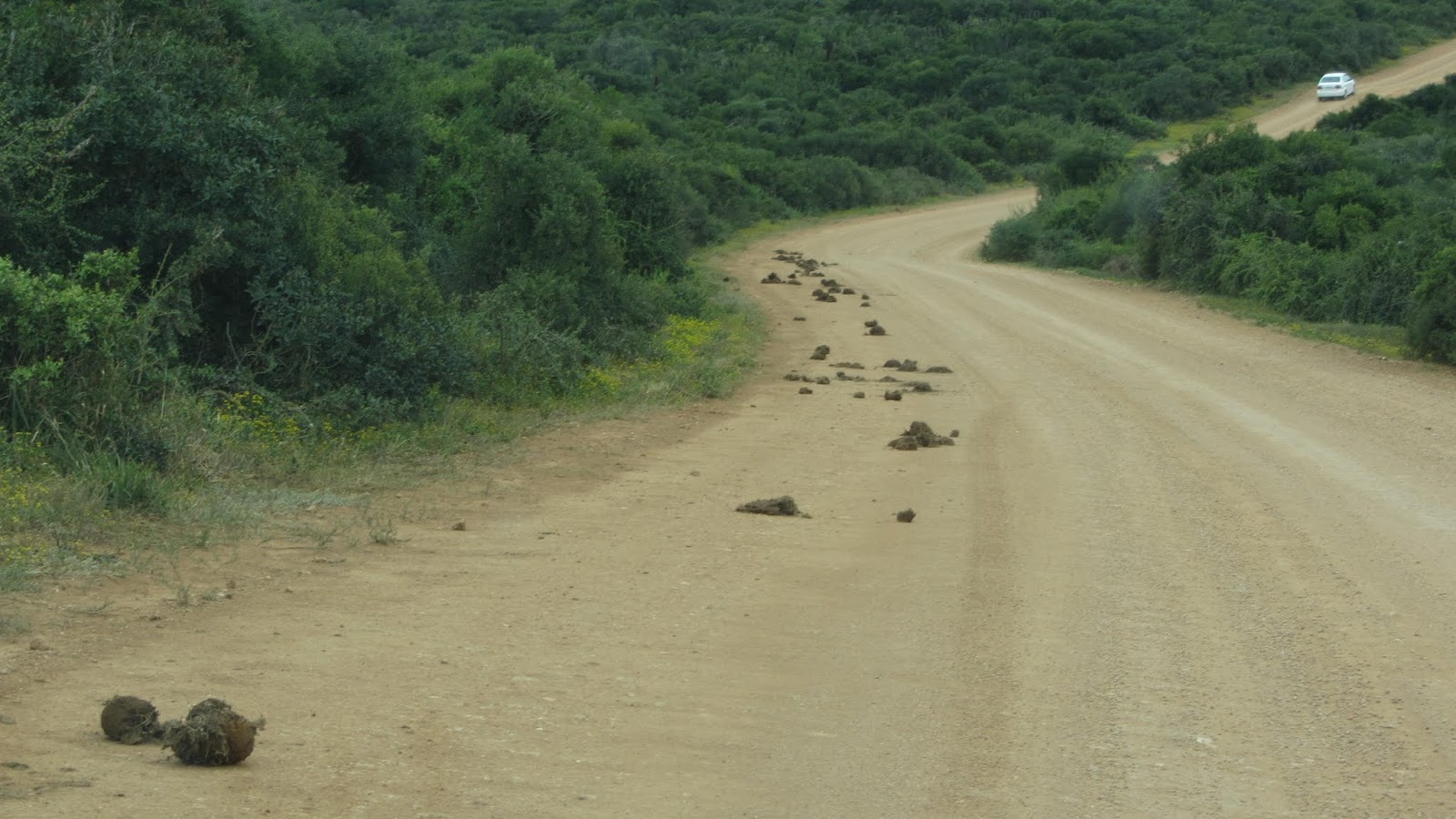
An adult elephant deposits upwards of 330 pounds (150 kilos) of dung every day – about one consignment every 15 minutes. Prior to the expansion of the park, this meant that the dung beetles had an enormous clearing up job, and they were just not coping.
The flightless dung beetle is found almost exclusively in this park (other dung beetles can fly), and are important to the ecology of the area.
No citrus fruits may be taken into Addo as elephants have such a craving for them, that one whiff of an orange could send them crazy, and could mark the end of you and your car.
The cruellest irony is that the region has many citrus groves – which is an unkind twist of fate for the Addo elephants!
Black-backed jackal are commonly seen in Addo, and evenings are punctuated by their strident howls.
Cape buffalo, black rhino, kudu, eland, red hartebeest and springbok all graze on their preferred grasses or bushes and highly adaptable leopards are there but rarely seen. With the consolidation of the land expansion, lion will be reintroduced to complete the ‘Big Five’.
Furthermore, with the park now stretching to the shores of the Indian Ocean, whales and dolphins will swell the viewing opportunities.
Addo’s birding opportunities are accentuated by the contrasting habitats of dense thickets interspersed with open grassy areas and wooded kloofs. Look out for martial and crowned eagles, olive bush shrikes, yellowthroated warblers, Cape batis, black korhaan and secretary birds.

This region’s temperate climate is influenced by the Indian Ocean, providing rain in equal measures throughout the year.
Spring: Spring is in the air by the end of August and into September.
October gets much warmer with the feeling of summer around the corner.
Summer: November to March are hot, and temperatures peak from December to February at around 75°-86°F (24-30°C) or more.
Autumn: Temperatures start cooling down from about April but it can still be very pleasant until June.
Winter: June, July and August are mid-winter months but the days may still be bright and warm, but it gets cold in the evening.

10 of the best backpackers in the Western and Eastern Cape …

Sunrise from the porch

Bridge to the beach

I might live in my car, occasionally a tent but even I feel the need for a some home comforts, clean sheets and piping hot showers. Here are ten of the best backpackers in the Western and Eastern Cape in South Africa that I’ve stayed in .

Find out if you are cut out to be a backpacker here – then learn how it’s done with 10 tips for first time backpackers.

1. Cape Agulhas Backpackers

Cape Agulhas, Western Cape 

The Meru Wreck

This was where it all started. Genesis if you will. And it didn’t disappoint. The Southern most tip of Africa. Aside from a cool war story to tell everyone, it really should be a must for visitors to South Africa.

Cape Agulhas Backpackers is sweet as and handily own the activity centre across the road that offers all manner of watersports from Adrenalin Boat rides, Stand Up Paddle Boards and some of the best kite surfing conditions in South Africa. You can also hangout with stingrays in the harbor if you just want to get your toes wet.

Aside from all the usual goodness you’d expect at a backpackers they have undoubtedly one of my favourite bars to have a beer in. I can’t really explain why. Maybe it was the start of it all. But the beer was sweet, the staff unbelievably chilled and friendly and it set the tone for the Going Homeless Project up perfectly.

It also was the first place I stayed longer than I intended. For good reason. Drop by. It’s full of goodness.

www.capeagulhasbackpackers.com


2. Backpackers Paradise

Oudtshoorn, Western Cape

It’s about the birds

Oudtshoorn, on the R62 and separated from George by the Outeniqua Mountains, is a travellers’ heaven so to speak. Activities a plenty and a backpackers that is centrally situated and pretty darn cool.

The Backpackers Paradise offers all manner of in-house tours, a lot of biking options and is within range of the incredible Swartberg Pass. Daily braai’s and a busy bar make your stay social. A giant indoor fireplace and a lounge full of couches is the ideal place to get to know your fellow travelers.

You cannot visit Oudtshoorn without dropping by one of the ostrich farms or miss out on the Cango Caves, if you have a car be sure to visit the Swartberg Pass – it’s a stunning mountain pass. It also offers a diverse and different stay to the coastal destinations on the Garden Route.

www.backpackersparadise.net


3. Fairy Knowe

Wilderness, Western Cape

Sunrise from the porch

Wilderness is probably one of the most underrated destinations on the Garden Route in South Africa. Sandwiched between the Kaaimans and Touws river it offers a relaxing yet truly beautiful experience.

The Fairy Knowe Backpackers is situated on the lagoon and adjacent to the Wilderness National Park, making pretty much every activity within walking distance. Very handy. That aside it is set on an incredible piece of land with established trees and offers space, hammocks and a porch that just begs to have the sunrise watched from it.

Be sure to visit the waterfalls in the National Park, Clifford Cave on the walk to Victoria Bay and the Map of Africa in the Wilderness Heights. Stop driving by. Wilderness is sweet as.

www.wildernessbackpackers.com


4. Tsitisikamma Backpackers

Storms River, Eastern Cape

You’ve crossed it before

Tsitsikamma is a travellers’ paradise: aside from being truly beautiful it caters to both the adventure heads and the more easy-going traveller. Situated in the Eastern Cape about 65km north of Plettenberg Bay, Storms River village and the Tsitsikamma Backpackers offer the ideal base to experience all this area offers.

The backpackers set on a large piece of land, teeming with indigenous trees and plants offers a serene place to relax after a hard day of activities, the porch gets the morning sun and is a good way to start any day. The Bar area offers an indoor braai and a great place to have a drink and meal with your fellow travellers.

A visit to Tsitsikamma has to include a visit to the national park at Storms River mouth to hike the iconic suspension bridge and the start of the Otter Trail (Read about hiking the Otter Trail here) to visit the waterfall, the area offers a variety of day tours from Zip lining across waterfalls or through the indigenous forests, off road Segway tours and many more. Tsitsikamma is diverse, beautiful and should be should be on any traveller’s itinerary.

www.tsitsikammabackpackers.co.za


5. Island Vibe

Jeffreys Bay, Eastern Cape

On the beach means on the beach!

The biggest shame about my time in Jeffreys Bay was that it was way to short and the sea was flat, for a surf destination not ideal, but that no fault of anyone but mother nature and its hard to be angry when she delivers beauties like Jeffreys Bay.

That said Island Vibe Backpackers surely must be a designated stop on anyones travels up the Garden Route. The saying goes Location location location … and Island Vibe’s panoramic views from just about all accommodation and the bar over the beach is truly spectacular. Upgrade to the Beach house if you want the sensation of living on the beach.

Be prepared to shake your booty and party every night as Island Vibe is undoubtedly one of the party locations on the Garden Route and your days can be filled with a variety of activities – the obvious one is surfing and there is a full fledged surf school for beginners, and a variety of day tours that range from township tours, sand boarding and game viewing make it an excellent destination for adventure heads and surfers.

www.islandvibe.co.za


6. Aardvark Guesthouse and Backpackers

Outside Addo Elephant National Park, Eastern Cape

Photo bombed by an Elephant

Ten minutes from the main gate of Addo Elephant National Park (Read more about the Addo Elephant National Park here) is a little piece of paradise, hammocks hanging in trees, sunshine and wide open space. The Aardvark Guesthouse and Backpackers, beautifully decorated and adorned with local arts and sculpture, is the place to stay when visiting Addo National Park.

Graciously hosted by Daniel And Claude, I discovered that the Addo area has a lot more to offer than just the national park. Local knowledge trumps the interwebs again. A canoe trip up the Sundays River with Criss Cross Adventures and a visit to Daniel cheetah farm rounded out an unexpectedly epic stay in Addo. If you need road tripping or route advice chat to Daniel who is a veritable back road wizard.

Try their scrumptious breakfast, it is epic and save some time to chillax in the hammocks it’s good for your body and soul.

www.theaardvarkguesthouse.co.za


7. Away with the Fairies

Hogsback, Eastern Cape

the bath at the end of the world

Aside from the fact that I am totally captivated by Hogsback, it offers a very different and unique experience to the rest of my travels up the coast. Set inland in the magnificent Amathole mountains, it’s hard not to be wowed by the place.

Away with the Fairies, perched atop a cliff overlooking the beautiful indigenous forests, offers the perfect base to do all that Hogsback has to offer. Walk from the bottom of the garden into the forests to visit the numerous waterfalls, visit the local artists and potters. Be sure to drop by the Ecology Shrine for a different perspective and find the answers to life by walking the Labyrinth.

Hogsback is a truly beautiful place and offers a completely different experience to travelers. It’s a must visit place for those looking for a more than a costal view of South Africa. Oh and be sure to take a bath at the end of the world …

www.awaywiththefairies.co.za


8. The Falls

Tsitsa Falls, near Maclear in the Eastern Cape

Tsitsa Falls

The biggest surprise of my journey so far, an unheard destination for me. Located about 40km from Maclear in the Eastern Cape, Tsitsa Falls is an off-the-grid experience that is truly awesome and that’s before you even see the falls.

The backpackers is housed in the old farmhouse, its front porch lords over the valley and offers a spectacular view to appreciate the space and serenity. Off the grid but by no means lacking, the beers are cold, the showers piping hot and you want for nothing … you forget about modern life and this is what makes this place special.

There are some excellent hikes and bushman paintings but the jewel without a doubt is the falls – I lack superlatives to describe it. Aside from the spectacular views from above, next to and behind the waterfall, Tsita Falls can be walked into but the opportunity to zip line down into the gorge is the only choice. There is also world class kayaking on four different rivers. The Falls Backpackers won’t be everyone’s cup of tea – but you missing out on a destination that is truly beautiful and good for your soul.

www.tsitsafalls.com


9. Buccaneers

Chintsa, Eastern Cape

Bridge to the beach

This place is legendary, if you haven’t heard about it you’re probably talking to the wrong people or reading the wrong travel information. Situated in a primo spot on the lagoon in Chintsa, Bucs offers an excellent all round place to stay, great accommodation, free daily activities, killer dinners and a very festive in-house bar.

Surf lessons and board rentals, horse riding and a multitude of other cool activities are available for those who feel the need to be active, or head to the beach for a swim and just laze in the sun. Grab a freebie bodyboard and hit the waves or canoe up the lagoon.

A free daily activity, often involving free drinks, kick off good evenings so be sure to participate. They also offer themed dinners fit for a king and are definitely bang for your buck, they also help create the awesome social vibe Bucs has got going for them.

Don’t skip Chintsa because its a small dot on the map – its pure awesomeness.

www.cintsa.com


10. Coffee Shack

Coffee Bay, Transkei, Eastern Cape

Coffee Bay

Uhm, one word should suffice. Heaven. Well there are also cool people and beer. And a beach. So probably better. Situated in Coffee Bay, Transkei, the Coffee Shack is epic. Comfy, welcoming and well pure backpacker porn so to speak.

Daily activities that waver between vaguely strenuous and super chilled. Perfect surf for both beginners and experienced surfers. Lessons and board rentals are cheap cheap – so learn to surf while you there. Hike to the Hole in the Wall, Cliff Jump and chow down in the local village and get the skinny on the area on the various day trips.

Yum Breakfasts and communal dinners and coffee i’d put my name to are available from the kitchen and make cooking for yourself obsolete they are so good. Cool, friendly and helpful staff make the Coffee Shack a “you’re stupid if you miss it” when visiting South Africa.

There is something about the Coffee Shack that gets everyone on the same page and that makes for late nights and fun filled days. Good times. Indeed.

www.coffeeshack.co.za


Find more awesome backpackers in this blog: 22 of Southern Africa’s best beach backpackers.


Are there any other hostels or backpackers I should be visiting on my trip around South Africa? Let me know in the comments and I’ll be sure to pay them a visit.


You can follow my trip on www.goinghomeless.co.za or you can follow me on Twitter – @going_homeless.

Previous post by Stu Cooper:

« The Going Homeless Project

Next post by Stu Cooper:

No next posts by this author

Tags: Accommodation, backpackers, Budget Travel, eastern cape, western cape

Leave a Replyfacebook

2 Responses to “10 of the best backpackers in the Western and Eastern Cape”facebook

  1. Hey Stu, if you coming past Plett you need to check out this new place on Central Beach, Plett, a Flashpackers of note, with a selection of restaurants and activities on the doorstep.

  2. You’ve featured them before in other posts, but I think they deserve to always be mentioned…Bulungula, Transkei. It’s a little spot of paradise that seems to have removed itself from the frantic pace of our everyday lives. Love that is has such a strong community impact as well! Do yourself a favour and get out there for a few days of relaxing to the maxing

Team buzzing over new Addo business


All material copyright The Herald. © Avusa Media Limited. All Rights Reserved.

Subscribe | Terms Conditions | Privacy Policy | News | Archives | Events | Blogs | Classifieds | About Us |
Jobs | Herald Rates | WeekendPost Rates

Website development and design by Online Innovations

Five Star Lodge in the Addo Elephant National Park: Breathtaking

<!–
google_ad_client = “pub-8982229653008092”;
google_ad_slot = “2158176860”;
google_ad_width = 468;
google_ad_height = 60;
//–>

RiverBend Lodge is a mere 55 minutes’ drive from Port Elizabeth and is an ideal malaria-free safari addition to a Garden Route holiday. Personalised game drives are led by enthusiastic and experienced guides, who will ensure you have a truly memorable safari experience. Article source: http://riverbendaddo.blogspot.com/2012/09/breathtaking-sunset.html

Port Elizabeth Budget Accommodation

Go to:My Addo

Breathtaking Sunset

RiverBend Lodge is a mere 55 minutes’ drive from Port Elizabeth and is an ideal malaria-free safari addition to a Garden Route holiday. Personalised game drives are led by enthusiastic and experienced guides, who will ensure you have a truly memorable safari experience.

South Africa and Europe 2012: ADDO ELEPHANT PARK

Day 23……more animals…..but first breakfast.


Then off we go…..


“don’t you worry miss daisy, I’ll be there as soon as I finish my business”  you cracker ass bitch


So, three hours later of driving Miss Daisy at 20 Km around the park, where we saw…..


…..and then we came around the corner and saw this


We sat here for about 45 minutes watching this show.  You will have a chance to see some of it if I can ever load another movie file. Right now it says it will take 362 minutes to load and I don’t have that much time.

Want to know how to track a elephant?


Back at Elephant House our laundry was delivered.


Photo of the day – baby elephant at Addo | JBAY News

A new born elephant with its herd at Addo Elephant Park. Situated a mere 120 km from Jeffreys Bay, Addo is a must visit for locals and visitors alike. This image by Port Elizabeth photographer Stan Blumberg

student photo essay – emily, wake forest university

1
How many people are lucky enough to have two spring breaks in one year?

2
Spent our second morning of Break at Addo Elephant Park outside of Port Elizabeth.

3
We were one of the first groups to see the five-day-old baby elephant!

4

Zebras recognize one another from the stripes on their bums.

5
Enjoying the view of Addo’s 180,000 hectares of land, making it the third largest national park in South Africa.

6
“I’m working on my roar!”

7
Our first lion sighting.

8
Close encounter with a frustrated male elephant. Spectators watched in amusement as the elephant
harassed our Landy (Safari slang for Land Rover).

9
Getting ready for dinner. Unfortunately, tonight was not a success for the lioness as moments later we watched the zebra limp away with merely a gash in its leg.

10
Thanks to our awesome tour guide, Pieter, for a lekker day. Heading home to mentally prepare for our next adventure: bungee jumping!

11
Nerves are 216m high, as we get ready to take the plunge off of Bloukrans Bridge, the world’s highest bungee bridge.

12
Feeling calm and accomplished with Bloukrans Bridge behind us.

13
Aldyn’s perfect beach day in Plettenberg Bay.

14
Naa-Shorme enjoys her first ever ocean waves, and in the Indian Ocean no less!

15
By the end of the week, we had perfected our veg dinners.

16
Accustomed to the wine tastings in Stellenbosch, we decided to try something new at Mitchell’s Brewery in Knysna.

17
Going for a casual ride in the Park.

18
While waiting for my turn, I witnessed Sabrina’s smooth parachute landing.

19
View of Plettenberg Bay from the plane moments before I jump.

20

10,000 feet!

21
We decided to treat ourselves to Knysna’s famous seafood for our final dinner.

22
Celebrating Naa’s 20th was a great way to end our week together : )

Addo Elephant National Park – a unique place of beauty and …

F rom its humble beginnings in 1931, Addo Elephant National Park has grown into one of South Africa’s most ambitious conservation projects. The park is situated in the Eastern Cape province of South Africa and the ideal destination for wildlife safaris, family holidays and romantic getaways.

Addo is South Africa’s third largest national park at 180 000 hectares, and the recent addition of a long stretch of coastline stretching all the way to the Bushman’s River includes massive dune fields adding significantly to the park’s ecological diversity. It includes six of South Africa’s seven biomes – from the vast open spaces of the Karoo to rolling hills covered in fynbos, thicket and sloping sand dunes flanking the coastline. With the inclusion of marine areas the park now boasts the Big 7: lion, leopard, elephant, rhino, buffalo, southern right whale and great white shark.

The below video will give you a taste of what Addo has to offer.

History of Addo
Today, Addo Elephant National Park is home to the densest populations of African elephant in the world. The area boasts a carrying capacity incomparable to any other wilderness region. But it wasn’t always like this – Addo and the surrounding region endured dark times during the early 20th century when the once-widespread elephant population was hunted to near extinction due to the ivory trade and agricultural activities that encroached into the natural habitat of wildlife. The elephants had a penchant for oranges in particular and raided the local farmers citrus crops. To combat the ‘problem’ the Administrator of the Cape Province, Sir Frederick de Waal employed hunters to exterminate the elephants. A professional hunter, Major P.J. Pretorius, was especially destructive by killing 120 elephants in his first 11 months in the area. It is journalled that he once shot 16 elephants in 30 seconds.

When the elephant population reached a critical number of only 11 individuals things started to change. Due to public pressure a reserve was allocated and in 1931 the national park was proclaimed. The elephant survived in an unfenced area of around 2000 hectares. Only in 1951 the park was fenced and the elephant-human conflict stopped. The population grew steadily, but due to the low numbers the genetic pool was too small and most of the females were tuskless. The National Parks Board then decided to introduce a number of elephant bulls from Kruger National Park. But the results took a bit longer than planned as the new bulls quickly formed their own herd and didn’t integrate with the local population. The theory according to the local rangers is that the new bulls didn’t speak the same dialect and it took some time for the new-comers to find their place in the Addo family.

Map of Addo
The below map shows the main wildlife area of Addo Elephant National Park with the two camps – Addo Main Camp in the north and Camp Matyholweni in the south.

Visitors to Addo can expect excellent game viewing of Africa’s magnificent wildlife. Enjoy self drive game viewing in your own car, or if you want the in-depth knowledge of the local rangers, join them on the scheduled morning and afternoon game drives. Night drives are also a good opportunity to spot some of Africa’s more elusive nocturnal animals and birds. Horse riding is available from Addo Main Camp. Bird watchers won’t be disappointed with 450 species to tick off and a hide offering a view of the local bird species up close.

Accommodation in Addo
Addo offers a variety of accommodation options. From family friendly self catering units in Addo Main Camp to luxurious boutique lodges (such as Gorah Elephant Camp) ideal for honeymoons and romantic getaways. If we include the Greater Addo area, your options include some of South Africa’s most unique private game reserves such as Shamwari and Kwandwe. Read more about the Greater Addo Route we recently experienced.

Addo Main Camp is conveniently situated in the central part of the National Park just off the main road. This makes for access easy and should be high on your list when planning a self drive holiday. The camp is full of interesting things to do for kids and include a jungle gym in the shape of an elephant. The interpretive centre offers an insight into the wildlife found in the area. Night drives are offered from Main Camp with horse riding and game drives in open sided vehicles also available. A fully stocked shop is ideal for anything you might have forgotten and the restaurant allows a break from cooking at the chalet. The actual chalets are ideally placed next to the fence, so it’s great for spotting wildlife walking past (which happens often!).

Camp Matyholweni is the most southern camp, tucked away into the natural vegetation. The family chalets are fully equipped for self catering purposes and built on stilts, overlooking the beautiful densely vegetated hills of southern Addo. Ensure that you have all your food, drinks and things like firewood and fuel before you settle in here. This camp doesn’t offer a shop or any other facilities but  the town of Colchester is a 10 minute drive away if you urgently need supplies.

One other camp called Spekboom Tented Camp is another option for self drive guests, but not ideal for children as each tented unit only has two beds. It will work for families with older children. This camp also does not offer any facilities so stock up at Addo Main Camp before heading out for an overnight at Spekboom.

Bedrogberg 4×4 Trail
If you travel in an all-terrain vehicle Addo offers a 45km 4×4 trail over the Zuurberg mountains between the Kabouga and Darlington areas of the park. It offers spectacular views and interesting history. The scenery is completely different from the main wildlife area with riverine thicket, afromontane forest and fynbos on the peaks. As you make your way into the mountains you will see cycads, one of the most ancient plant species in the world. The trail takes you across flowing streams and mountainous valleys. The route will take you around 6 hours. Accommodation before and after the route is available at Kabouga House or Mvubu campsite (camping only) on the Kabouga side and the luxury Darlington Lake Lodge is available on the Darlington side. The below map will give you a rough idea of where it will take you.

Alexandria Hiking Trail
As you descend down to the coastal section of Addo called Woody Cape, the landscape  changes dramatically to forest and beach. The area offers two hiking options – the 7km Dassie Day Hike and the 36km 2 day circular Alexandria Hiking Trail. The trails are well-signposted. The 2 day hiking trail is made up of 19.5km on day one and 16.5km on the second day. Accommodation before and after the hike is available at the Langebos huts situated at the start and end point. Your overnight stay on the first night of the hike is at the Woody Cape hut, nestled in thick coastal forest on top of the cliffs with a view of Bird Island in the distance. This hut has 12 beds with mattresses and drinking water is available in the form of rainwater tanks. This hike takes you through a variety of biomes starting out in the magical coastal forest where ancient yellowwods and exotic Knysna loeries can be seen. It then takes you onto the beach where you might spot southern right whales and dolphins off the coast. You will cross the largest coastal dune field in the southern hemisphere on day two before heading back through thick forests ending back where you started.


FAST FACTS:

Where is Addo located? In the Eastern Cape, South Africa. Nearest city is Port Elizabeth.

Best time to visit? Addo is a year-round destination. Summer (November to February) is best for game viewing, as wildlife can be found around the few waterholes. Winter is colder, especially at night, with rain occasionally occurring. The coldest months are June and July.

Getting there? Fly to Port Elizabeth and transfer to one of the lodges. Or explore Addo by car. Rent a vehicle of choice or take your own and discover this beautiful park at your own pace. Addo is the ideal destination as a start or end point for a Garden Route and Cape Town safari.

Places to stay?  Addo offers something for everyone – from luxury lodges for those wanting the best, self catering units for families and couples, affordable accommodation just outside the park and camping options scattered around the region.

Activities are on offer? Game viewing, hiking trails, horse riding, 4×4 trails, bird watching, night drives, guided game drives and the PPC Discovery Trail (a fantastic experience for visually-impaired and wheelchair-bound visitors).

Book Addo accommodation: Check availability and book online with SANParks – Addo Main Camp, Matyholweni Rest Camp


Tags: addo elephant national park, big 7, elephants, featured, greater addo, sanparks, zuurberg mountains

Five Star Lodge in the Addo Elephant National Park: Breathtaking …

RiverBend Lodge is a mere 55 minutes’ drive from Port Elizabeth and is an ideal malaria-free safari addition to a Garden Route holiday. Personalised game drives are led by enthusiastic and experienced guides, who will ensure you have a truly memorable safari experience.

Discover South Africa One Hot Airfare Deal At a Time | Vayama …

Port Elizabeth, South Africa: Surfing, Penguins and Elephants.

Port Elizabeth is the San Diego of South Africa. It offers long stretches of Indian Ocean beaches with beach condos and beach arcades, a fun surf culture in the nearby town of Jeffery’s Bay and a world class a national park on the beach that boasts populations of seven big wild animals: Elephants, Buffalos, Lions, Leopards, Rhinos, Great White Sharks and Southern Blue whales (Addo Elephant Park).

Save the Penguins South African Style


Don’t miss Port Elizabeth’s Penguin Hospital (Cape St Francis Penguin Rescue) where they treat and save injured penguins before releasing them back into the wild. The penguins are too cute and you can watch the volunteers feed them sardines, which they gobble up quite happily.

Rescuing Penguins

Much “Addo” About Something

One of the main reason for visiting Port Elizabeth (apart from the surfing and cute penguins) is Addo Elephant National Park.   Unlike the more famous Kruger National Park, Addo is malaria free. Its reception area and guest huts have the landscaped look and feel of an African theme park, but don’t let the “Jurassic Park” decor and Jungle Jim uniforms of the friendly staff fool you. Beyond the gates are acres and acres of wild South African savannah, where herds of wild elephants roam (hence the name).

The park offers one hour safaris on large Range Rovers, or you can drive your own car or pick a guide at the gates to ride with you.  All three options are fun.  On a recent visit, we signed up for a Range Rover Safari. The driver was a local Boer dressed in the obligatory khaki shorts and shirt and safari hat.  We soon found out that the park has a lot more large game than just wild elephants.  Our driver did a circuit of the parks several waterholes so we could see all the different animals come out of the bush to drink.

First out were the Zebras. Their black and white coats glistened in the midday sun, while warthogs caroused between their powerful legs in the hope of a drink. Once the Elephants showed up, they took over the waterhole and all the other animals had to wait their turn.

The park offers accommodation in huts with all the mod cons. Our hut was located near a waterhole which is lit at night. Close to midnight we heard some growling and turned off the lights in our hut in order to not spook whatever was making all that noise. Minutes later, a large pack of hyenas scurried out of the bushes to horde the waterhole. I was petrified at how large they were; they looked bears with huge teeth. The lead hyena growled and salivated as we watch in silence from our darkened hut, just a few feet away. The next day as we prepared to leave, I knew that I had to come back to Africa. I was hooked, and you will be too.

Addo Water hole

Discover Africa

Fly to South Africa nonstop on South African Airways .  Vayama offers airfare deals to South Africa  and the rest of the African continent.  This year vayama is sponsoring the TriLife racing team in South Africa’s Comrades Marathon – considered the world’s ultimate challenge. The race will start this year from Durban. Come and cheer the TriLife team in South Africa with this hot airfare deal.

This entry was posted

on Monday, September 24th, 2012 at 10:46 am and is filed under Africa.
You can follow any responses to this entry through the RSS 2.0 feed.

You can leave a response, or trackback from your own site.

Does South Africa Deliver? Part 2 | Vayama Travel Blog

Whales, Elephants, Zebras and Warthogs in South Africa’s Capes.

By Florin R. Ferrs

After a week in Capetown, eating Cape Malay curries, browsing in the African markets, going up Table Top and hitting the bars along Long Street, I was quite ready to hit the road.

You can’t come to South Africa and not do a Safari.  So I decided to visit the South African National Parks website where I booked a cute bush bungalow in Addo Elephant Park.  Addo is not quite as large as Kruger National Park, but it’s quite impressive in its own right, with herds of wild elephants, zebras, warthogs, lions, cape buffalo and even whales and sharks just off its protected beaches.  Addo’s main entrance is located about an hour from Port Elizabeth, approximately a ten hour drive from Cape Town, in the Eastern Cape region.

I consult my guidebook and learn that fortunately the 10 hour drive is chock full of South African touristic wonders: The Cape Wine Region,  the whale watching coast around Walker Bay and the town of  Hermanus, the southernmost tip of Africa at Cape Alguhas, and the “Garden Route”,  that links several beach towns from Mossel Bay to the Surfing community of Jeffrey’s Bay.

Posh Stellenbosh


I have to check out early in order to make it to Jeffrey’s bay on the Eastern Cape by dusk. Fortunately the friendly lady from The Accommodation Shop, who’s in charge of my Cape Town apartment, doesn’t mind showing up at 7am to collect the keys and return my deposit.

An hour later I am driving trough vineyards. I find the sign for  Stellenbosh, the jewel of the Cape Wine region. You could be in Napa or Sonoma but with Dutch colonial buildings instead of Spanish. Dramatic mountains rise above a white washed town that is full of trendy shops, cafes and bakeries. I sit al fresco and watch the beautiful people while sipping excellent South African wine. Their reds are world class and their olives are even better.

I head out of town trough vineyards and pine forests before reaching the coast at Hermanus, a town famous for its whale population.  Southern blue whales have found refuge there, returning every year to have their young. I see the whale signs and expect a faint puff of water in the horizon, before I realize that what I thought were rocks close to the shore, were actually several blue whales.  A group of tourists screamed with delight as a mother whale and her calf swam so close to the rocky shore that they could almost reach out to pet them. Many countries promise a lot to tourists, but very few deliver like South Africa does. I was gob smacked and in total awe before these majestic creatures.

Video:   Whale Watching in Hermanus South Africa

A Whale of a time in Hermanus

After driving trough interminable wheat fields, ostrich farms and sheep estates, I finally hit the  coast at Mossel Bay. This part of South Africa reminds me of California; beach communities dotting the coastline for miles until the city of Port Elizabeth: Knysha, Plattenberg Bay, Jeffrey’s Bay.

I reach Jeffrey’s Bay in mid spring so the town has an off season feel to it. The big surf tournaments are in the southern winter (July),  so the beach bars are empty and so are the surf shops. My Bed Breakfast is run by Zimbabwean refugees.  Nice couple, but you can tell that they have been left behind holding the flag for Queen and country. Serving marmite on toast and HP sause with their breakfast eggs. They are a pair of holdouts from a bygone era, perhaps struggling to find a place in the new South Africa. And they are a reminder that the eastern Cape was settled by the British, and that I have left behind all the gorgeous Dutch colonial architecture of the Western Cape,  for the Eastern Cape’s red brick of its British style homes.

Addo Elephant Park

I reach Addo Elephant Park early the next day.  My bungalow won’t be ready until the afternoon so I sign up for the noon Safari.  We will be riding a ten seater Range Rover with open sides and a rag top.

Our guide is a chubby, enthusiastic,  Boer with great knowledge of the park’s animals. I have to pinch myself,  even the guide’s accent is perfectly cliche.  We’re on Safari in South Africa! Big adventure awaits!

Video:   Addo Elephant Park Safari South Africa

The gates open and our Land Rover roars inside the game area. The animals stir out of the bush around noon to hit the water holes.  Soon we are surrounded by a pack of Elephants hogging a water hole, while Zebras and warthogs watch and wait for their turn. I count the seconds after seeing our first warthogs before someone yells “Hakuna Matata”, it’s the guide.  I am in Safari heaven, surrounded by wildlife, a million miles from home, on an open top Range Rover. Yes, South Africa delivers, and then some.


Addo Zebras

This entry was posted

on Monday, September 24th, 2012 at 11:35 am and is filed under Africa.
You can follow any responses to this entry through the RSS 2.0 feed.

You can leave a response, or trackback from your own site.

Five Star Lodge in the Addo Elephant National Park: Meet our new …

RiverBend Lodge is a mere 55 minutes’ drive from Port Elizabeth and is an ideal malaria-free safari addition to a Garden Route holiday. Personalised game drives are led by enthusiastic and experienced guides, who will ensure you have a truly memorable safari experience.

River Bend Lodge, Addo Elephant National Park | Klein Collection's

<!–
google_ad_client = “pub-8982229653008092”;
google_ad_slot = “2158176860”;
google_ad_width = 468;
google_ad_height = 60;
//–>

– African Safari Review by Jonathan Sophie Ellaby We visit one of Addo’s three exclusive lodges for a dose of colonial luxury and come away impressed with what the large reserve has to offer. And the hospitality. It’s a warm winter’s day when we arrive, greeted by the competent front-of-house team and we tuck into […]

Port Elizabeth Budget Accommodation

Go to:My Addo

Cape Town to Addo Elephant Park

6 Day Cape to Addo Safari

Day 1: Cape Town – Agulhas

We depart from Cape Town between 06h30 – 07h30. Today’s route takes us along the Coastal Whale route, through one of the most scenic parts of our country. We stop en-route in the town of Hermanus to have lunch (own expense) and in the hope of spotting the Southern Right whales (seasonal) that visit this coast to breed.

After lunch we head to the exact point where the African continent sinks into the ocean and keep a sharp eye out for the Cape Grysbok in the fynbos or Cape fur seals and Dolphins playing in the surf. We reach our overnight destination in time to appreciate one of the most spectacular sunsets in the world from the patios of our fisherman’s cottages, in sight of the ocean.

Dinner is a two course meal, prepared by your guide and served al fresco outside one of the cottages. Wine is served with dinner but guests are welcome to bring along additional / alternative drinks which should be purchased before entering the park.

(Dinner included)

Day 2: Agulhas – Tsitsikamma

Today our route takes us through the scenic fruit and wheat producing regions of the Overberg and Langeberg. These rolling grasslands are known to be home to the endangered Blue Crane and we may be fortunate enough to spot some of these beautiful birds. We travel along the world renowned Garden Route, past the picturesque coastal towns nestled in the lake and lagoon region at the foot of the Outeniqua mountains and reach Tsitsikamma, the jewel of the Southern Cape in time for lunch (own expense).

After lunch and checking into our accommodation, there is time to explore the beauty of the rare indigenous forest and impressive coastline on a hike to a waterfall. If we are lucky we might spot the Cape clawless otter hunting in the streams and surf.

Dinner is a two course meal, prepared by your guide and served al fresco outside one of the cabins. Wine is served with dinner but guests are welcome to bring along additional / alternative drinks which can be purchased at the shop.

(Breakfast Dinner included)

Day 3: Tsitsikamma – Addo

We rise early for a morning hike in search of the beautiful but elusive Knysna Turaco and depart after breakfast to the world renowned Addo Elephant Park. The drive takes us from forest and plantation through the semi arid region of the Southern Cape with several opportunities to see some of the rare Raptor species that make this area their home.

We arrive at Addo Elephant Park and start exploring the park in our closed tour vehicle. After a short drive, we have lunch (own expense) at the main rest camp and check into our accommodation. This afternoon you head out on an afternoon game drive, conducted by a SANParks ranger, in an open game drive vehicle. This drive generally takes about 3 hours and tends to extend into the early evening, affording guests the possibility of spotting some nocturnal animals.

Dinner is a two course meal, prepared by your guide and served al fresco outside one of the chalets. Wine is served with dinner but guests are welcome to bring along additional / alternative drinks which can be purchased at the shop.

(Breakfast Dinner included)

Day 4: Addo

Today we will spend the morning afternoon exploring the park in our tour vehicle, in search of some great photo opportunities experiencing wildlife at its best! Addo Elephant Park offers a unique eco system and is home to a huge variety of wildlife, including the Big 5 as well as plains game, Black Backed Jackal, Tortoises and Dung Beetles (who have right of way!).

We’ll return to camp for breakfast after the morning drive and have time for a siesta lunch (own expense) before heading off on our afternoon drive.

Dinner is a two course meal, prepared by your guide and served al fresco outside one of the chalets. Wine is served with dinner but guests are welcome to bring along additional / alternative drinks which can be purchased at the shop.

(Breakfast Dinner included)

Day 5: Addo – Oudtshoorn

After an early wake-up call, we pack up and enjoy a last game drive on our way out of the park. We will stop for breakfast in one of the small villages somewhere along the way.

Today’s route takes us away from the coast along Route 62. The scenery along this route is vastly different from what we have experienced during the first couple of days of our safari as lush green coastal forests makes way for a much more austere environment with stark landscapes. Nestled between the Outeniqua the Swartberg Mountain ranges, this area is world renowned for its agriculture, in particular ostrich farming. We stop for lunch en-route in one of the quaint towns (own expense)

We spend the night in the Ostrich capital of the world, Oudtshoorn. Dinner is a two course meal, prepared by your guide and served al fresco at one of the chalets. Wine is served with dinner but guests are welcome to bring along additional / alternative drinks which can be purchased in town.

(Breakfast Dinner included)

Day 6: Oudtshoorn – Cape Town

After a leisurely breakfast, we explore the area west of Oudtshoorn. This fruit dairy producing area sports some interesting towns with brandy distilleries cheese factories. We stop for lunch en-route (own expense).

We finally pass through the fruit producing areas of Elgin Grabouw to cross the Hottentots Hollands Mountains, with spectacular views of the surrounding landscape, as well as False Bay and the Cape Peninsula in the distance with Table Mountain watching over Cape Town. We plan to be back in Cape Town between 16h00 17h00, with drop-off points at both Cape Town International airport and the V A Waterfront.

(Breakfast included)

Safari Options: (rates valid from 1 August 2012 – 30 September 2013)

Classic R13950 per person sharing R16700 per person single

Accommodation is in en-suite chalets with beds, linen, towels soap.

(Please note that a minimum of 2 pax is required in order for this safari to take place)

Included:

• Transport for the duration of your safari

• Pick up drop off points at the V A Waterfront or CPT International Airport

• Professional drivers/guides (FGASA registered – Field Guides Association of Southern Africa)

• Meals as specified per itinerary

• All game drives in Addo Elephant National Park are conducted in the closed, air-conditioned tour vehicle, with the exception of:

• SAN PARKS sunset drive (All guests over 6 years of age)

• All entry fees and daily conservation levies

• Accommodation in en-suite chalets with beds, linen, towels soap provided

• Bottled mineral water in the vehicle

• Wine with dinner

Excluded:

• Meals not specified in itinerary

• Guests are welcome to bring their own drinks to dinner, which can be purchased at the Park’s shop or en-route to the parks

• Items of a personal nature

• Gratuities

Notes:

On our safaris, we make use of facilities and accommodation situated inside the National Parks and do not stay outside the Parks, unless forced to do so because of availability.

It is important to note that this is not a private safari and more than likely there will be other guests joining you on the safari.

Please note that sunset game drive times are subject to change and availability on the day. These drives are conducted by SAN PARKS, by one of their rangers and in one of their vehicles. There will most likely be other guests on this drive. Children under 6 years of age are not allowed on SAN Parks open game drive vehicles.

Guests flying out of Cape Town Airport on the last day are reminded to not book any flights departing earlier than 19h00 (domestic) in order to give us enough time to get you to the airport. We recommend that you rather stay over in Cape Town if possible. Since we cannot guarantee our arrival time in Cape Town on the last day we will not be held responsible for re-imbursements of flight tickets, should we arrive later than expected.

** Terms Conditions apply **

Tags: Addo Elephant Park, big 5, Cape Agulhas, cheetah, cuisine, educational safaris, elephant, endangered species, game drives, game drives in open vehicles, game viewing, hippo, kruger national park, kruger rest camps, lion, photographic workshop, Pilanesberg, professional photographer, safari holiday, safari in africa, safari tour, secretary bird, south africa, Tsitsikamma, workshop

This entry was posted
on Friday, August 24th, 2012 at 12:50 pm and is filed under Itineraries.

You can skip to the end and leave a response. Pinging is currently not allowed.

Leave a Reply

You must be logged in to post a comment.

No comments

RiverBend Lodge is a mere 55 minutes’ drive from Port Elizabeth and is an ideal malaria-free safari addition to a Garden Route holiday. Personalised game drives are led by enthusiastic and experienced guides, who will ensure you have a truly memorable safari experience.

500px / Photo "Addo's Sunset!" by Jurjen Harmsma

Beautiful!!!…V+

Regards, Frankie

Long swim to freedom « Hotel & Restaurant


Forty-six African penguins were returned to the wild recently after being rescued from Bird Island in Addo Elephant National Park. The penguins were released back to the sea in excellent condition following months of rehabilitation in two centres in the Eastern Cape.

Penguins Eastern Cape in Cape St Francis released thirty-six penguins while the South African Marine Rehabilitation Centre (SAMREC) released ten penguins back to sea. It is expected that the penguins will make their way back to colonies on Bird and St Croix Island in Algoa Bay as they have done in the past.

The juvenile penguins were rescued by helicopter off Bird Island in early June when it was found that they were underweight and suffering from exposure to extreme weather. Treatment and feeding in specialised rehabilitation centres was the only way to ensure their survival.

South African National Parks (SANParks) took the decision to airlift the birds to rehabilitation centres as part of the strategy to take special measures to ensure the survival of individuals where a species is endangered. African penguins were reclassified as endangered in 2010 following the global decline of their population.

Addo Elephant National Park rangers have introduced special measures to increase the survival of penguin chicks on the islands including monitoring the birds on a daily basis, providing artificial nest covers to shelter eggs and chicks from harsh weather and predators and removing penguins to specialised rehabilitation centres when needed.

The Algoa Bay islands managed by SANParks are now home to the world’s largest African penguin populations with 6 625 breeding pairs on St Croix Island and 3031 breeding pairs on Bird Island.

The photo above shows the juvenile penguins beginning their swim back home to Bird Island after being rehabilitated.

  • Previous
  • Page 1
  • Interim pages omitted …
  • Page 40
  • Page 41
  • Page 42
  • Page 43
  • Page 44
  • Interim pages omitted …
  • Page 50
  • Next
WE LOVE ELEPHANTS.

COPYRIGHT MyAddo.co.za · DESIGN Reach Trust
All Rights Reserved · Powered by Stratlec Online